Three solo exhibitions at Michigan's Grand Rapids Art Museum are spotlighting the creative works of individuals who are or were incarcerated, aiming to humanize them and celebrate the resilience of creativity. The shows feature artists Julie Green, Gary Tyler, and Ray Materson, curated by Terra Warren and Jennifer Wcisel.
Confronting Mass Incarceration Through Art
With nearly 2 million people behind bars, the United States leads the world in incarceration, with the highest rate per capita among independent democracies. Despite these numbers, mass imprisonment often remains out of public view. "Our carceral system is something we as a society try to separate out from the everyday," notes Terra Warren, associate curator at the museum.
Green's major work, The Last Supper, is exhibited in full for the first time. The piece, which took 22 years to complete, comprises nearly 1,000 ceramic plates, each depicting the final meal requested by a death row inmate before execution. Many plates are inscribed with "none," indicating when an inmate declined a final meal.
Personal Stories Behind the Plates
Warren recalls specific plates that stood out, including one where a prisoner opted to eat vending machine food with family and another where a mother was allowed to cook her son's last meal. One plate details that a person with an IQ of 61 was executed, highlighting serious mental impairments.
Gary Tyler, an author and artist, was sentenced to death in 1974 at age 16 for a murder he is widely considered to have been wrongfully imprisoned for. Freed in 2016 following the Supreme Court's ruling in Miller v Alabama, Tyler spent four decades in Angola state prison, where he began making quilts for inmates in hospice care.
Transformative Power of Creativity
"I saw that I could help the men in the hospice, so it was something that I warmed up to," Tyler said. "I realized we were doing something that would last for generations in the family." His quilts, now art pieces, depict vivid scenes and have become a means of telling his own story.
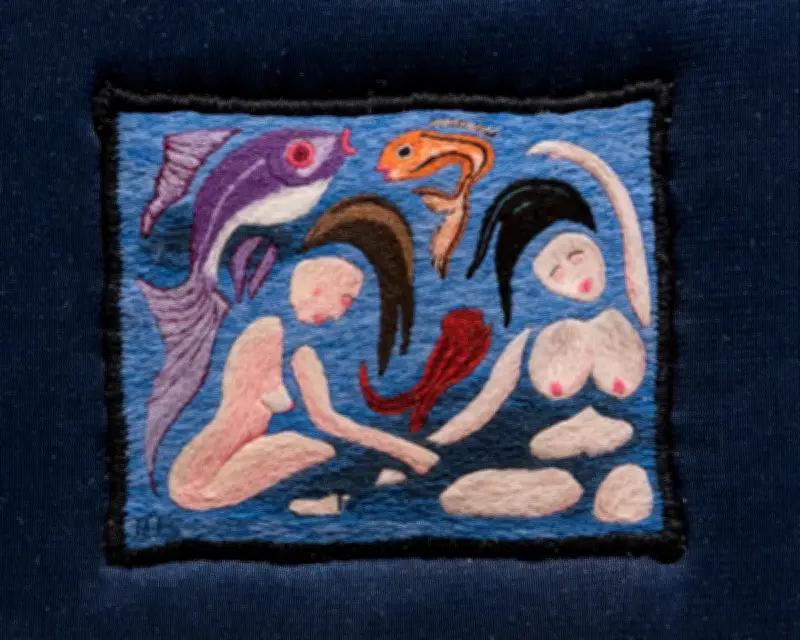
Ray Materson developed his signature technique of embroidering with unraveled socks while serving seven years in prison for drug addiction. His works, often measuring just 2x3 inches, depict scenes from Shakespeare, Ibsen, and Chekhov, as well as royalty. "Ray was on a track of death through his addiction, but because of art his life turned around into something defined by creativity and giving," Warren said.
The exhibitions run at Grand Rapids Art Museum from 3 October 2026 until 24 October 2027 for Green, and 3 January 2027 for Tyler and Materson.