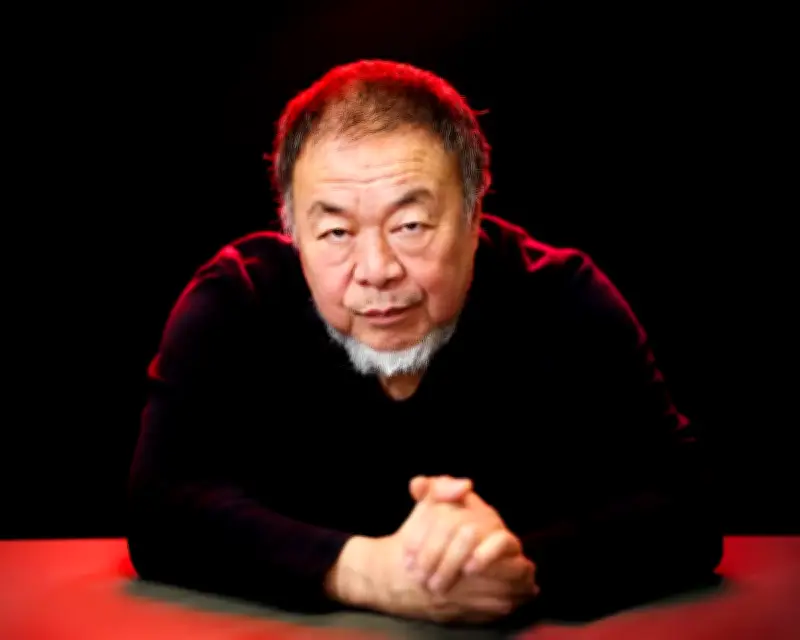
Ai Weiwei has unveiled his latest work, Mushrooms, a 40-metre installation of 500 identical cast-iron combat helmets, on the Tallawoladah Lawn outside the Museum of Contemporary Art (MCA) in Sydney. The acclaimed artist, speaking from his farm in Portugal, said 90% of art today is "garbage" and that real art must question the existing order.
From Portugal to Sydney Harbour
Ai has lived quietly on a secluded farm in the Alentejo region of Portugal for the last six years. He welcomed a visitor into a vast building, a replica of his former studio in Shanghai, which was controversially demolished. The space is cavernous, gridded by huge wooden columns, with dizzyingly high ceilings webbed with beams. There is no artwork on the walls.
"People say, what is this building for? For what? Fuck that. Maybe it's for nothing," Ai said with a shrug. "It's empty. And emptiness, people cannot accept."
The origins of Mushrooms
The new commission, this year's Neil Balnaves Tallawoladah Lawn Commission, consists of 500 identical cast iron sculptures of combat helmets on an elevated platform. The title alludes to the visual rhyme between mushroom caps and the shape of the helmets, as well as the fungal associations with decay, death and the fragility of life, brutally exposed by armed conflict.
"Curiosity" and "boredom" generally shape Ai's creativity, and the origins of this particular commission are "very simple". In 2015, Ai began work on Human Flow, his documentary on the migrant crisis, for which he and his team travelled to 23 countries. The process led him to reflect more deeply on the causes of these perilous mass movements: war, or more specifically, the mechanics and munitions involved in contemporary warfare.
"I studied for two years to understand the military, arsenals, who designs bombs, and how they are used. Then, when Russia threatened Ukraine and Ukraine asked for help from Germany, the German chancellor offered them 5,000 helmets. I laughed," Ai said. "I thought, wow, that's interesting. So, at the beginning of the conflict, you can say Germany or Europe did not understand the nature of the war."
War, peace and the state of the world
Last year, Ai visited Ukrainian soldiers on the frontline four times. He showed pictures and footage from his time there, including being taught how to use a rifle and troops sporting uniforms he had embroidered with motifs of sunflowers. He plans to use these clips in an upcoming film.
Ai is keen that these experiences are not seen simply as research for the new MCA piece. "I never prepare my life so I can make an artwork – or create artwork for my life," he said. Mushrooms was also shaped by its future home, "a beautiful location" with a dramatic view of the Sydney Opera House. "That building represents rational, peaceful enjoyment … but at the same time we have to re-announce that there are wars going on and peace is essential for any civilised society."
Throughout the conversation, Ai seemed despairing about a collective and cold amnesia about the parlous state of geopolitics. "We cannot be blind, we cannot say I don't know the situation," he said. "You know the situation and you just pretend you don't know it." Speaking about the genocide in Gaza, he expressed deep concern about the lack of connectedness within modernity, our failure to understand that "if injustice happens to one person, it happens to the whole of humanity as well".
Art and the existing order
Asked whether art can offer hope about the future of humanity, Ai was pugnacious and plain speaking: "Art today is very corrupted – 90% of what we see in most institutions, or in so-called artistic circles, I think is just garbage. Real art questions the existing order. Art is not about representing so-called beauty, but rather to question the existing judgment about everything in politics, in life, in personal relations, in individual judgment – but this kind of art is never encouraged. People want you to behave, want you to be a nice guy, pleasant, cheerful, enjoying your life. And so most work we see in the museums is very decorative and sentimental, rather than having any relations to human struggle and our reality."
The Chinese word for mushroom is 蘑菇 or mógū, a term often associated with slowness, delay and dawdling. While the discussion regularly returned to Ai's dissatisfaction with the tardy pace of societal and institutional progress, the conversation itself was leisurely. Despite describing himself as "the most interviewed human being" and claiming to have been interviewed "more than 1,000 times", he was generous and fleetingly mischievous.
Asked where his interests might take him next, Ai said he has no "goals". "The only thing we should try to do," he said, "is live a life which can naturally capture the light." Ai Weiwei's Mushrooms is free to visit now on the Tallawoladah Lawn at the Museum of Contemporary Art in Sydney.