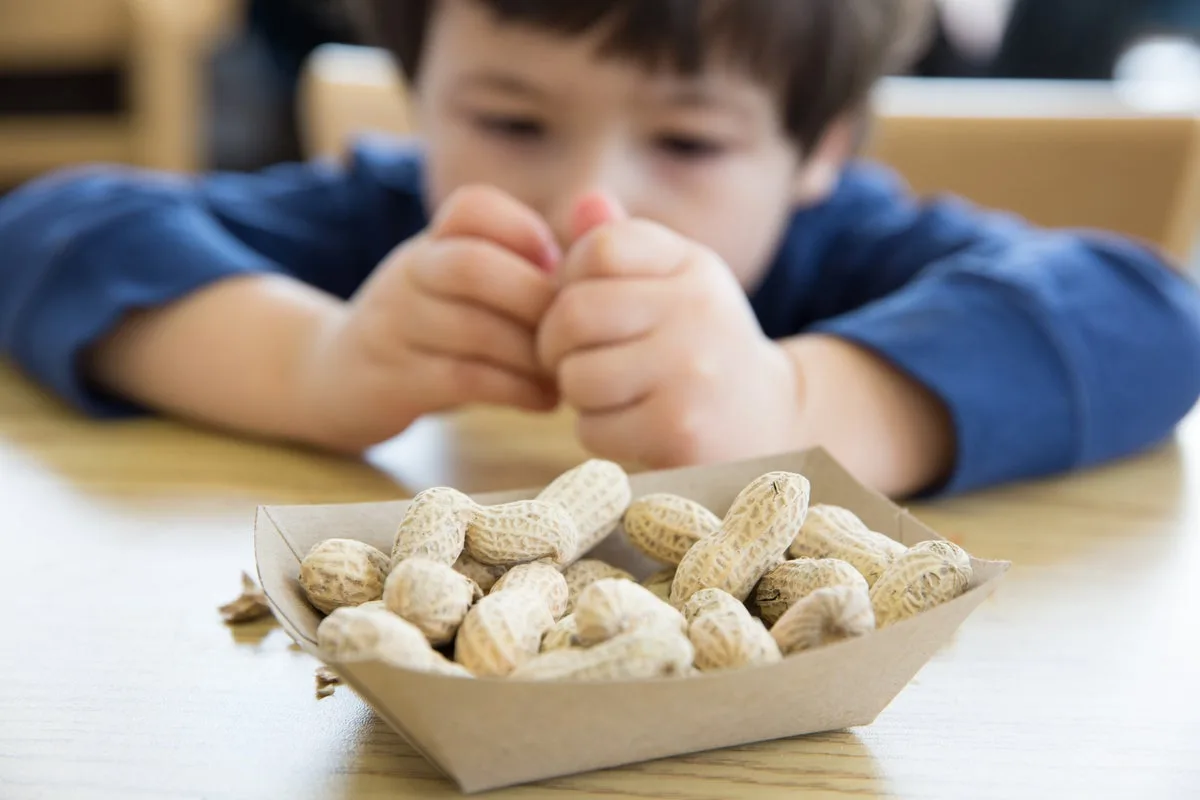
A new study from Karolinska Institutet in Sweden suggests that feeding toddlers small amounts of peanuts daily can treat their allergy within three years. Peanut allergy affects about one in 50 children in the UK and is often lifelong, causing mild reactions like itchy mouth and nausea, or severe anaphylaxis.
The study, published in The Lancet Regional Health – Europe, involved 75 children aged one to three with confirmed peanut allergies. Fifty children were given peanut puffs, while 25 avoided peanuts entirely. Treatment started with a very low dose in hospital and continued at home, with doses increased every four to six weeks until reaching a maintenance dose of around one and a half peanuts daily.
After three years, 82% of the children receiving peanut puffs could eat at least three and a half peanuts without an allergic reaction, even after a four-week break. In contrast, only 12% of the control group could tolerate that amount. Most children in the treatment group could eventually consume up to 25 peanuts.
Professor Caroline Nilsson, senior author, said: 'All children who followed the protocol achieved the goal of eating three and a half peanuts without experiencing an allergic reaction.' She emphasised the treatment is safe only under controlled conditions in a healthcare setting. Side effects were mostly mild, but some serious reactions occurred during dose increases, requiring adrenaline injections.
Researchers stressed that parents should not attempt this at home. Professor Anna Asarnoj warned: 'The cautious treatment approach appears to play an important role in safety, but this is not something that parents should attempt at home, as serious reactions can still occur.' The study highlights a promising method for desensitising young children to peanuts under medical supervision.