January strikes and alleged violence
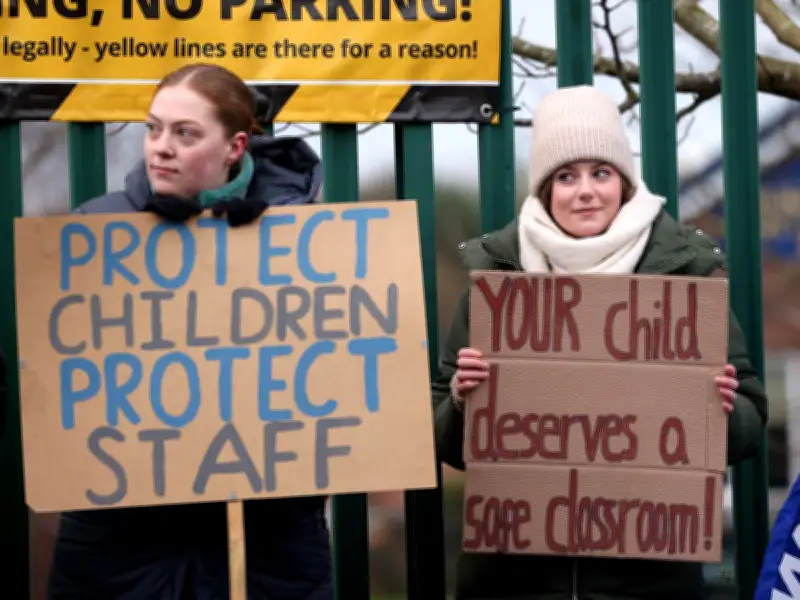
When pupils returned to school after the Christmas break, teaching staff were on picket lines outside the gates. Eight strike days were called at Ravensfield Primary in Dukinfield and Lily Lane Primary in Moston during January by the NASUWT union.
The union said a "culture of violence and intimidation" had led to frequent attacks on staff, with both pupil-on-teacher and pupil-on-pupil assaults having "grown to untenable levels". It blamed leadership at both schools and the multi-academy trust behind them, Changing Lives in Collaboration (CLIC). The trust insisted the allegations "did not reflect the day-to-day reality" at either academy.
The dispute drew national attention, with Manchester Evening News readers and parents of current and former pupils voicing support for the strikers. It proved to be the start of a turbulent seven months for the two CLIC schools, with critical Ofsted inspections, the departure of a headteacher and two interventions by the Department for Education (DfE). CLIC now insists both schools are moving in the right direction, but Ofsted's own assessment was blunt: "No one is under any illusion that the road to recovery will be easy or swift."

A 'level of fear' in classrooms
On cold January mornings, NASUWT members picketed outside Ravensfield and Lily Lane, alleging that violence against teachers had escalated and that leadership was not taking their concerns seriously. Parents spoke of a high turnover of teaching staff.
Conor Priestley joined Lily Lane's teaching staff in September 2025 but handed in his notice weeks later, leaving in December. "A day didn't really go by where someone wasn't hit, kicked, punched, or chairs thrown," he told the M.E.N. "Talking about my school days, I realised my good days were 'oh I didn't get hit today' - which is ridiculous when you say it out loud."
Another teacher, who asked not to be named, said: "I've witnessed daily assaults on myself, colleagues and teaching assistants. Staff have had to go to A&E multiple times this year. They've tried to stab teachers with pencils. I could go on all day with incidents I've seen."
At Ravensfield, union members said pupil aggression had led to classes being placed in lockdown, and teachers described a "level of fear" during the working week. NASUWT claimed staff had been hit, kicked and spat at, with objects thrown and doors pushed into them. One teacher said: "We have been met with no support, met with blame being passed on to us for certain incidents. It's really upsetting that we have had to get to this point. To be out here, when children are in there not getting their full education, it's devastating. We want this to end now, so we can go back to school as a safe environment for everybody."
CLIC said pupil and staff safety was its "highest priority", adding: "The claims made by the union do not reflect the day-to-day reality in our schools, nor the significant improvements that have been delivered since they joined the trust." During the first two strike weeks, 10 of 64 staff at Ravensfield and five of 90 at Lily Lane were on picket lines.
The M.E.N. understands an agreement was reached allowing NASUWT members to return to work, but further discussions on key concerns were still due, and the issues have not been deemed fully resolved. A meeting between the union and the CLIC trust board is expected next academic year.
Ofsted: 'school is at rock bottom'
Days after teachers returned, both schools faced fresh turmoil. On February 4, Ofsted carried out focused monitoring inspections at Ravensfield and Lily Lane. The regulator said these followed "a number of complaints made to Ofsted and negative press coverage that raised serious concerns", after the previous month's industrial action. Both schools were judged to require "significant improvement".
Ravensfield needed "urgent improvement" in four of seven inspection areas, with the other three "needing attention". At Lily Lane, two areas required "urgent improvement" and five "needing attention". Attendance and behaviour were among the urgent themes at both schools. Ofsted noted at Lily Lane that "a lack of respect between some pupils, and towards some staff, is evident".

Inspectors at Ravensfield said "low expectations of pupils' behaviour have become the norm" and that "recent turbulence at the school has resulted in absence rates increasing". They also acknowledged that school leaders had "successfully reduced the most serious behaviour incidents" at Lily Lane, and that a "new comprehensive behaviour policy" at Ravensfield was "at the early stages of tackling disruptive behaviour".
Leadership and governance were not judged to need urgent improvement at either school, but inspectors highlighted a breakdown in trust. Ravensfield's report said: "Relationships with many staff are fractured. Morale is low because staff do not believe their wellbeing is considered, especially when dealing with the disruptive behaviour of some pupils. Parents and carers are concerned about their children's achievement, wellbeing and safety. The school is at rock bottom with a culture that does not put pupils' best interests at the heart of school life."
Yet Ofsted also saw signs of recovery, saying: "Recent changes in leadership are beginning to make a positive difference. Leaders are taking the right action, at the right time, to tackle the deep-rooted weaknesses... Even so, this is just the start of the journey. No one is under any illusion that the road to recovery will be easy or swift."
At Lily Lane, Ofsted remarked that "a notable proportion of staff do not feel supported", and staff reported that poor behaviour prevented effective teaching and that they did not feel confident raising concerns. However, the regulator said CLIC "provides regular and sustained support" to Lily Lane and was "understanding" of Ravensfield's situation.
Government intervention
Ofsted recommended next steps to improve achievement, behaviour and attendance at both schools, including rebuilding working relationships. Ravensfield's report said: "Leaders must ensure that they rebuild fractured relationships with staff so that pupils' best interests and their enjoyment of school sit at the heart of school life."
The scrutiny did not end there. After the inspections were made public, the DfE issued termination warning notices to Ravensfield in April and to Lily Lane in July, effectively putting CLIC on notice. Such notices allow the Secretary of State to terminate an academy's funding agreement and transfer it to another trust if a school requires significant improvement.
CLIC was given deadlines to respond with details of improvement plans and progress: May 8 for Ravensfield and July 22 for Lily Lane. A letter to Ravensfield staff, seen by the M.E.N., called the notice a "standard part of the process following an Ofsted judgement of this nature" and said the trust "fully recognises the seriousness of the challenges identified and remains committed to delivering the rapid improvements pupils, staff and families deserve".
A week before the DfE's deadline, Ravensfield headteacher Karen Leyland announced she would resign "after much reflection". She had been at the school for eight years. Executive headteacher Oliver Kerr, who joined last September, remained in post, with Hannah Heron as acting headteacher. A new permanent headteacher is expected.
Trust says DfE confirmed Ravensfield will stay
Lily Lane joined CLIC in March 2023 and Ravensfield in November 2024. Lily Lane had been rated inadequate in its last Ofsted inspection before joining; Ravensfield had been rated good in 2019, but inspectors this year spoke of "deep-rooted weaknesses".
CLIC says its turnaround work is now showing results. After the trust's response to the Ravensfield warning notice, the DfE stated that Ravensfield can remain with CLIC and its funding agreement will not be terminated. The trust is hopeful of a similar outcome for Lily Lane.
A CLIC spokesperson said: "A termination warning notice from the DfE is a standard part of the process following an Ofsted judgement of this nature and provides an opportunity for the trust and school to update the department on the progress being made and the actions underway to secure improvement. We fully recognise the seriousness of Ofsted's findings and remain committed to delivering the rapid improvements pupils, staff and families deserve. We are working closely with the DfE and wider education partners, and are confident that the plans already in place will deliver the long-term improvements needed across both schools.
"We are pleased to say the DfE has already confirmed Ravensfield will remain in the trust as the department has recognised we have the capacity to deliver rapid and sustainable improvement, improvement activity is being delivered at pace, we have taken decisive action to strengthen leadership and governance at the school, and there is already positive impact on staff morale and engagement, attendance, behaviour and culture. We will receive an update on Lily Lane in due course, which has similarly been on an improvement journey and for which Ofsted removed special measures at the most recent inspection.
"As Ofsted recognised, leaders have a clear understanding of the areas requiring improvement, positive changes are already underway, safeguarding is now effective in both schools - and we are only at the start of the journey. Trust and school leaders are also delighted with the 2026 SATs results for both schools, which represent great gains and the impact of hard work and determination for rapid school improvement. We would like to thank staff, parents, carers and the wider school communities for their continued support as this work continues."
The DfE was approached for comment.