Montessori learning is being phased out at a Victorian public school, with critics blaming a state government push towards explicit instruction and questioning the body that helped design the policy.
Student impact
Michelle's year-eight daughter, Leah*, has been in and out of hospital since birth with complex medical issues. Michelle says the Montessori stream at their nearby public school has reduced anxiety in her daughter's education through its self-directed learning approach.
"My daughter has a lot of time in hospital and if you're coming back to a mainstream school you're feeling that anxiety because the kids are up to chapter 16 and you don't know what the topic is and it's really hard to come back in," Michelle said. "With Montessori it's self-directed learning, so wherever you're up to you don't have to compare yourself to the kid next to you … that fits perfectly for her, she just slides back in there like she's always been there the entire time."
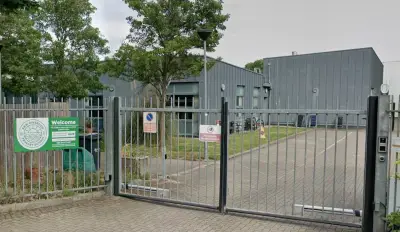
The Montessori stream, running from years seven to nine at Templestowe College public school north-east of Melbourne, is being phased out. Michelle, who helped found the Coalition for Choice in Public Schools group, believes it is because of the state government's policy forcing all public schools to teach via explicit instruction, a different model to Montessori.
What is explicit instruction?
Explicit instruction, which has gained traction in recent years, has become a flashpoint in a long-running culture war over educational theory. The method is teacher-led rather than student-led, where the educator explains a lesson in small chunks, demonstrates the skill, and then asks the student to model it. It differs from inquiry-led learning, where students discover information for themselves.
Education experts say explicit instruction is an important method but not the whole solution to improving learning in schools.
In 2024, Victoria announced the Victorian Teaching and Learning Model 2.0 (VTLM 2.0), which mandated explicit instruction in collaboration with the Australian Education Research Organisation (Aero), a contentious body heavily focused on that model. Under VTLM 2.0, all Victorian government schools must fully embed the policy by 2028, and in some instances will "include retiring approaches and practices that do not align with the VTLM 2.0".
Since the policy was announced, two Montessori streams and one Steiner stream in Victorian public schools have been shut down or phased out. One Montessori stream and five Steiner streams remain in Victoria.
Official response
The state education department said it is up to Victorian public schools whether they offer alternative programs such as Montessori, Steiner, or International Baccalaureate streams. In a letter to a parent, seen by Guardian Australia, the department says it "has not issued any directive in relation to the 'retirement' of alternative curricula".
Mark Powell, director of education services at Montessori Australia, said Aero and the VTLM 2.0 model promulgate a one-size-fits-all approach to teaching that doesn't work for all students.
"In June 2024 the government launched VTLM 2.0, a mandatory teaching framework with a hard 2028 deadline, [with] very explicit language allowing for the retirement of non-aligned programs … and then the closure of three programs in the last two years, it looks like a policy design," he said. "Montessori is an evidence-based methodology. It's been internationally recognised over the last century and it's been proven by many peer reviewed studies to be highly effective for diverse learners including those with neurodivergence."
Meanwhile, the federal government has buried a damning independent report into Aero, which the body claims would cause it "serious reputational harm". The education department blocked Guardian Australia's freedom of information request for the report by KPMG, commissioned by Labor, because it could risk damaging relations between states and the commonwealth.
Aero objected to the release, according to the FoI rejection, saying it would "undermine trust in the quality of evidence Aero generates, with a risk that educators and other stakeholders would cease using its resources". It said the release could cause "serious reputational harm to Aero … damaging its ability to engage with partner jurisdictions", as well as harm relationships with members, "undermining its ability to fulfil its functions".
De-professionalising teaching
Alex Bacalja, a senior lecturer in initial teacher education at Melbourne University, said teachers, schools, and academics had criticised Aero for its heavy focus on explicit teaching, accusing it of moving decision-making and experience from educators to bureaucrats.
"Because Aero claims to know the best methods of teaching, and communicate that knowledge through departments of education, teachers are no longer allowed to decide what is best for the students in front of them at any one time, a bureaucrat has decided that for them … it aims to de-professionalise teaching," he said. "It's like a bureaucratic department telling brain surgeons how to do brain surgery."
Bacalja was involved in consultation sessions organised by KPMG during the audit. "I thought there would be a balance of those people who mostly supported Aero's work and others far more critical. It was all critical," he said. "I know colleagues who attended other consultation sessions with KPMG who shared similar stories."
The Greens education spokesperson, Penny Allman-Payne, said it was "appalling" the report was hidden from the public. "Aero is meant to be Australia's national education evidence body and yet they won't provide to teachers, other educators and school leaders, the evidence of the report into how well they're functioning … I think that's pretty appalling."
The former public school teacher said she had heard criticism from educators and researchers that Aero "takes a very narrow focus on which evidence they use and look at", and heard concerns that some resources on the website were "insulting" because they were so basic and would have been covered in university.
The federal government is working towards absorbing Aero, the Australian Curriculum, Assessment and Reporting Authority (Acara), the Australian Institute for Teaching and School Leadership (AITSL), and Education Services Australia (ESA) into a new "teaching and learning commission". The department, in its FOI response, said some education ministers claimed the release of the audit could "prejudice ongoing discussions" about the new commission, but Allman-Payne said the KPMG report should be released because of the new body.
"Information in that report is going to be critical to any decisions that are made … a good process would involve everybody understanding what's gone well with the bodies that they want to amalgamate and what hasn't."
* A pseudonym has been used to protect identity.