Georgia Could Become First State to Mandate Weapons Detection in All Public Schools
Georgia lawmakers are on the verge of passing legislation that would require weapons detection systems in every public school across the state. If enacted, Georgia would become the first state in the nation to implement such a comprehensive mandate, marking a significant escalation in school security measures.
Legislative Response to 2024 School Shooting
The proposed bill is a direct reaction to a tragic school shooting in 2024 that resulted in the deaths of four students at Apalachee High School in Winder. Daria Lezczynska, a junior at the school where the shooting occurred, expressed strong support for the measure. "That rifle would have never reached our hallways," Lezczynska stated. "Lives would have been saved. Families would not be grieving. Students like me would not be carrying this trauma."
Advanced Detection Technology
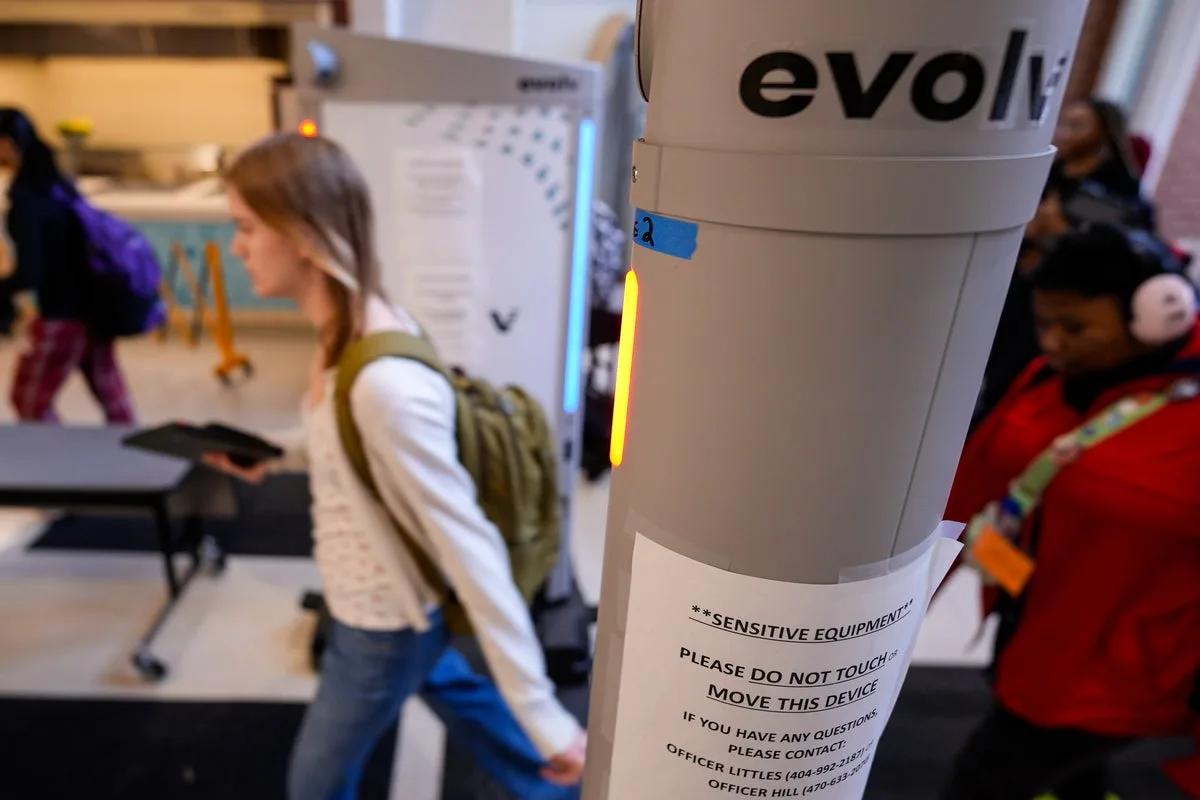
While some schools have long utilized traditional metal detectors or required clear backpacks, the legislation focuses on newer generation technology that combines computer analysis with cameras or electromagnetic fields to identify weapons. These systems have seen rapid adoption in various public venues including schools, arenas, stadiums, and hospitals across the country.
Chuck Efstration, the bill's sponsor and Republican House Majority Leader who represents the Apalachee High School area, emphasized the need for enhanced security. "It's very commonplace for me to walk through a weapons detection system when I enter into a courthouse," Efstration noted. "Georgia's students and educators deserve similar security with weapons detection systems inside of every Georgia public school."
Implementation Challenges and Concerns
Despite the legislative momentum, significant questions remain about the practical implementation of such a sweeping mandate. There is little rigorous nationwide research proving that weapons detectors effectively prevent school shootings, and Georgia faces substantial financial considerations with systems costing $10,000 or more per installation.
School employees would need to staff checkpoints and conduct bag searches, raising concerns about resource allocation. Even supporters acknowledge that frequent false alarms can dull vigilance among security personnel, potentially causing them to miss actual weapons during routine checks.
Some critics question whether weapons detectors are necessary in elementary schools, as Efstration's bill mandates. Others who find Georgia's gun laws too permissive argue that installing weapons detectors everywhere represents a form of surrender, accepting that society will remain awash in guns and violence rather than addressing root causes.
Legislative Progress and Funding Questions
A Senate committee passed an amended version of Efstration's bill on Monday, setting the stage for final votes in both legislative chambers during the closing days of Georgia's 2026 session. The legislation would then proceed to Republican Governor Brian Kemp's desk for his signature or veto.
Funding remains a critical issue. Georgia currently provides each public school campus with $50,000 annually for school safety, but many districts already allocate these funds toward on-campus police officers. House budget writers have proposed borrowing an additional $50 million for grants to districts to help cover implementation costs.
"While we absolutely think weapons detection is imperative, it can only be made possible with appropriate funding," said Gretchen Walton, an assistant superintendent in Cobb County, Georgia's second-largest school system with 103,000 students.
National Context and Alternative Perspectives
Nationwide data reveals that weapons checks remain relatively uncommon in American schools. According to a U.S. Department of Education survey from the 2021-2022 school year, only 6.2% of all schools and 14.2% of high schools required random metal detector checks. Daily metal detector checks were even rarer, with just 2.4% of all schools and 6.2% of high schools implementing them.
The survey found that schools were more likely to require clear bookbags or ban bookbags altogether than to mandate daily metal detector checks. Weapons checks were most common in urban schools with predominantly nonwhite student populations and high poverty rates.
Atlanta's Experience with New Systems
Atlanta's school district provides a case study, having spent over $4 million in 2021 to deploy new weapons detection systems in middle and high schools, replacing older metal detector technology. District Police Chief Ronald Applin explained that officials sought systems that allowed faster student movement, describing traditional detectors as "too cumbersome."
The investment appears to have yielded results, with guns found at Atlanta schools dropping from 32 the year before implementation to just four in the current year. At Midtown High School, where 1,700 students typically hold laptops aloft while passing through detection gates, School Resource Officer Meredith Littles described the process as "very non-intrusive" and "not real adversarial."
Technical and Operational Considerations
Research engineer Nikita Ermolaev of IPVM, which tests and researches security technology, highlighted the delicate balance required in system sensitivity. "Too sensitive, and alarms go off for everything. Not sensitive enough, and weapons slip through," Ermolaev explained. He emphasized the challenge of maintaining vigilance when most alarms prove false, noting that security personnel may become complacent after numerous false alerts.
Political Divisions and Broader Debate
The legislation has exposed political divisions, with some Democrats viewing the focus on weapons detection as misplaced. They argue that Georgia should prioritize limiting children's access to firearms rather than implementing detection systems.
Democratic State Representative Bryce Berry, a public school teacher who voted against the bill in the House, articulated this perspective: "We have allowed guns and weapons of war to become more available than a pack of gum in this state, then act confused when people keep dying. Let's stop hiding behind procedure and politics and pretending that the threat our children face is some vague, mysterious force."
As Georgia's legislative session approaches its conclusion, the debate over weapons detection in schools continues to evolve, balancing security concerns with practical implementation challenges and broader questions about gun policy in American society.