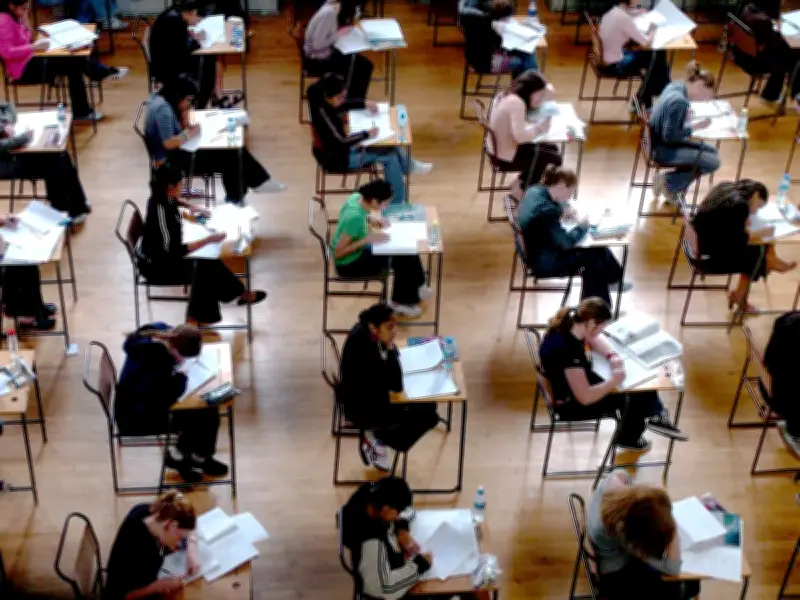
Thousands of students will be receiving their GCSE results today after months of hard work and revision. The majority of students taking GCSEs in England will receive grades from 9 to 1, with 9 being the highest grade. Grade 4 is equivalent to a C, with Grade 9 equivalent to an A*. The GCSE performances of schools are judged partly on the number of pupils achieving Grade 5 or above, which is considered a "strong" pass.
How Grade Boundaries Are Set
Grade boundaries are decided after GCSE exams are marked and they are used on results day. GCSE grade boundaries are not fixed from one year to the next, with exam boards deciding where they should fall once marking is almost complete. A grade boundary is simply the minimum number of marks needed to achieve a particular grade. If an exam is easier than in previous years, the grade boundaries for that paper will be higher. If it is harder, the grade boundaries will be lower.
Guidance about grade boundaries on Gov.uk, said: "The difficulty of exam questions varies year to year, even though exam boards try to keep the level of demand consistent. That's because it is impossible to determine how difficult students will find a paper until it is taken."
"This is why new grade boundaries are set each year – to reflect the difficulty of that particular paper, and to ensure that it is no easier or harder to get a grade in any given year," it continued. "The quality of a student's work in their exams determines the grade they get and no-one is advantaged or disadvantaged by the year in which they happen to sit the exam."
No Quotas for Pass Rates
"There are no quotas for the number of students who must pass or fail a subject each year, and no cap on the number of students that can get each grade," the guidance added. Grade boundaries are set with the aim of maintaining standards over time, not to ensure that the same proportion of students get a particular grade. Data is used to identify potential grade boundaries, which reflect whether students found the exam slightly harder or easier than the previous year.
Grade boundaries typically differ between exam boards, because grading reflects the level of difficulty of each particular paper. All exam boards must cover the same subject content and assessment objectives, and follow the same rules. But there are often small differences between the type of questions they ask or the balance of different types of questions in a particular paper.
Where to Find Grade Boundaries
Each school should provide information on what time you can collect GCSE results on Thursday, although this typically starts around 8am. A full list of AQA GCSE grade boundaries will be available on the AQA website. A full list of Edexcel GCSE grade boundaries will be available on the Edexcel website. A full list of OCR GCSE grade boundaries will be available on the OCR website. A full list of WJEC GCSE grade boundaries will be available on the WJEC website. A full list of CCEA GCSE grade boundaries will be available on the CCEA website.