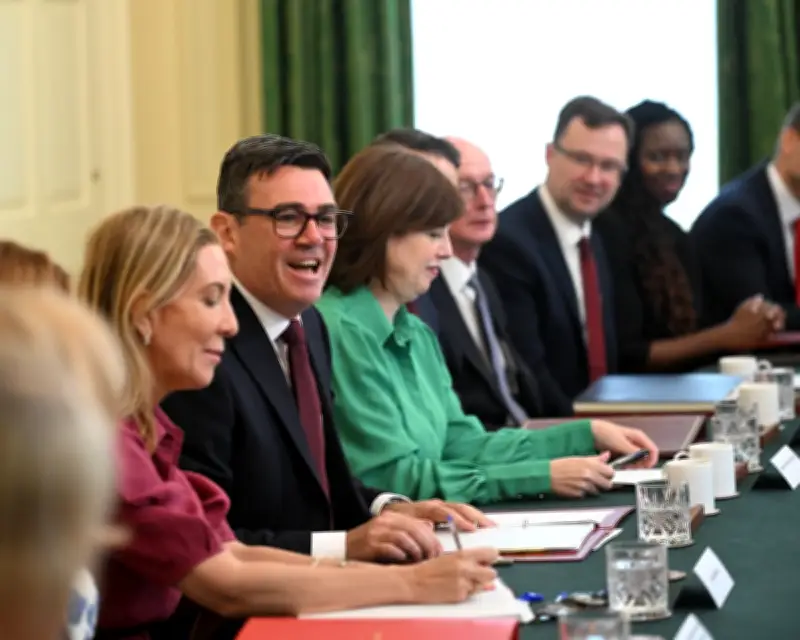
Andy Burnham held his first cabinet meeting on Tuesday, and the makeup of his top team has sparked debate about social mobility and representation. While the cabinet is more diverse in some respects—half of its members represent northern constituencies and there is an equal number of women and men for the first time—over half (54%) attended Oxford or Cambridge, up from 29% under Keir Starmer. Nationally, only 1% of the population attend these universities.
Private School Representation
More than a fifth of Burnham's cabinet attended private schools, including the AI minister Kanishka Narayan, who went to Eton on a full scholarship after moving from India. Narayan's background includes studying PPE at Oxford and an MBA at Stanford, but his story reflects a complex picture of social mobility. Other ministers, such as energy secretary Miatta Fahnbulleh, were educated privately after arriving as asylum seekers from Liberia.
Nick Harrison, chief executive of the Sutton Trust, emphasized the importance of representation: “Of course, the background of the cabinet matters. If they’re meant to be representing the country, they should be representative of the country. We would absolutely say that you get better decisions if you have a wide range of views, perspectives and backgrounds around the table.”
Wider Access to Power
Sam Friedman, a sociology professor at the London School of Economics, noted that the cabinet's makeup is symbolic of broader access to power in Britain. His research shows that pupils of the nine most exclusive private schools are 52 times more likely to reach elite positions than those from other schools. Oxbridge graduates born in the 1960s and early 1970s were over 250 times more likely to reach the British elite than non-graduates.
Friedman argued that the cabinet is just the visible tip of an iceberg of powerbrokers, and that elite backgrounds can influence government decisions. “Those who are brought up in more privileged backgrounds tend to tilt to the right,” he said, adding that cabinet members often interact with civil servants and business leaders who mediate their decision-making.
Beyond Traditional Markers
Lee Elliot Major, a professor of social mobility at the University of Exeter, cautioned that counting private schools and Oxbridge degrees only tells part of the story. “The real challenge is whether ministers understand how Britain’s contemporary opportunity system now works,” he said, pointing to divides shaped by wealth, place, networks, and hidden cultural codes.
Major urged politicians to address the “profound unravelling of the promise of modern capitalism,” where more people in their 40s and younger are experiencing downward mobility. “The test for this government isn’t whether ministers themselves are socially mobile. It’s whether they can create a society in which many more people have genuine opportunities to flourish,” he said.
Dr Daniel Evans, a lecturer at Swansea University, agreed that focusing on politicians' origins is a “red herring.” He highlighted the collapse of the graduate premium, student debt, and a brutal job market. “The discourse hasn’t kept up,” he said.