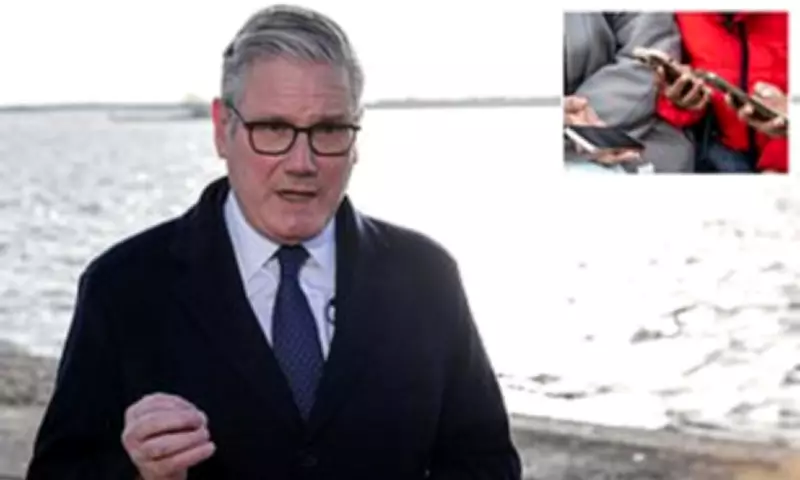
Prime Minister Keir Starmer has declared that the current situation regarding social media access for young people is unsustainable, vowing that the "status quo" will not persist for under-16s. The Government is actively consulting on various restrictive measures, including a potential blanket prohibition, in response to mounting pressure from legislative bodies and international legal developments.
Landmark US Ruling Influences UK Policy
Sir Keir expressed his strong commitment to addressing addictive design elements within popular applications, citing a potentially precedent-setting court case in the United States. A jury in Los Angeles recently ruled that tech giants Google, owner of YouTube, and Meta, operator of Facebook and Instagram, deliberately constructed platforms to ensnare young users with little regard for their psychological wellbeing.
House of Lords Applies Pressure
The Prime Minister faces intensified demands for stringent action following a significant parliamentary defeat. On Wednesday evening, the House of Lords voted for a second time in favour of an amendment to the Children's Wellbeing and School's Bill, advocating a social media ban for individuals under sixteen years of age. The vote resulted in a decisive majority of 125, with 266 peers supporting Conservative former minister Lord Nash's proposal against 141 opponents.

This legislative setback for the Government triggers a process of parliamentary ping-pong, where Members of Parliament will have the opportunity to vote on the amendment when it returns to the House of Commons. Lord Nash asserted that the upper chamber had delivered an "unambiguous message" to the administration, criticising what he described as "hollow promises and half-measures" and urging immediate action to raise the age limit for accessing harmful social media platforms to sixteen.
Government Consultation and International Context
British ministers are currently evaluating whether to implement a comprehensive social media prohibition for under-16s, mirroring a similar ban recently enacted in Australia. Concurrently, hundreds of British teenagers are participating in a trial examining the effects of social media bans, usage time limits, and evening curfews.
The Government has stated it will oppose the Lords' amendment until its own consultation on social media restrictions concludes. Speaking at a summit in Helsinki, Finland, Sir Keir emphasised the administration's preparedness, noting, "We've already taken the powers so that when we get to the end of the consultation, we don't have to wait years to implement this." He added unequivocally, "It's not if things are going to change, things are going to change. The question is, how much and what are we going to do?"
US Legal Precedent and Corporate Response
The American lawsuit, initiated by a young woman who argued that childhood social media addiction severely worsened her mental health conditions, could influence thousands of similar cases alleging harm caused by social media corporations. The Los Angeles jury recommended awarding the twenty-year-old plaintiff six million dollars, approximately £4.4 million, in damages.
Both Meta and Google have disputed the verdict, confirming their intentions to appeal. A Meta spokesperson contended that "teen mental health is profoundly complex and cannot be linked to a single app," while Google argued the ruling misunderstood YouTube, describing it as "a responsibly-built streaming platform, not a social media site." Other platforms, including Snapchat and TikTok, were named as defendants in the suit but settled before the trial commenced.
This California decision followed closely on the heels of another ruling in New Mexico, where a jury found Meta liable under state consumer protection laws for misleading the public about platform safety and failing to adequately protect children. Sir Keir acknowledged these developments indicate a shifting public sentiment towards more aggressive regulation, stating, "I think it does, and obviously we'll study that ruling very carefully, but I'm absolutely clear that we need to go further."