Lauren Cowell's Personal Mission to Protect Children Online
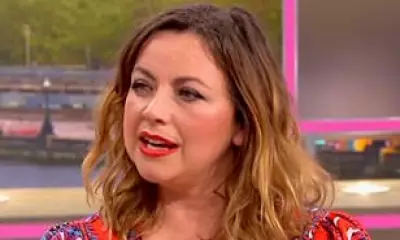
In an exclusive and deeply personal interview, Lauren Cowell has revealed the heartbreaking experience that propelled her into campaigning for a fundamental change in how children access social media platforms. The mother and campaigner is now at the forefront of the Raise the Age movement, which advocates for introducing a minimum age of 16 for social media access in the United Kingdom.
The School Run Discovery That Changed Everything
Like countless parents across the nation, Lauren Cowell would routinely hand her phone to her 12-year-old son Eric during car journeys to let him select music. "He would always take my phone to put music on in the car, and obviously, I'm driving so I can't look at what he's doing," Lauren explains. It was during one such ordinary school run that she made a disturbing discovery: Eric had secretly downloaded Snapchat onto her device.
"I knew nothing about it, and how it actually worked," she admits. "But the more I started to understand about it, the more it really freaked me out." This moment crystallized long-standing anxieties that she and her husband, Simon Cowell, had harbored for years regarding technology and child welfare. Simon, a judge on Britain's Got Talent, has himself been phone-free for eight years, a lifestyle change he credits with dramatically improving his mental health after nearing burnout.

Joining Forces with Bereaved Families
The incident sparked more than just parental concern; it ignited a full-fledged campaign. Lauren has since joined the Raise the Age campaign, standing alongside dozens of families who have tragically lost children to online-related harms. Her involvement deepened after hearing the story of Ellen Roome, whose 14-year-old son, Jools Sweeney, died in 2022 in what is believed to be an online challenge gone wrong.
"I reached out to her, and we became close very quickly," Lauren says. "Simon and I invited her over to talk, and we were so moved by her story. We were so shocked at what she was having to go through." Meeting Ellen and other grieving parents transformed the issue from a theoretical worry into a visceral, urgent cause. "It stopped being a what if or a hypothetical," she states. "You're hearing from parents whose lives have been completely torn apart."
The Impossibility of Parental Control in the Digital Age
Lauren's campaign is driven by a stark realization of the limits of parental oversight. Despite her vigilant efforts—including monitoring Eric's group chats and providing him with a phone stripped of all social media apps—she acknowledges the systemic challenges. "You can be engaged. You can care deeply. You can do everything you believe is right and still not fully know or be able to control what your child is being exposed to," she concedes.
Her concerns are echoed by teachers and other parents at Eric's school, where she notes widespread reports of:
- Dwindling attention spans among pupils
- Growing confidence issues
- A general feeling of helplessness among adults regarding children's online exposure
Lauren has also been closely following landmark US court cases that found tech giants like Meta and YouTube liable for exposing children to harmful content, highlighting the intentionally addictive design of these platforms.
A Call for Legislative Action
The campaign comes to a head with a crucial vote in the House of Commons. Lauren is urging MPs, including Prime Minister Keir Starmer, to prioritize child safety over political debate. "This really shouldn't even be a political discussion...it should absolutely be a discussion of what is in the best interest and the safety and protection of children, full stop," she asserts.
She draws parallels to existing age restrictions for activities like driving, gambling, and alcohol consumption, arguing that while no law is foolproof, such measures establish vital standards and significantly reduce harm. "There will always be ways for children to get around the restriction. But that doesn't mean that we do nothing," she emphasizes.

At home, the Cowell family continues to navigate these challenges. Eric, now without social media access, can still communicate with friends via text and WhatsApp. Remarkably, Lauren reports that her son has expressed his own reluctance to engage with social media, telling her, "Mum, I don't want social media. I really, really don't want it."
For Ellen Roome, Lauren's support has been invaluable. "She wants to protect her son as much as all these other children that are being harmed on social media," Ellen says, adding a poignant plea ahead of the parliamentary vote: "How many more children have to suffer or potentially die like my son."
Lauren Cowell's transformation from concerned parent to determined campaigner underscores a growing national crisis. Her message is clear: technology may be here to stay, but society has both the power and the responsibility to ensure it is supervised and made safer for the most vulnerable users—our children.