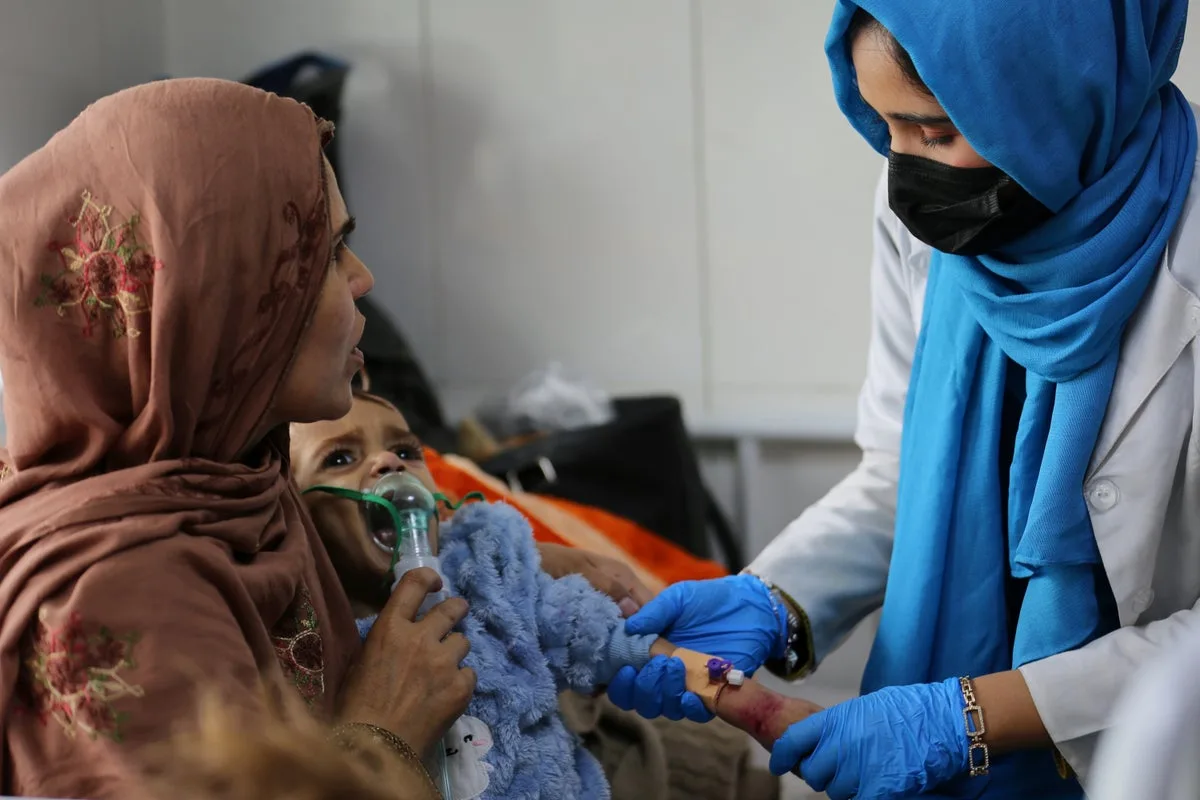
The World Food Programme (WFP) has been forced to turn away three out of four acutely malnourished children in Afghanistan due to severe funding cuts, the agency's country director has warned. John Aylieff described the situation as a 'catastrophic nutritional crisis', with 4 million children's lives hanging in the balance.
Afghanistan has long relied on foreign aid, but the Taliban takeover in 2021 halted direct assistance almost overnight. The crisis has been compounded by drought, earthquakes, and the return of 5.3 million Afghans from neighbouring countries. Now, cuts to humanitarian programmes, including the suspension of US aid, have severed a lifeline for millions.
Of the 17.4 million people facing acute hunger, the WFP can now reach only 2 million, and even they receive reduced rations. The agency's budget for Afghanistan fell from $600 million in 2024 to an expected $200 million this year, amid competing global emergencies.
In Kabul's Indira Gandhi Children's Hospital, two-and-a-half-year-old Abu Bakar weighs just 6kg—half the healthy weight for his age. His mother, Latifa, said food assistance stopped three years ago and her husband has been unemployed for a year. 'I can control my hunger, but my child can't,' she said.
The WFP has recorded more than 500 child deaths in recent months, which Aylieff called 'the tip of the iceberg'. Many deaths in snow-blocked villages go unregistered. 'How many more Afghan children will die before the world wakes up?' he asked.
Afghanistan's health ministry has expanded malnutrition treatment facilities from 800 to 3,200, but the scale of need remains overwhelming. In Kabul's Ataturk Hospital, 21-year-old Sharara watches over her six-month-old son Samir, who has not gained weight in 13 days of treatment for severe pneumonia and malnutrition.