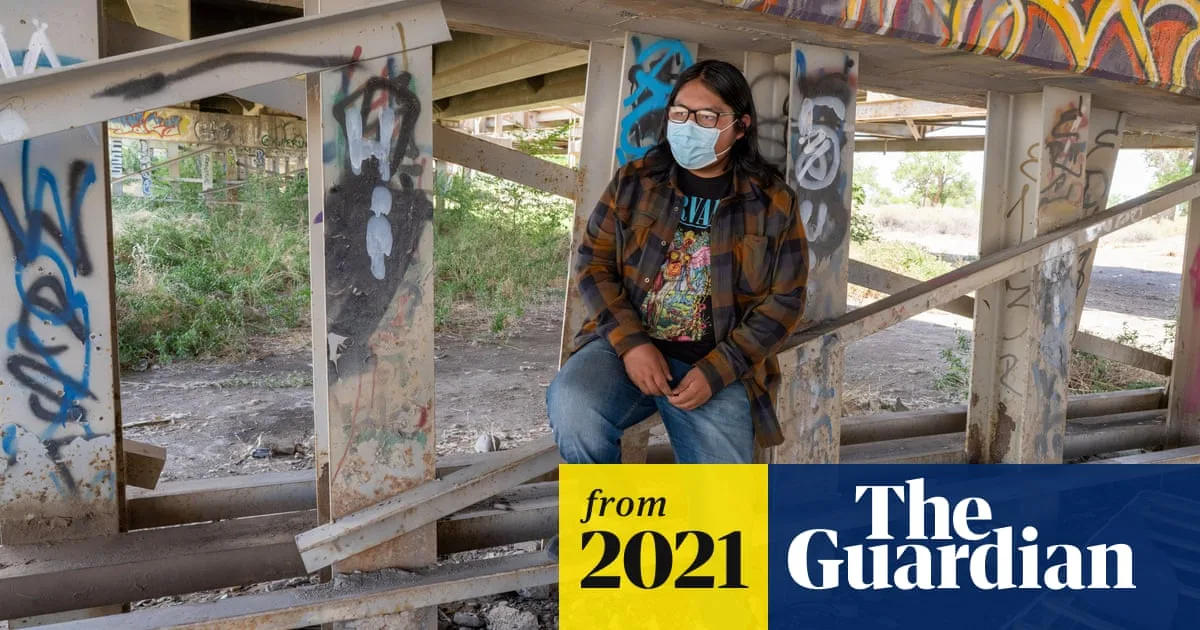
Every school day for more than a year, 16-year-old Evan Allen drove 5.5 miles from his grandmother's home in T'iis Názbąs, Arizona, to the top of a hill where he could get a decent internet connection. He attended virtual classes from the driver's seat of a pickup truck, sometimes for up to ten hours, because his home on the Navajo Nation lacked both internet and cellular service.
Evan, a sophomore at Northwest Middle and High School in Shiprock, New Mexico, used a mobile wifi hotspot in the truck. His experience reflects the reality for thousands of Native American students in the region who faced extraordinary barriers to remote learning during the pandemic. New Mexico's public education department estimated that over 23,000 students lacked the high-speed internet and devices needed for online classes, though the true figure is likely much higher.
The challenges extended beyond connectivity. In winter, Evan wrapped himself in a wool blanket against the cold, worried that bad weather would knock out the internet. During monsoon season, his connection was so poor that he often could not log into classes. He said some teachers became frustrated and counted him absent, telling him it was his responsibility to be present despite the circumstances.
Evan's daily routine involved seven classes, with only a five-minute break between most and a 45-minute lunch that he often spent on the hill. After school ended at 3.30pm, he sometimes stayed until 6 or 6.30pm doing homework because he had no internet at home. He occasionally moved his laptop to the tailgate to play percussion instruments for music class, surrounded by the desert landscape of the Four Corners area.
The pandemic has exposed deep inequities in access to education for Indigenous students, many of whom live in internet and cellular dead zones, sometimes without electricity. Despite these hardships, students like Evan have shown remarkable resilience, drawing on their cultural heritage as they sit in parked vehicles on land their ancestors fought for.