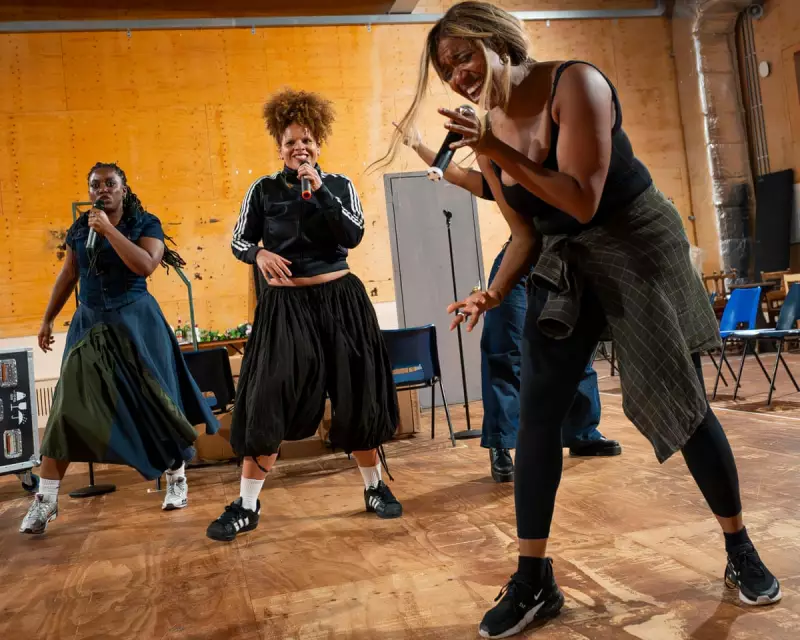
Whitney White, a Tony-nominated director, performer, and songwriter, is reimagining Shakespeare with a rock 'n' roll edge in her new production, All Is But Fantasy, set to debut at the Royal Shakespeare Company. In an exclusive interview from Stratford-upon-Avon, White shares her deep reverence for the Bard, describing how a visit to his grave moved her to tears due to the beauty of his language.
A Musical Journey from Church to Stage
White's theatrical roots trace back to her grandfather's church, where a 50-strong choir first ignited her passion for music. This background shapes her approach to Shakespeare, where she emphasises the musicality of his works, viewing the metre as crucial as the meaning. She recalls her high school encounter with A Midsummer Night's Dream, which sparked her inner "theatre nerd" and led her to question why theatre isn't always as immersive, blending text, music, and dance.
Breaking Boundaries with Female Characters
As a performer, White faced limited casting opportunities, often relegated to minor roles like the nurse in Romeo and Juliet or Maria in Twelfth Night. This experience fueled her desire to create All Is But Fantasy, a boundary-breaking gig-theatre piece that mixes characters from various Shakespeare plays. The production features Lady Macbeth and Othello's Emilia in one part, and Juliet and Richard III in another, offering a fresh perspective on female ambition and mortality.

White explains that music was paramount from the start. "I read Macbeth and I heard rock'n'roll. To me, Lady Macbeth sounded like Tina Turner," she says, highlighting the character's desire for more in a restrictive world. However, she soon noticed a troubling pattern: many of her favourite female characters, such as Juliet, Emilia, and Cleopatra, meet untimely deaths by act five. This realisation prompted her to reframe these narratives, especially after personal losses in her family.
Interrogating Fatal Female Arcs
The show delves into what White calls "fatal heterosexual female arcs," questioning society's comfort with women's premature ends. She adds, "I feel like we're all a little too comfortable with women meeting an untimely end." To process this trauma, she incorporated the witches from Macbeth as central figures, viewing them as allies on stage. These characters are portrayed as bossy, funny, and humane, singing in a blend of gospel and hymn styles.
White draws parallels between witchcraft and spirituality, stating, "A spell is a prayer, and a witch is a holy woman, right?" She sets the production in a church-like space to foster communal witnessing, inspired by her upbringing where community and female guidance were paramount. The three witches, she notes, represent her mother and aunts, who have always been her guides.
Relevance and Reverence in Modern Context
White's relationship with Shakespeare has evolved through this project, becoming more complex. She reflects that while Shakespeare captured timeless issues 400 years ago, their persistence today is a societal problem. For instance, All Is But Fantasy connects Emilia's speech on abused women to the rise in domestic abuse during the pandemic, showing how these narratives remain alive in contemporary newsfeeds.
Despite her reverence for the text, White embraces irreverence in her adaptation, allowing her to play with the material based on her lived experience. "I have an opinion about them that comes from my lived experience and I think I have the right to marry those two things and ask a lot of questions," she asserts.
Nerves and Excitement at the RSC
Staging the production at the Royal Shakespeare Company brings a mix of nervousness and exhilaration for White. She admits, "I've never been more scared in my life, but I've also never felt more alive." Meeting icons like Ian McKellen and Judi Dench left her speechless, and she marvels at the historical significance of the RSC's armoury, where props have been touched by countless hands over the years.

In the end, White sees herself as adding a new song to the Shakespearean mass, honouring tradition while innovating. All Is But Fantasy runs at the Other Place in Stratford-upon-Avon from 21 January to 21 February, promising a thrilling twist on classic tales.