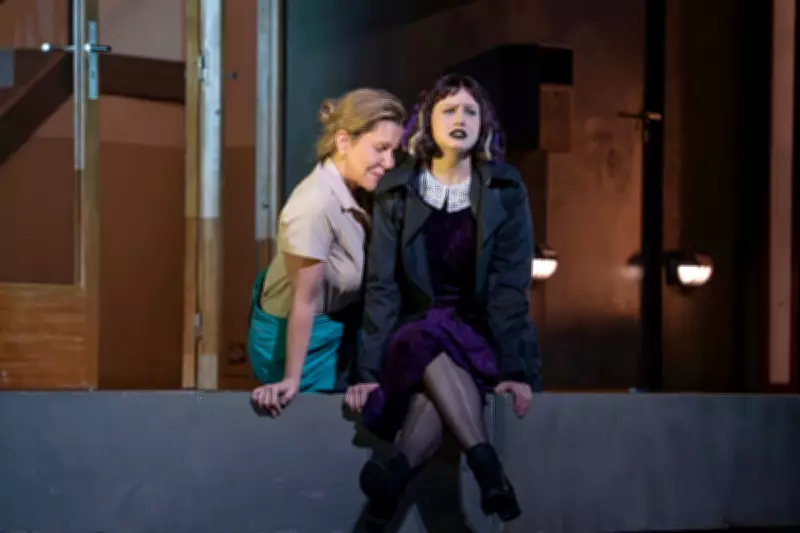
Vilma Jää's Unexpected Journey from Folk Music to the Met Opera Stage
When Vilma Jää enrolled at Helsinki's prestigious Sibelius Academy to study traditional folk music, she never anticipated performing a leading role in one of the twenty-first century's most celebrated operatic productions. The Finnish folk singer's unique vocal techniques have now become a central feature of Kaija Saariaho's acclaimed opera Innocence, currently running at New York's Metropolitan Opera through April 29.
From YouTube Discovery to International Opera Premiere
Saariaho, Finland's foremost opera composer, was developing Innocence when she sought a performer who could authentically represent Finnish folk traditions rather than conventional operatic styles. After discovering Jää's work through online platforms, the composer requested an audition recording featuring various folk techniques. "I said yes, that's cool," Jää recalled. "Everyone knows Kaija in Finland, but I hadn't listened to her music because I wasn't into classical."
Jää's musical background stems from her family's deep folklore connections, particularly through her mother who taught folk dancing and organized traditional festivals. This heritage proved invaluable when Saariaho selected two of Jää's four demonstrated folk traditions for incorporation into the opera's score.

The Dual Timeframe Narrative of 'Innocence'
The opera unfolds across two simultaneous time periods separated by a decade, presented on an innovative split-level revolving set designed by director Simon Stone. One timeline depicts a contemporary wedding celebration where a waitress's connection to the groom's family gradually emerges, while the parallel narrative revisits an international school tragedy involving a horrific shooting incident.
Librettist Sofi Oksanen's work features thirteen characters expressing themselves through multiple languages, with conductor Susanna Mälkki noting the production's "extraordinary variety" of musical elements. Mälkki particularly emphasized how Jää's folk contributions create "the most striking part" of the auditory experience through their unexpected qualities.
Blending Folk Traditions with Operatic Composition
Before her passing two years after the opera's premiere, Saariaho collaborated extensively with Jää to develop the role of Markéta—a school pupil who is also the waitress's daughter. "Everything after she wrote for my voice and the techniques I introduced to her," Jää explained regarding their creative partnership.
The composer actively sought Jää's expertise on vowel usage and vocal techniques, regularly consulting her about compositional decisions. Director Stone observed that "Kaija was aware that she wasn't the expert in that Finnish folk tradition, so of course she was leaning into someone who had just spent years at university studying it."
Traditional Herding Calls and Mocking Songs
Jää's performance incorporates two distinct Finnish folk traditions: the high-pitched, vibrato-free herding call known as Karjankutsu, and the Viena Karelian yoik featuring voice-breaking techniques. "It's a call, so it's not trying to be beautiful," Jää described the herding technique. "It's trying to be loud so that your herd will hear you, like 5 kilometers away when they're roaming around the forest."
The mocking songs employ deliberate voice breaks at specific consonants and improvised passages within limited pitch ranges. Stone interprets this folk style as reflecting "a kind of innocence to her as a character who didn't ever grow up into adulthood," creating emotional contrast with the opera's heavier psychological themes.
Critical Acclaim and Future Prospects
Mezzo-soprano Joyce DiDonato, who portrays Markéta's mother in the production, praised Jää's contribution as almost channeling Saariaho's presence through its unique portrayal. "Vilma has this beautiful presence and serenity about her," DiDonato noted, "and it makes the closing scene of having to let her go terribly poignant."

When not performing in Innocence, Jää maintains a multifaceted career as a singer, composer, fiddler, researcher, and recording artist—her 2023 debut album Kosto successfully blended Finnish folklore with electronic music. Regarding future operatic opportunities, Jää remains open: "Sure, if a composer would write a role for me. Nothing compares to singing live with a full orchestra because the music lives and breathes. It's something pop music can never do."