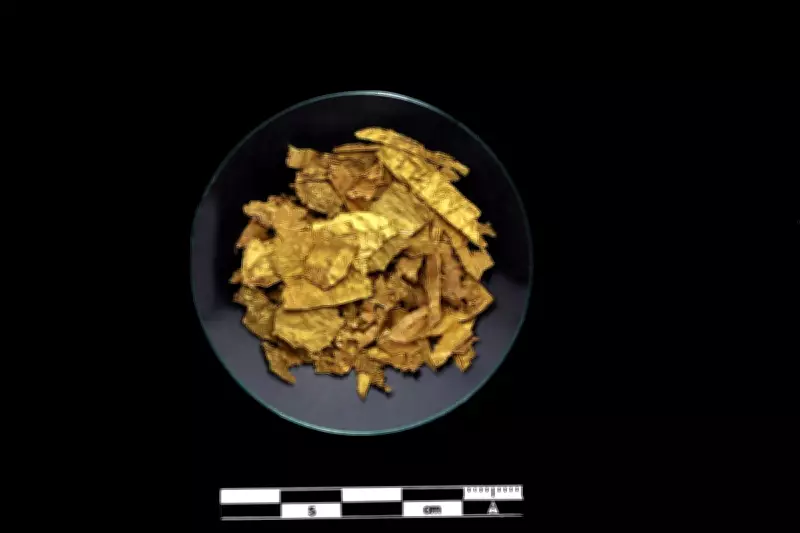
Physicists Accidentally Create Gold from Lead in Big Bang Simulation
In a stunning development that echoes the dreams of medieval alchemists, physicists conducting experiments to mimic the conditions immediately following the Big Bang have inadvertently transformed lead into gold. This unexpected breakthrough occurred at the ALICE experiment within the Large Hadron Collider in Switzerland, where scientists were colliding lead nuclei at velocities approaching the speed of light.
The Alchemical Dream Realised Through Modern Physics
For centuries, alchemists pursued the mythical goal of transmuting base metals like lead into precious gold. Modern science has long dismissed this as impossible through chemical means, recognising that lead and gold are distinct elements with atomic structures that cannot be altered by traditional chemistry. The fundamental difference lies in their proton count: a lead atom contains precisely three more protons than a gold atom.
This raises a compelling question: could gold be created by simply removing three protons from a lead atom? As the recent experiments demonstrate, the answer is yes—but achieving this requires extraordinary conditions far beyond any medieval laboratory.

The Mechanics of Proton Removal
Protons reside within an atom's nucleus and carry a positive electric charge. To extract them, an immensely powerful electric field is necessary—approximately one million times stronger than the fields that generate atmospheric lightning. The strong nuclear force that binds protons together operates over extremely short distances, demanding unprecedented energy to overcome.
The physicists achieved this by accelerating beams of lead nuclei to nearly the speed of light and directing them toward each other. In most collisions, the nuclei merely grazed past one another, interacting through electromagnetic forces rather than undergoing complete destruction.
The Critical Role of Near-Miss Collisions
During these near-miss encounters, the electric field between the rapidly passing lead nuclei becomes extraordinarily intense due to their proximity. This rapidly fluctuating field causes the nuclei to vibrate violently, occasionally ejecting protons. When exactly three protons are expelled from a lead nucleus, transmutation into gold occurs.
The ALICE team utilised sophisticated zero-degree calorimeters to detect and count the protons stripped from the lead nuclei. Although the gold nuclei themselves cannot be directly observed, their production is inferred from these measurements. The scientists estimate that approximately 89,000 gold nuclei are generated per second during the lead beam collisions.
Microscopic Yields and Unintended Consequences
The total quantity of gold produced is vanishingly small—around 29 trillionths of a gram—rendering it commercially insignificant. Moreover, the transmutation process introduces practical challenges for the experiments. Once a lead nucleus loses protons and becomes gold, it deviates from its optimal trajectory within the collider's vacuum beam pipe, eventually colliding with the walls within microseconds.
This gradual loss of beam intensity over time means that, for the researchers, gold production is more of a nuisance than a benefit. However, comprehending this accidental alchemy is crucial for interpreting experimental data and designing future, more advanced particle physics experiments.
Broader Implications and Elemental Byproducts
Beyond gold, the experiments also yielded other elements through proton loss: thallium (resulting from the removal of one proton from lead) and mercury (from the removal of two protons). These findings enhance our understanding of nuclear processes under extreme conditions, shedding light on the fundamental behaviours of matter.
This research, led by Professor Ulrik Egede of Monash University and originally published by The Conversation under a Creative Commons licence, underscores how cutting-edge physics can unexpectedly revive ancient quests. While the gold produced is negligible, the knowledge gained paves the way for deeper insights into the universe's earliest moments and the forces that shape elemental formation.