The Global Rise of the Risograph Printer
When Scottish-Italian designer Gabriella Marcella first operated a risograph printer, she experienced a profound creative awakening. "The process, the immediacy – it resonated," Marcella recalls. "A lot of my aesthetic comes from that machine." This reaction is shared by countless artists worldwide, leading Marcella to establish Riso Club, a non-profit initiative that now celebrates its 100th issue with an exhibition at Glasgow's Glue Factory Galleries.
What Is a Risograph?
Invented in Japan during the 1980s by Riso Kagaku, founded by businessman Noboru Hayama, the risograph printer resembles a photocopier but functions like a screenprinter. Designed for intuitive and affordable use, it employs soy inks to produce small print runs with a distinctive handmade quality. Over decades, risograph printing—often called "riso"—has become integral to zine culture, activism, and independent creative projects.
Marcella's journey began modestly. "I bought my first riso off eBay for about £200," she says. "My dad drove me to collect it from pensioners who used it for their grandsons' football gazettes." Her passion deepened while studying at New York's Pratt Institute, and upon returning to Glasgow, she launched Risotto Studio in 2012. The vivid colors and bold shapes characteristic of risographs defined her work for major clients like Stüssy, Apple, and Swatch.

Building a Worldwide Community
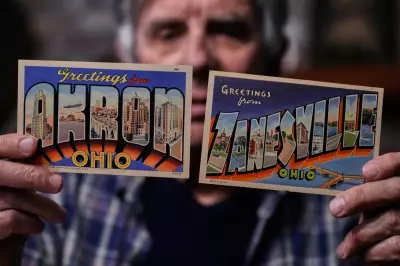
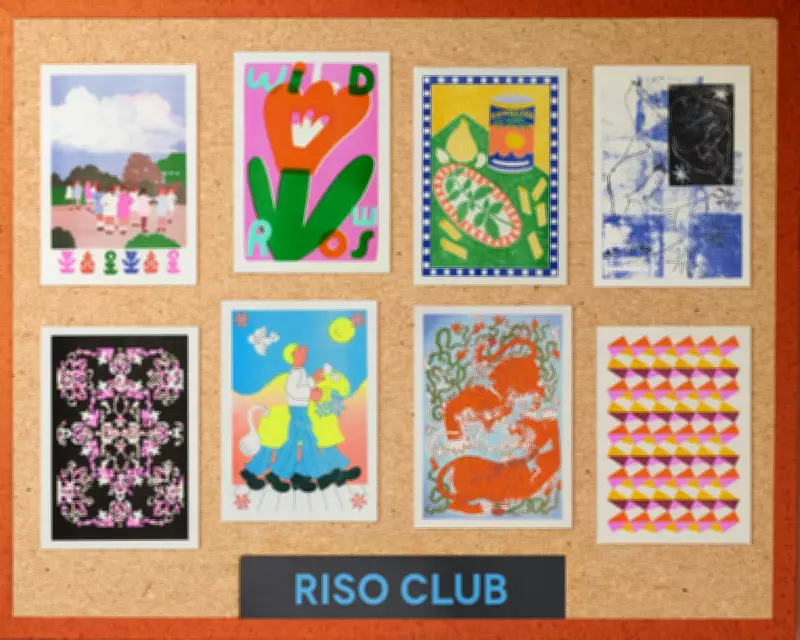
In 2017, Marcella founded Riso Club to promote artists globally, especially those dedicated to risograph printing. "I wanted to highlight places beyond London and New York," she explains. "There's a niche but global riso community I've connected with over the years." For an annual membership fee, participants receive monthly issues of four postcards from four different riso artists, each set representing a specific international city.
This approach has delivered art from diverse locations including Lille, Lima, Kyiv, and Damascus. Marcella emphasizes the tactile value of postcards: "Physical things land differently. A postcard through the door has weight, texture, and intimacy that digital communication lacks—especially in the social media age where we scroll past hundreds of images per minute."
Art Beyond Borders
Riso Club's postcards serve as cultural bridges, offering insights into cities through artists' perspectives rather than tourist stereotypes. Marcella notes that some locations carry significant political or diasporic weight, such as Kyiv and Damascus, aligning with the risograph's historical role as a tool for political and educational printing due to its speed and affordability.
Designer Mari Kinovych curated the Kyiv issue as a fundraiser for Razom for Ukraine, aiming to depict the city's vibrancy amid war. "I chose Anna Gavryliuk's piece with tank traps and flowers to show duality," Kinovych says. "My own illustration reflects the love and community felt during the war's second year."
For the Damascus issue, curator Kinda Ghannoum sought to counter typical media portrayals of Syria. "Each artist shared personal reflections and nostalgia," Ghannoum explains. "The results were even more beautiful than I imagined. We represented Damascus's spirit meaningfully."
Celebrating a Century of Issues
To mark Riso Club's 100th issue, Marcella curated a special edition featuring design icons like Memphis Group founder Nathalie Du Pasquier, artist Peter Shire, and architect Barbara Stauffacher Solomon. All 400 postcards are displayed in Glasgow, aiming to broaden appreciation for risograph art.
"I hope visitors see that design can be generous, accessible, and social," Marcella states. "Print can still connect people in a direct, everyday way." The Riso Club 100 exhibition runs from April 11 to 19 at the Glue Factory Galleries, with details available on risottostudio.com.