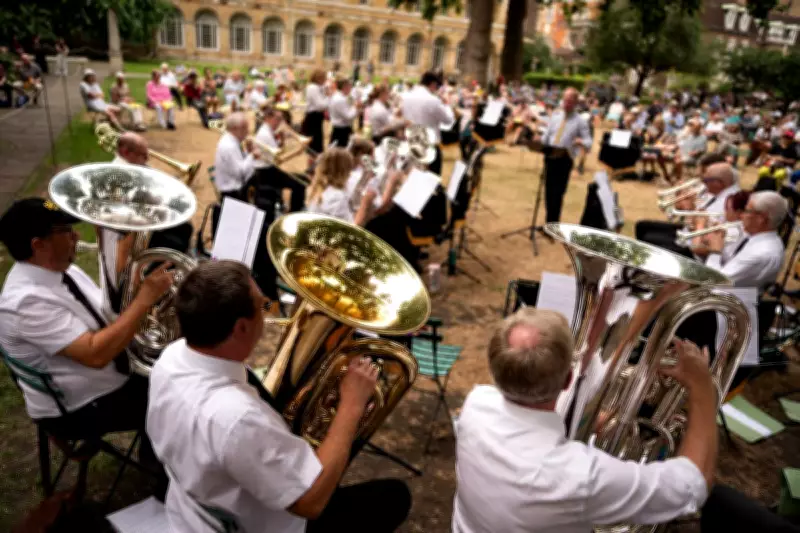
New government figures have ignited a fierce debate over arts funding priorities, revealing a stark disparity between support for opera and brass bands in the United Kingdom. Between 2022 and 2025, opera received a staggering £226 million in public funding, while brass bands were allocated just £31.5 million. This means opera secured over seven times more financial support than its brass band counterparts, leading to accusations of elitism and geographic unfairness in cultural investment.
Accusations of Snobbery and Regional Bias
The funding gap has prompted sharp criticism from politicians and industry representatives, who argue it reflects a deep-seated "snobbishness" and a "southern and metropolitan bias" within arts funding bodies. MP Esther McVey has been vocal in condemning the imbalance, stating that taxpayers' money should be distributed more equitably to reflect the diverse cultural landscape of the nation.
Brass Bands as a Vital Pipeline
Sarah Baumann, a spokesperson for Brass Bands England, emphasised that brass banding is far more widespread than often perceived, with strong roots in communities across the UK, particularly in northern and rural areas. She highlighted that these bands serve as a crucial "pipeline" for nurturing musicians who often progress to prestigious opera houses, suggesting that investment in brass bands ultimately benefits the entire music sector.

"This isn't just about fairness; it's about recognising the foundational role brass bands play in our cultural ecosystem," Baumann explained. "By underfunding them, we risk weakening the talent stream that feeds into higher-profile arts institutions, including opera."
Arts Council England's Defence
In response to the controversy, Arts Council England defended its funding strategy, asserting that it supports a wide range of creative activities and is committed to diversity in the arts. The council noted that it invests in Brass Bands England to help develop the sector, while acknowledging the challenging operating conditions faced by many arts organisations.
"We strive to balance our investments across different art forms and regions, but we operate within a constrained financial environment," a spokesperson said. "Our goal is to foster a vibrant arts scene that includes both traditional and community-based expressions."
Calls for Reform and Fair Distribution
The row has intensified calls for a thorough review of arts funding mechanisms to ensure a more balanced allocation of resources. Critics argue that the current system perpetuates historical biases, favouring high-art forms like opera over grassroots musical traditions such as brass bands, which have significant social and educational value.
As the debate continues, stakeholders are urging policymakers to reconsider how public funds are distributed, advocating for a model that better reflects the nation's cultural diversity and supports all forms of artistic expression equitably.