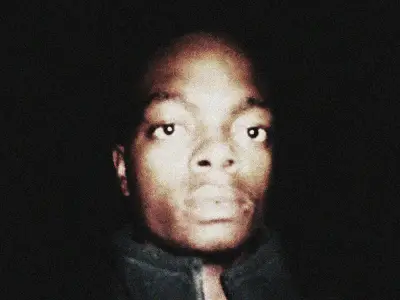
On Wednesday, exactly a week after twin earthquakes tore through Venezuela's northern coast, Israel Rivas stood outside Residencia La Gabarra, a collapsed 12-storey apartment block in Caraballeda. The 24-year-old mechanic and budding photographer had travelled 12 hours from San Félix, using money saved for a camera lens, to help. 'I couldn't eat well. I couldn't sleep well, knowing that my brothers and sisters from this country are dying, so I … came here and I'm doing the best I can,' he said.
Volunteer Mobilisation and International Aid
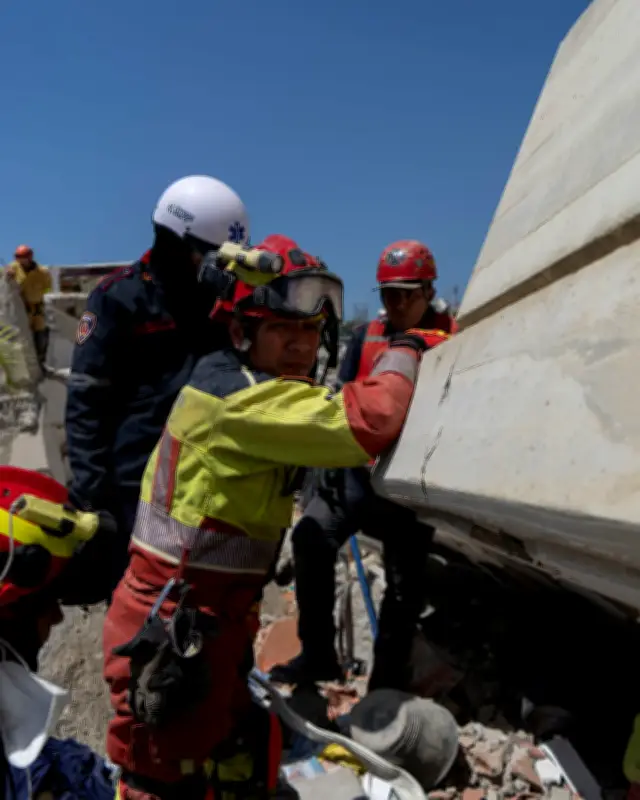
Rivas, a fluent English speaker, now works as an interpreter for the UK's International Search and Rescue team (UK ISAR), which includes firefighters from Merseyside, the West Midlands, and Wales. He roams the devastated streets of Caraballeda, a resort town east of La Guaira's capital, helping navigate a 'hellscape' of broken properties. 'It's a hard job. It's hard to see so many dead people around you. It's hard to say we can't recover the body because it is 10 floors down and we don't have the equipment,' he said. 'But that's one side of the coin, which is death. The other side of the coin is life. Coins are always flipping and we are always [hoping they land] on life.'
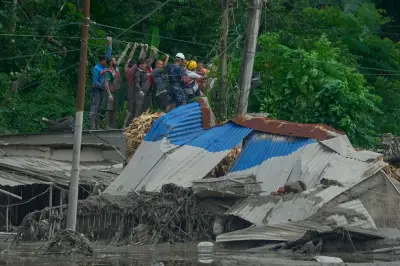
Rivas is one of thousands of Venezuelan volunteers who mobilised after the quakes, which struck in 39 seconds, causing widespread death and destruction. The official death toll stands at 2,595, but with 400 bodies reportedly delivered daily to La Guaira's morgue, that figure is expected to rise. At least 12,400 people have been injured, and satellite data suggests more than 58,000 buildings damaged or destroyed.

Apocalyptic Scene Along the Coast
Russ Gauden, UK ISAR's national coordinator and team leader in Venezuela, described the scene: 'Along the coastline what we're seeing is buildings of 20 storeys plus [that have] collapsed – pancake collapses, total collapses, where it's floor upon floor upon floor. Buildings that are leaning over. It's [such] an apocalyptic scene that you'd think you'd seen … a disaster film.'
A few hundred metres along Los Corales beach, one of Gauden's teams deployed life-scenting dogs and a seismic and acoustic listening device to confirm whether someone was alive under wreckage. Early Wednesday, they gathered around a rubble-filled swimming pool, seeking shade from the Caribbean sun. Tristan Bowen, a firefighter from south Wales, said: 'It's pretty extreme. I can only describe it as a war zone in terms of collapse.'
Hope Beyond the Golden Window
Bowen noted the 72-hour 'golden window' for finding survivors had closed but believed it was still possible to find people alive. Hours later, a 43-year-old security guard was pulled from the collapsed basement of a nearby shopping centre after eight days under rubble. 'People have survived many days beyond that [golden] window, but … it depends entirely on where they are within that structure,' Bowen said.
Rivas remained optimistic. 'It doesn't smell bad which means there are no dead bodies in there, [which means there is] a higher chance for them to be alive,' he said, as British and Ecuadorian searchers crawled into cramped tunnels and used a loudhailer to communicate with anyone trapped below.
Families Wait for News
A hundred metres away, at the remains of a neighbouring high-rise, Olivia Sandoval, 50, waited for news of her eight-year-old grandson Ronald, named after footballer Cristiano Ronaldo and baseball star Ronald Acuña. 'Ronald is such an intelligent, calm, respectful boy,' she said, breaking down. The boy had been playing with his cousins, Victoria, 10, and Leonardo, 8, when the building collapsed. Sandoval has knelt by the pool and in the rubble, begging for divine help. 'I just can't get my head around how such a monstrous thing could happen to these children,' she said.
Government Absence Fuels Anger
Sandoval and many other Venezuelans are struggling to comprehend the government's failure to aid them in the hours and days after the quakes. She has seen rescue teams from Brazil, Chile, El Salvador, and Peru, alongside Venezuelan volunteers, but the government has been largely missing. 'That's the saddest thing,' she said.

Outside the wreckage of Residencia Costa Brava, Adolfo Guedes, 56, expressed fury. His 23-year-old daughter, Alexandra, remains buried in the rubble. 'What would I say? That I curse the day this wretched revolution entered Venezuela. This is what ruined us,' he said of the Chavista movement. He and his wife Yaritza now sleep on a donated mattress, propped up by cinder blocks scavenged from their daughter's pulverised home.
Jesus David de Oliveira, a 27-year-old civil engineer, complained that Venezuelan soldiers hit the streets with machine guns instead of spades. 'As you can see, the international help is really all the help that we have,' he said. 'We are alone.'
Government Response Defended
At a press conference, acting president Delcy Rodríguez bristled at criticism, dismissing it as 'tendentious and offensive generalisations'. She vowed to work 'tirelessly, morning, noon, night for Venezuela' and defended the armed forces, noting one army commander worked at a camp for displaced people despite losing his entire family. 'We did everything in our power and we will continue to do everything in our power,' she said, showing WhatsApp messages on her phone she claimed demonstrated a swift response. 'They are carrying spades. They are pushing wheelbarrows,' she said of her troops.
Night Falls, Hope Persists
At La Gabarra, as night fell, Brazilian firefighters replaced the British team, sending a border collie named Megan into a crevice carved out of the building's facade. Ecuadorian searchers were sure their listening devices indicated a survivor. Capt Diego Assunção, a firefighter from São Paulo, said: 'They have detected movement. They have detected the sound of breathing – it might be a child or a younger person, or someone who is completely sheltered. This is enough to give us hope.'
Nearby, Olivia Sandoval sat alone in the shadows, keeping faith. 'It's the kids! It's the kids!' she said after a burst of activity around the pool misleadingly raised her hopes. But hours passed with no breakthrough as rescuers struggled to cut through steel rods. By daybreak, there was still no good news, but rescue teams and volunteers worked on.
On the collapsed side wall of Residencia Don Peppino, someone had scribbled a message for the authorities: 'Where the government is absent, the people abound.' The rubble below was littered with possessions: a blue toy car, a pink cot, a baby photo album, a children's purse with characters from Disney's Frozen, and a family card game called Fibber.