Iran launched drone and missile attacks on Bahrain and Kuwait on Sunday, responding to new US strikes on sites in southern Iran, escalating tensions and further undermining the fragile interim peace agreement between the two countries. The attacks prompted US President Donald Trump to threaten violence that would ensure Iran 'will no longer exist.'
Iranian Attacks and US Response
Tehran's attacks targeted Bahrain and Kuwait, with Kuwait's interior ministry reporting that two ballistic missiles were intercepted without injuries or damage. Bahrain's interior ministry stated that Iranian strikes damaged a residential building near the international airport, but no fatalities were reported. The Islamic Revolutionary Guard Corps (IRGC) claimed responsibility, warning that violating the ceasefire would lead to a 'complete halt' of ongoing negotiations.
Trump responded on social media, stating that a moment might come soon when he abandons talks and the US would 'militarily finish the job. If that happens, the Islamic Republic of Iran will no longer exist!' The latest violence was triggered by efforts to reopen the Strait of Hormuz to all shipping without Iran's direct oversight. The strategically critical waterway, which carried a fifth of the world's oil and liquid gas supplies before the war, has long been considered an international passageway.
Strait of Hormuz Dispute
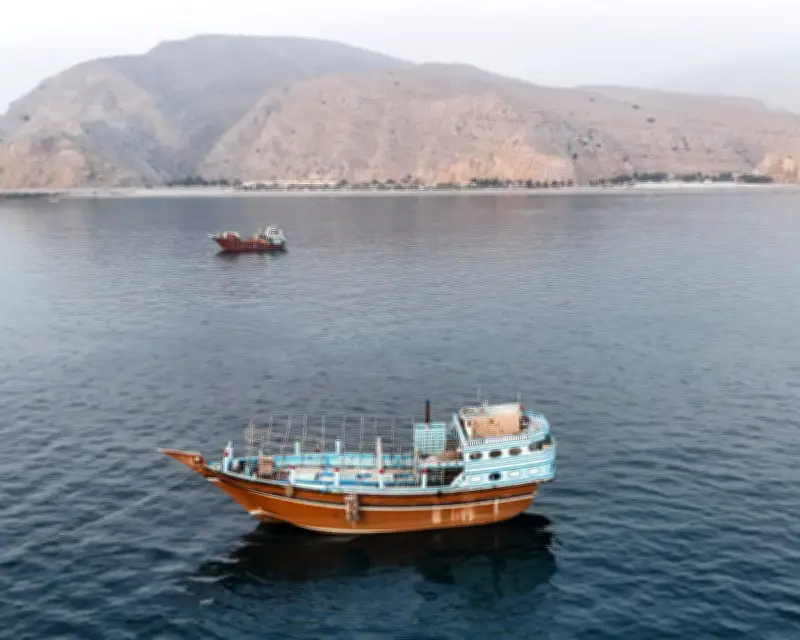
US Central Command said its strikes were 'in direct response to continued Iranian aggression against commercial shipping' and targeted Iranian military surveillance, communications, air defence, drone storage, and mine-laying facilities. Washington has been promoting a southern lane along the coast of Oman, while Tehran, which ultimately aims to charge fees for use of the strait, wants ships to use a northern route through its waters and under its control.
Hundreds of vessels, including tankers laden with oil, have been blockaded inside the Gulf by the closure of the strait since war broke out. Some have chanced the passage through the past two weeks, leading oil prices to drop to close to prewar levels and bringing relief to economies around the world. The US military accused Iran of violating the ceasefire on Saturday by attacking the Panama-flagged tanker Kiku, which carried crude oil for Qatar's state-run energy company. According to ship-tracking websites, the Kiku appeared to be attempting to use the southern corridor near the coast of Oman. A Singapore-flagged container ship was struck by an Iranian drone while transiting the same route last week.
Iran's Foreign Minister Abbas Araghchi restated Tehran's claim to sole control of the waterway during a state visit to Iraq on Sunday. He said in Baghdad: 'Any interference in this matter, any attempt to establish new or separate arrangements from those currently being carried out by the Islamic Republic of Iran, will only lead to further complications, delay the reopening of the strait of Hormuz, and increase the level of tension.' Observers say Iran is using its ability to threaten shipping in the strait not just as leverage in negotiations with the US, but to intimidate neighbouring countries and establish a more dominant role in the region.
Diplomatic Efforts and Domestic Pressures
Mediators from Qatar and Pakistan successfully brought representatives of Washington and Tehran together in Switzerland earlier this month but have been unable to bridge wide gaps on contentious issues such as the future of the Strait of Hormuz, sanctions relief for Tehran, and the future of Iran's nuclear programme. Under the memorandum of understanding signed earlier this month, the two countries have 60 days to work out the details before signing a final agreement. Leaders in Tehran and Washington face domestic political pressures to avoid a return to conflict and appear committed to a ceasefire for now, despite frequent bellicose rhetoric.
Bahrain's foreign ministry denounced the attacks, calling them 'a dangerous escalation that reveals that what Tehran is doing is not a passing act, nor an isolated incident, but rather a deliberate approach and a systematic pattern of repeated aggression against the sovereignty of the kingdom, and the security of its citizens and residents.' Bahrain is home to the US Navy's 5th Fleet, whose base there came under repeated attack during the war.
Violence in Lebanon
Violence has also continued in Lebanon, further threatening the agreement between Iran and the US to end their own conflict. Israeli military officials said a soldier was killed on Sunday when soldiers encountered a 'Hezbollah terrorist after entering a suspicious structure in the area of Deir Seryan in southern Lebanon.' The Lebanese state news agency reported a new Israeli attack targeting the outskirts of Deir Seryan and Taybeh in southern Lebanon. The fresh clashes come two days after Israel and Lebanon signed an agreement aimed at ending hostilities. The deal calls for Israeli forces to begin an initial withdrawal from the south and their replacement by the Lebanese armed forces, who will assume responsibility for local security and dismantling Hezbollah's military infrastructure. The clashes further undermine prospects for any durable peace agreement between Iran and the US, which Tehran has insisted is dependent on a ceasefire in Lebanon. Israel, which is not a party to the US deal with Iran, invaded southern Lebanon in March in a new offensive against Hezbollah, which is supported by Iran. Israel and Lebanon have repeatedly agreed to US-brokered ceasefires, the latest on Friday, but these have had only limited effect, with Israel insisting it will not withdraw from Lebanese territory it has seized, and Hezbollah repeatedly rejecting calls to give up its arms as long as Israeli troops remain in place.