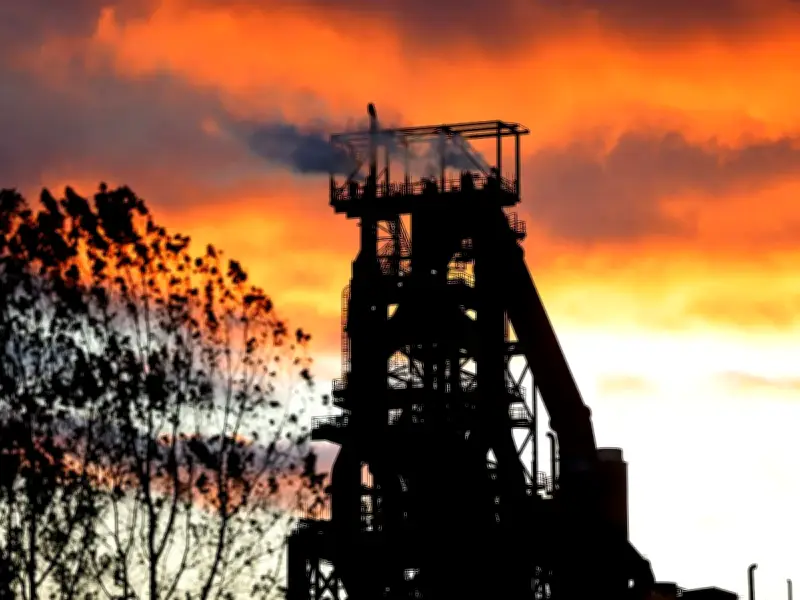
Tata Steel is on trial at Swansea Crown Court, accused of health and safety failings at its Port Talbot works after two workers were taken to hospital following an incident involving toxic gas from a blast furnace.
The prosecution follows an incident when toxic gas from a blast furnace was vented into an area of the plant where staff and contractors were working. Tata denies two counts of failing in its legal duty to ensure the health, safety and welfare of employees and others. The trial is expected to last two weeks.
Incident on February 14 2022
Rebecca Griffiths, prosecuting for the Health and Safety Executive, told the jury the case concerned an incident on February 14, 2022, when the blast furnaces at Port Talbot were still in operation. On that day, toxic gases from blast furnace number four were vented into the air as part of an emergency procedure. Fifteen employees and contractors were working in the area. The gases from a blast furnace are toxic and typically contain between 20 per cent carbon monoxide.
As a result of the venting, two Tata employees had to be given oxygen before being taken to hospital for checks. The prosecution case is that the toxic gas should never have been vented into the location where it was, and that Tata failed to carry out a proper risk assessment.
Background and emergency procedure
The background to the events was an incident at the plant in 2007 when one of the blowers pushing heated air from the stoves into the bottom of a blast furnace failed. The drop in pressure allowed gases to flow out of the furnace and back down the pipe, leading to "significant damage" to the blower.
Following this incident, an emergency procedure was put in place to cover future failures with a blower. It involved opening a "snort valve" to vent gases into the atmosphere until the pressure in the pipe dropped sufficiently to allow a hot gas isolation valve to be shut and the flow of gases out of the furnace to be stopped completely. Typically, it would take around three minutes of venting via the snort valve to reduce the pressure sufficiently to allow the isolation valve to fully close.
In February 2022, a blower linked to blast furnace four had been out of action for a time while it was upgraded, and it came back online on February 11. Two days later, the blower failed and the emergency procedure was initiated, involving venting gas through the snort valve. On that occasion, nobody was working in the area around the valve.
Exposure levels and evacuation
The blower was brought back online, but at 9.30pm on February 14 it failed again, leading to the emergency procedure being activated. On this occasion, there were 15 men working in the area: two Tata employees and 13 men working for York Linings who were working on one of the "stoves" used to heat the air going into the blast furnace.
All 15 men were wearing personal gas monitors. The monitors on the Tata employees were triggered, and the employees radioed the control room and were told to evacuate the area. The Tata employees did not leave immediately but stayed to ensure all the contractors, eight of whom were working inside the giant stove, got out.
The volume of the vented gas was enough to fill an Olympic-sized swimming pool. The safe short-term limit for exposure to carbon monoxide in the air is 100 parts-per-million, but the personal gas monitors worn by the two workers recorded levels of 1,408 and 1,860 parts-per-million.
The two Tata employees were subsequently given oxygen on site before being taken to hospital for check-ups, and "thankfully they recovered". The incident was reported to the Health and Safety Executive, and an investigation was launched.
Agreed points and legal arguments
The barrister told the jury there were points upon which prosecution and defence agree: that the snort valve was originally designed to vent clean air; that the snort valve was added to the emergency procedure in 2008; that gases from a blast furnace are toxic; that on February 14 gases were released and people were exposed to them; that the effect on the workers was minimal but could have been greater had they been closer to the snort valve; and that following the incident the emergency procedure was amended so gases were vented through a "bleeder" in a different location rather than through the snort valve.
The question for the jury is whether Tata failed in its duties to ensure the safety of staff and others. Tata had a duty to take "reasonably practicable actions" to ensure safety. The prosecution case is that the firm failed to carry out a proper risk assessment into the use of the snort valve to vent gases and failed to assess whether there were alternatives, and that the snort valve should never have been used in the way it was used at the plant.
The barrister said: "The prosecution says Tata was wrong to allow toxic gases to be released in an area where people could have been working, even if it only was in an emergency procedure. Tata only had to take reasonably practicable action. The prosecution says there absolutely was a realistic alternative for venting gases."
Following the events of Valentine's Day 2022, Tata changed its emergency procedures so the snort valve was no longer used.
The barrister told jurors that in regulatory offences such as the ones they are considering, there is a burden of proof on both parties. It is for the prosecution to make jurors sure of the alleged failings to the criminal standard, and then, if they are sure "beyond reasonable doubt", it is for the defence to try to prove on the balance of probabilities that it was not reasonably practicable for the firm to do more than it had done to meet its legal duties.
The prosecution does not have to prove harm was caused to the men in the plant, and most health and safety prosecutions are brought on risk of harm. The barrister told the jury: "You must be careful not to judge with hindsight. Was the risk reasonably foreseeable before February 14? The prosecution say it was reasonably foreseeable, because the risk would have been obvious if a proper risk assessment had been carried out."
Tata Steel denies two counts of failing to ensure health, safety and welfare - one covering employees and one covering other workers - and the trial continues.