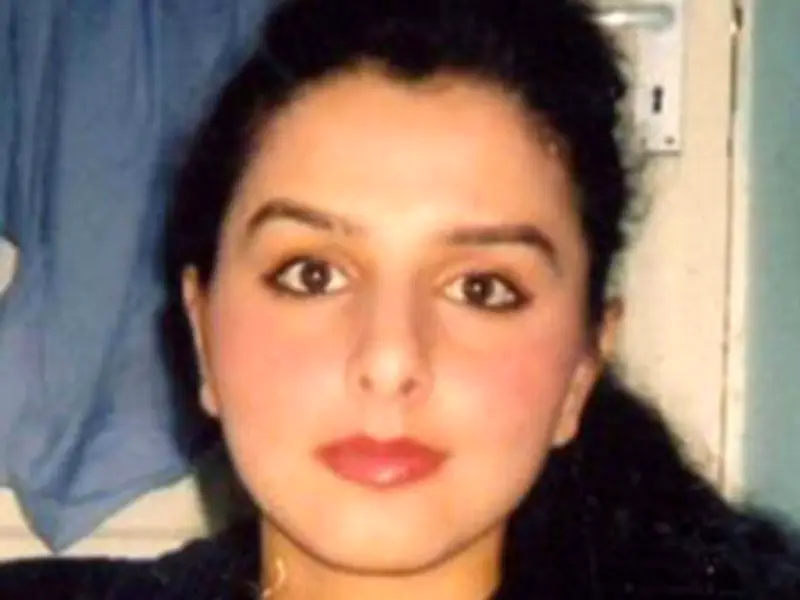
Twenty years after Banaz Mahmod was tortured and strangled in an honour killing orchestrated by her own father and uncle, her sister Bekhal has spoken out, revealing she still lives in fear for her safety.
Banaz was just 20 when she was killed in the living room of her parents' home in Mitcham, South London. Her father, Mahmod Babakir Mahmod, and uncle, Ari Agha Mahmod, ordered the murder because they believed she had brought shame on the family and that killing her would restore their honour within the Kurdish community.
Witness Protection
Bekhal bravely testified in court against her family, leading to their imprisonment. However, she has lived in witness protection ever since. In an extraordinary interview, concealing her identity, she spoke about the impact of facing her family in court.
Speaking on Zara McDermott's Truth Be Told show, Bekhal said: "I feared for my life like I had never before. But every time I wanted to back out, I thought of Banaz. She is not here. Who is defending her? I couldn't sit there and live with myself knowing that Banaz's life was taken and I knew who was responsible."
Living in witness protection has been difficult. "My life is very isolated," she said. "Hearing people talking in my language makes me tense up. It makes me abandon my shopping. I look at people walking down the street, two, three generations together, and I envy that. I don't have that. It's, yeah, it's not easy."
She added: "I can't even see Banaz in my dreams. I don't dream of her. I'm always having nightmares. Always. Because of what they did to her. That puts the fear in you to never be too comfortable to let your guard down."
Early Life
Bekhal and her sister grew up in Iraq, where they were not allowed opinions, answering back was not tolerated, and there were restrictions on TV and clothes. Bekhal described her father's role simply: "The punisher. That's literally how I put it. Can I say this? Am I going to get into trouble? Am I going to get slapped, spit on? Anything that you see could be used to hit you. Ladle spoon, spatula, belt, hose. And Banaz went through the same."
Bekhal was forced to undergo female genital mutilation at age eight before the family moved to the UK in February 1998 when she was 14. Her family tried to force her into marriage with her cousin, leading her to run away. This resulted in her brother allegedly beating her violently with a dumbbell.
Banaz Mahmod
At just 17, Banaz was ordered into an arranged marriage with a man 10 years older. She was treated like a "slave," routinely beaten and raped. Bekhal recalled the last time she saw her sister: "Not good. Her face was drawn in. You could see her cheekbones sticking out. Her eye sockets was sunk in. She looked drained. She looked like she was being held against her will, basically."
Banaz left her husband and fell in love with Rahmat Sulemani. Despite her new relationship, she went to the police five times, fearing her family wanted her dead.
Murder
Bekhal said her family met to discuss the "shame" Banaz had brought on the family name. "They marked who was going to do who, who had what part to play, who was going to get paid, they did what they did to her. They strangled her, they did horrific things to her and they took her life in my family's home. The people who carried it out actually did the actions of the horrific things they done to Banaz was immediate cousins and second cousins and the people who pulled it together was my dad and my uncle. The very same people that were meant to protect her, they left home willing to let these people come into the house and take her and her life, stuff her into a suitcase and take her away in a hired car miles away to be buried in an abandoned home like she was trash that just got taken out."
The honour killing happened on January 24, 2006. The hired killer was Mohamad Hama. Banaz suffered two-and-a-half hours of unimaginable suffering, enduring sexual violence. Hama boasted about raping her before stamping on her neck to "get her soul out." After being raped and strangled, Hama and her cousins, Mohammed Saleh Ali and Omar Hussain, drove to Birmingham to bury the body in a pit, where it lay undiscovered for three months.
Banaz's partner Rahmat, who tragically took his own life in 2016, alerted police to her disappearance, leading to the father and uncle's arrest.
Sentencing
The father was found guilty of murder and given life with a minimum of 20 years. The uncle received life with a minimum of 23 years. Hama was sentenced to at least 17 years after admitting murder. The cousins, Hussain and Saleh Ali, were found guilty and given minimum sentences of 22 and 21 years.
Bekhal said: "I wish it was more. I wish they wouldn't see a day of light outside the prison again because that's how I feel. I feel like I'm in a prison. I'm left with the grief I feel for my sister."
Banaz's Law
Bekhal is proposing Banaz's Law in the UK to recognise "honour" abuse as a statutory aggravating factor in sentencing. She believes there needs to be more education for emergency services to better identify abuse in different cultures.
Bekhal, now under a new identity, added: "I am calling for change to ensure that accountability for perpetrators is put in place by increasing the punishment they receive so that people like my uncle and my dad can get longer time."