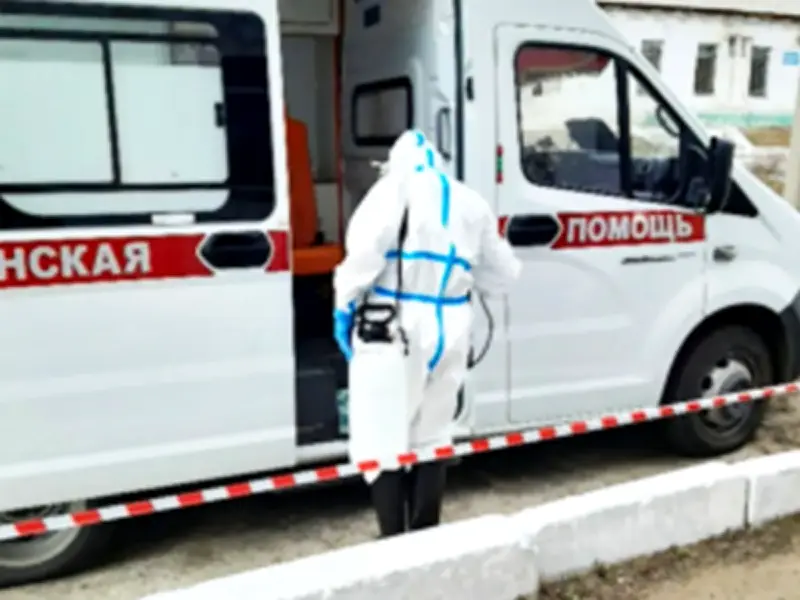
Nearly 200 people have been placed under medical surveillance in Russia after a researcher died from a plague infection following a laboratory accident. The 27-year-old employee at an anti-plague research institute in Irkutsk, a major city in southern Russia, died after being hospitalised on September 29 with severe pneumonia of "unknown origin".
Researcher's death triggers mass monitoring
Local media reported that Darya Shipilova may have been infected when she broke a test tube containing the pathogen at the Anti-Plague Research Institute in Shelekhov. Authorities responded by ordering mass medical surveillance of people who may have been in contact with her.
Rospotrebnadzor, Russia's public health watchdog, said on Sunday that the employee was diagnosed with "pneumonia of unknown etiology" before her death. They added that, despite the lengths taken to ensure the sickness would not spread, Irkutsk remains in a stable sanitary and epidemiological situation.
Hospitals closed and travel warnings issued
Other local outlets have said several hospitals in the city have reportedly been closed for a three-week quarantine. Citing a source, the Kyiv Independent reports that doctors in Irkutsk are "openly talking about plague", although there is still no clarification on what type of plague it could be.
Officials in Baykalsk urged residents on October 3 to temporarily avoid travelling to Shelekhov. The warning read: "Due to unofficial information about a confirmed case of plague in a person in the city of Shelekhov, we ask you to limit visits to Shelekhov and nearby settlements until the circumstances surrounding this threat are clarified." The warning was deleted a couple of hours after it was issued.
Official response and plague types
Irkutsk governor Igor Kobzev said: "Preventive measures are being carried out in the region under the strict supervision of Rospotrebnadzor." He added: "No microorganisms linked to the employee's professional duties were detected in samples taken from the patient. No reports of infectious diseases have been recorded among institute staff over the past 10 days. All individuals who had contact with the patient have been identified, examined, and placed under medical observation involving daily laboratory testing."
There are multiple types of plague, all caused by the Yersinia Pestis bacteria, including bubonic, septicemic, and pneumonic. Bubonic plague infects the lymphatic system and is spread through flea bites, while septicemic plague infects the blood. Pneumonic plague infects the lungs and can spread person-to-person via respiratory droplets. Each strain is fatal without treatment, though antibiotics can be effective if administered promptly. Cases are rare, with 3,248 recorded worldwide between 2010 and 2015, and 584 deaths in the same period.