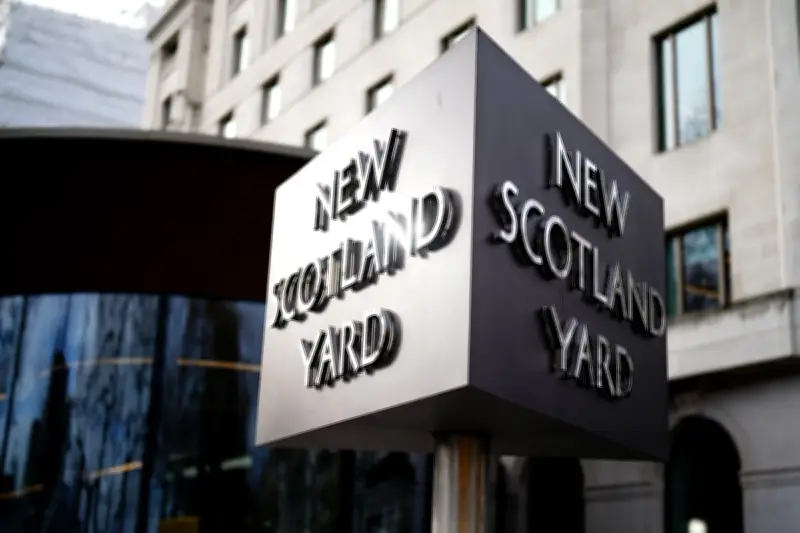
The Metropolitan Police has been accused of failing in its legal duty to victims of human trafficking at the hands of billionaire Harrods owner Mohamed Al Fayed.
At least five survivors have been confirmed by the Home Office as victims of modern slavery. These survivors have received positive conclusive grounds decisions from the National Referral Mechanism (NRM), the UK’s official framework for identifying victims of modern slavery, including human trafficking, forced labour and servitude.
The reporting framework allows victims to receive the right support and provides the Government with vital data about modern slavery in the UK.
Statutory duty to refer
Statutory first responders, including the police, Border Force, the National Crime Agency and local authorities, must refer to the NRM all children and consenting adults they have reasonable grounds to believe may be a victim of modern slavery. They also have a duty to notify the Home Office of these cases anonymously where an adult does not consent to being referred.
Certain non-governmental organisations (NGOs) like the Salvation Army, Barnardo’s, the Refugee Council and the anti-slavery charity Unseen are also able to make referrals as non-statutory first responders, but are not under the same legal duties.
Four survivors, who have all been confirmed as victims of modern slavery, told the Press Association the Met failed in their legal duty to offer them a referral to the NRM when they came forward. Instead, they made self-initiated referrals through the NGO Unseen.
Survivors' accounts
The survivors believe the Met did not offer referrals to anyone who came forward about Al Fayed until April 2026. It is understood the Met believes there is no automatic requirement for them to submit a referral for offences that occurred prior to the implementation of the NRM in April 2009 and the Modern Slavery Act 2015, but that referrals can be submitted. However, the Home Office views the historical nature of the alleged exploitation as irrelevant for notification and referral purposes.
More than 400 allegations of sexual misconduct have been made against Al Fayed, dating between 1977 and 2014, including sexual assault, rape, sexual exploitation and human trafficking. The Met are investigating at least 156 victims who contacted them directly, including 21 who came forward before Al Fayed’s death in 2023 at the age of 94.
The investigation, known as Operation Cornpoppy, was launched in November 2024 and is looking at people who may have facilitated or enabled Al Fayed’s crimes. Seven people have been questioned under caution. This includes four women in their 40s, 50s, 60s and 80s, and three men, one in his 60s, one in his 80s, and one of unknown age.
Legal and procedural concerns
On April 29, 2026, it was reported by the BBC that Rachel Louw had received a conclusive grounds decision that she had been a victim of modern slavery after reporting abuse suffered at the hands of Al Fayed and his brother Salah. Ms Louw said she would not have been able to go through with the process without the support she received from an advocacy group for survivors of Al Fayed called No One Above, who worked with Unseen to make the referral. Since then, all four members of No One Above have also received positive conclusive grounds decisions after self-initiating referrals through Unseen.
Margo, a pseudonym, was a domestic worker for the Al Fayed family after the 2010 sale of Harrods. She reported her experience to the police in 2024 and the Met did not offer her a referral to the NRM at the time. Margo told PA that on the same day the BBC article about Ms Louw receiving her conclusive grounds decision was published, the Met Police contacted her to let her know they believe she “meets the criteria” to be referred to the NRM and asking for her consent to do so. However, she was already going through the referral process via Unseen. She received a positive conclusive grounds decision that she was a victim of human trafficking in July. The Met have been “reactive as opposed to proactive” throughout the whole investigation, Margo said.
Isabella, also a pseudonym, worked in the chairman’s office at Harrods in 2001, where she was trafficked. She also reported her experience to the police in 2024. The Met have not offered her a referral to the NRM, despite telling her in 2025 that her circumstances fell under the definition of trafficking. After self-initiating a NRM referral through Unseen, Isabella received a conclusive grounds decision from the Home Office in May, identifying her as a victim of trafficking.
Reflecting on the fact the Met are now contacting survivors about referring them to the NRM, she said: “I think the sequence matters. Survivors had to force the state to recognise trafficking in a case the Met now says had trafficking always at its heart. Referring suspected victims to the NRM is a statutory duty, it’s not optional. That duty is triggered the moment that trafficking is suspected, not when it’s proved… The legal duty is that it should be made promptly, and the threshold is low: reasonable grounds to suspect, no definitive proof needed.”
Elizabeth, also a pseudonym, was a Harrods employee who was selected for abuse off the shop floor. She came forward and reported her experience to police when Operation Cornpoppy was launched. The Met did not offer her a referral to the NRM, but she also self-initiated a referral via Unseen and received her positive conclusive grounds decision in May. Elizabeth told PA there is a “very good reason” the police are required by law to identify victims of human trafficking. She said: “It’s how we recognise the prevalence of this very, very serious crime in the UK. To not comply with that duty is a very serious issue.”
She said there has been “some miscommunication” from the Met that their duty to offer a referral does not apply if it is a historical case, adding: “That’s not true – it’s very clear in the law.” Elizabeth said: “It’s a very simple, but very important thing that the police are supposed to do, they’re supposed to identify victims of trafficking, and they’re not doing it.”
Justine, also a pseudonym, worked at Harrods for more than three years in the 90s, and was trafficked during this time. She told PA the Met Police did not offer her referral to the NRM when she reported her experience in 2018. After self-referring via Unseen, she received a positive conclusive grounds decision in June. “The Met had a duty to refer all of us that have been reporting to them about this,” Justine said.
Expert and official responses
The former head of the Met’s own anti-trafficking unit, Phil Brewer, told PA he had never seen any guidance or policy that backs up the Met’s position. He said the test for human trafficking for the NRM has three core legal elements: act (recruitment, transportation etc), means (threat of force, coercion etc) and purpose of exploitation (sexual exploitation, forced labour etc). Mr Brewer said: “There’s no caveat of, ‘if it happened in the UK, was there legislation in place?’, which is what the Met’s suggesting. That’s not right.” He added that regardless of whether it was a legal obligation, the Met should have been referring these victims to the NRM anyway. “For me, it just seems such a simple thing to do that would give the survivors reassurance that they’re being listened to and believed,” he said.
Independent Anti-Slavery Commissioner Eleanor Lyons told PA: “Victims of sexual abuse and human trafficking have endured horrific exploitation at the hands of their abusers. The impact can be profound and long lasting, affecting every aspect of a person’s life for years to come. These victims should be offered support at any stage in their recovery journey. Statutory first responder organisations should refer these victims to the Government’s National Referral Mechanism, which is designed to provide care and identify them as victims of modern slavery and trafficking. We must do everything in our power to provide protections for victims of exploitation and hold the perpetrators of this crime to account.”
The Met Police has been contacted for comment. Andy Day, the gold commander of Operation Cornpoppy, said in a letter to survivors on August 11: “Work continues in relation to potential National Referral Mechanism referrals. The investigation team is progressing this work and will continue to make contact where appropriate. If you believe this may apply to you and you have not yet heard from the team, please get in touch.”
A Met Police spokesperson said in June: “Specialist detectives continue to lead one of the Met’s largest and most complex investigations. Four suspects have been interviewed under caution so far in our determination to bring anyone who is suspected to have played a part in Mohamed Al Fayed’s offending to justice. To date, 156 victims have come forward and reported allegations of sexual assault, rape, sexual exploitation and human trafficking. Over the past 18 months, officers have taken detailed accounts from victims and witnesses to build a comprehensive picture of the alleged offending. The victims are at the heart of our investigation and it remains our priority to communicate with them clearly and meaningfully as the investigation progresses. The most recent update was shared in the form of a letter on Thursday June 11 with all 156 victims.”