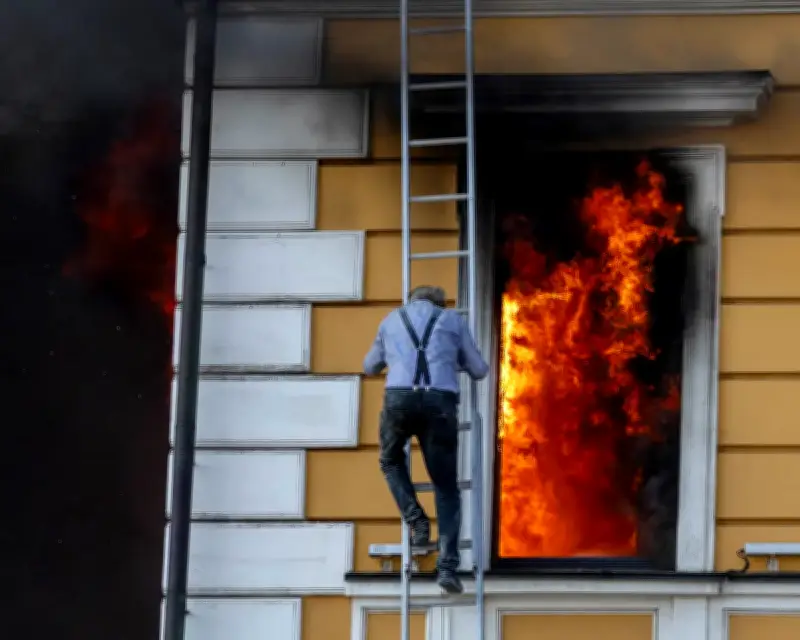
During a Russian drone strike on Kyiv, Diana Berg found herself laughing in front of a locked basement door, having run into the first residential building she could reach while on her way to buy curtains. She had not checked for an air-raid alert before leaving home, but as explosions sounded overhead, she continued her errand, later returning to the shop to purchase the curtains she wanted.
A City Under Attack
Berg, a Ukrainian artist and writer from Mariupol, described how the rhythm of war in Kyiv had changed after a month away: attacks now came by day, and drones and smoke had become part of the daytime soundscape. The curtain shop, an international chain, was closed during the raid, unlike many Ukrainian-owned stores, so she returned the next day to buy them.
After hanging the new curtains, Berg realised they also hid some of the war from her sofa: the flashes of air defence, the smoke, and the events outside. She acknowledged that the curtains did not make the war safer, only slightly harder to see.
Small Acts of Normalcy
Berg reflected on the strange logic of wartime living. In January 2022, her husband bought an expensive coffee machine in Mariupol, tired of living in fear. Since the full-scale invasion, he has bought a television, an electronic piano, a monitor, a washing machine, and a dryer. They do not invest in big renovations, as spending on a place a missile could destroy feels insane, but small things keep sneaking in.
She has rebuilt a bookcase full of books after losing her collection in Mariupol, and the family now has four cats, two from Mariupol and two adopted during the war. One cat, chosen in 2023, can barely see, hear, or walk after an accident.
Loss and Fear
Last week, a building at her husband's workplace was hit. He was in a different building, but the fear was palpable. On Instagram, Berg saw a post from a soldier at the front showing footage of the site: burnt-out cars and the news that his wife, who worked with her husband, had been killed. The soldier had bought a new house and car, but she was inside when the strike hit.
During attacks, Berg and her family have a scale of urgency: ballistic missiles mean the bathroom, cruise missiles allow finishing coffee, and drones take the longest. She wrote her column from the bathroom during an alert, with her four cats, watching live footage of the National Academy of Sciences building in central Kyiv on fire.
Resilience and the Here and Now
Berg finds the word "resilience" difficult. It sounds noble, but it feels less noble in reality. The curtains hide a little of the war, and she feels guilty for shutting her eyes to the horror, but it is more about refusing to let the war make every decision. The curtains are hanging now, making the room warmer, and she plans to paint the bathroom walls next.