Ten years after a wave of 'killer clowns' swept across the United States and beyond, the phenomenon has left a legacy of fear, copycat incidents, and even tragedy. What began as a marketing stunt for a low-budget horror film in 2016 spiraled into a global social contagion, with sightings reported in multiple states and countries.
The Origin: A Viral Marketing Stunt
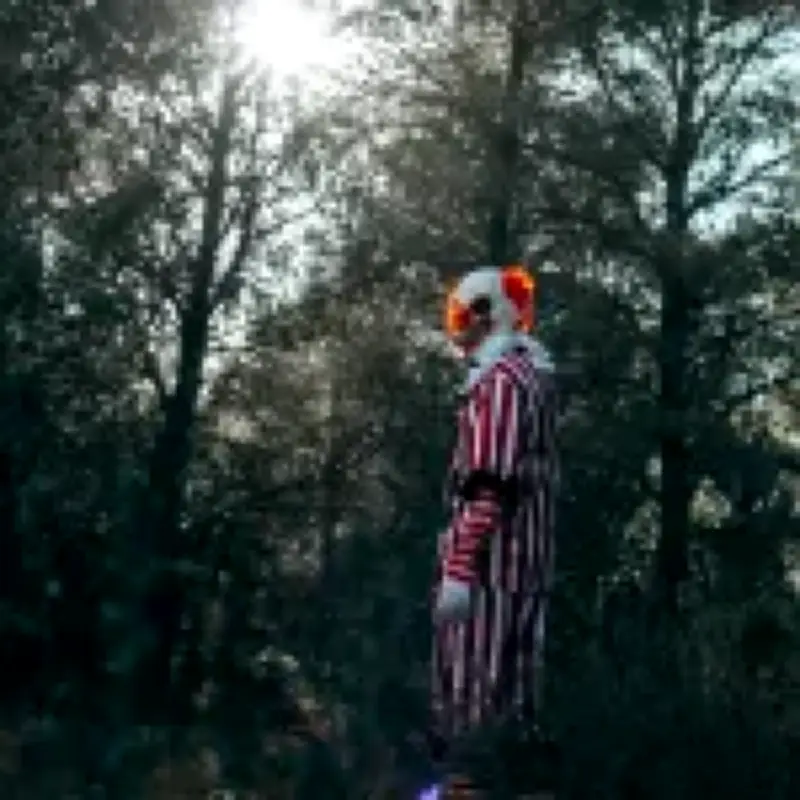
In August 2016, in Green Bay, Wisconsin, a man dressed as a tattered clown with white face paint and four balloons was captured on CCTV at 2am under a bridge. The grainy images went viral on Facebook and were picked up by Fox News and USA Today. The clown's name was Gags, and days later it was revealed to be a promotional stunt for the indie horror film 'Gags The Clown.' The movie bombed upon its release in 2018, but the stunt had already ignited a wave of copycat sightings.
From Pranks to Tragedy
Children in several states reported being approached by clowns trying to lure them into woods. In Winston-Salem, North Carolina, a clown offered children treats before being chased by police. In Pennsylvania, the trend turned fatal when 16-year-old Christian Torres was stabbed to death after an altercation over a clown mask; Avery Valentin-Bair, 29, was imprisoned for his murder.
As hysteria grew, author Stephen King, creator of the iconic clown Pennywise, called for calm on Twitter in October 2016: 'Hey, guys, time to cool the clown hysteria—most of em are good, cheer up the kiddies, make people laugh.'
The UK Experience
The craze crossed the Atlantic, with sightings reported across the UK. In Kidlington, Oxfordshire, a ten-year-old was chased by a man with a baseball bat dressed as a clown. Thames Valley Police were called to 14 incidents in 24 hours across Bracknell, Milton Keynes, Abingdon and Chesham. In County Durham, four children were followed to school by a clown with a realistic plastic machete, prompting local authorities to call for a Halloween ban on clown costumes.
Concerned mother Charlene Paterson told the BBC: 'It's general fear, not just in her [daughter] but in all of her friends and everybody else in the high school. Who's behind the masks? You don't know. Nobody knows. You don't know if it's a 15-year-old that's looking for a giggle or a 30-year-old man who's looking to do something far, far different.'
Why Clowns Terrify Us
Dr. Cecilia Sayad, a senior lecturer in film at the University of Kent, explains the fear: 'The main reason horror-film clowns are scary is, of course, because they perform evil act. Art, from the movie franchise, Terrifier, for instance, is outrageously and disgustingly violent.' She notes that clowns are 'hard to categorise: they are adult-sized but behave like children. Their bodies are human-like, but their exaggerated features are rather unnatural, even fantastic.'
In 2017, the UK saw its first clown jail sentence when 18-year-old Michael March was jailed for six months after brandishing a foot-long axe at a pregnant woman in South Shields as a Halloween prank. Commander Julian Bennett from the Met Police said: 'We are currently assessing a small number of reported 'killer clown' incidents in London, three of which meet the threshold of a criminal offence... I would urge those who are causing fear and alarm to carefully consider the impact their actions have on others.'
Recent Incidents and Ongoing Fear
In 2021, the Scottish village of Skelmorlie saw its own clown, Cole Deimos, appearing at Halloween and taunting locals with red balloons and cryptic clues, leaving residents divided. In the US, earlier this month, Illinois State Police arrested a 15-year-old boy in connection with the fatal stabbing of an elderly man in East St. Louis, after the teenager, dressed in a clown outfit, approached a Ring camera whispering 'I'm looking for you.'
What started as a creative movie promotion has evolved into a recurring source of real-world fear and violence, a decade on.