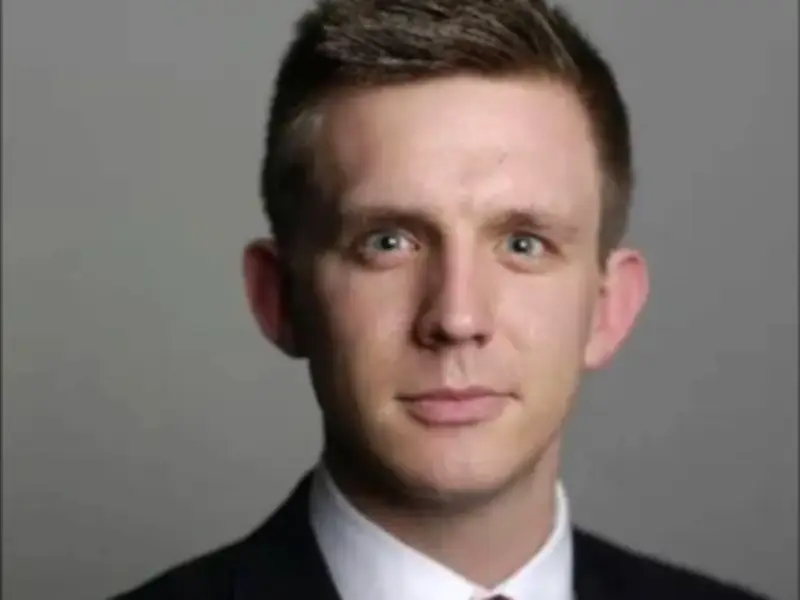
A Financial Times journalist died in Sri Lanka after a crocodile attacked him while he was washing his hands at a lagoon during a holiday with friends.
The incident happened almost exactly nine years ago, in September 2017. Witnesses said Paul McClean had wandered away from his friends and entered waters known for harbouring crocodiles. They described how he was dragged under while washing his hands, desperately waving his arms above the surface before disappearing beneath the water at a lagoon called Crocodile Rock, near Arugam Bay.
Victim's background and career
McClean, aged 25, was from Surrey, roughly 90 minutes southwest of London, and was an Oxford University graduate. The British national achieved first-class honours in French at Oxford in 2015 before joining the Financial Times that same year.
At the publication, he reported on Brexit and European Union affairs, having recently returned to London following a stint in Brussels.
Recovery and investigation
The lagoon, which residents confirmed was teeming with crocodiles, lies adjacent to the popular surfing destination Elephant Rock on Sri Lanka's southeastern coastline. Sri Lankan authorities and military personnel combed the waterfront following his disappearance, with naval divers providing support.
Recovery teams retrieved McClean's remains from the muddy lagoon bed near the coastal settlement of Panama, approximately 225 miles (360 km) east of Colombo.
A police spokesman told Agence France-Presse that six or seven injuries were discovered on his right leg, with the body located roughly where witnesses last spotted him.
Witness accounts
James Lamont, the Financial Times' managing editor, expressed at the time that the newsroom's thoughts were with McClean's family, friends, and loved ones, and that the paper was liaising with them and providing support. He portrayed McClean as a gifted, dynamic, and committed young journalist with a promising future.
A Scottish holidaymaker in the region, who requested anonymity, reported that a British tourist had been seized by a crocodile while visiting a lavatory near the lagoon. The witness added that some individuals mentioned quicksand in the lagoon, though they suspected a crocodile was to blame.
Fawas Lafeer, the proprietor of Safa Surf School further up the coast, stated that witnesses informed him they saw a crocodile snatch McClean after he ventured about 800 meters into the jungle area. Lafeer explained that the waterway linked to Elephant Rock was deep and murky, complicating rescue efforts, and that the navy, army, and a task force were dispatched to help. He said locals told him two fishermen witnessed the attack and that this was the first instance he had heard of such an incident occurring there, noting that Elephant Rock is generally deemed safe for surfing.
An Australian man, Sean Carroll, posted on Facebook that a crocodile had taken a tourist in Sri Lanka near a beach where a small river meets the sea, adding that the spot is known as Crocodile Rock for that reason.