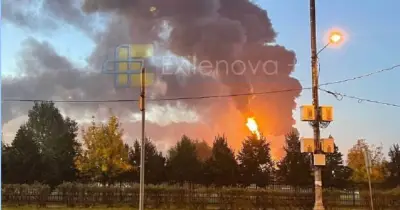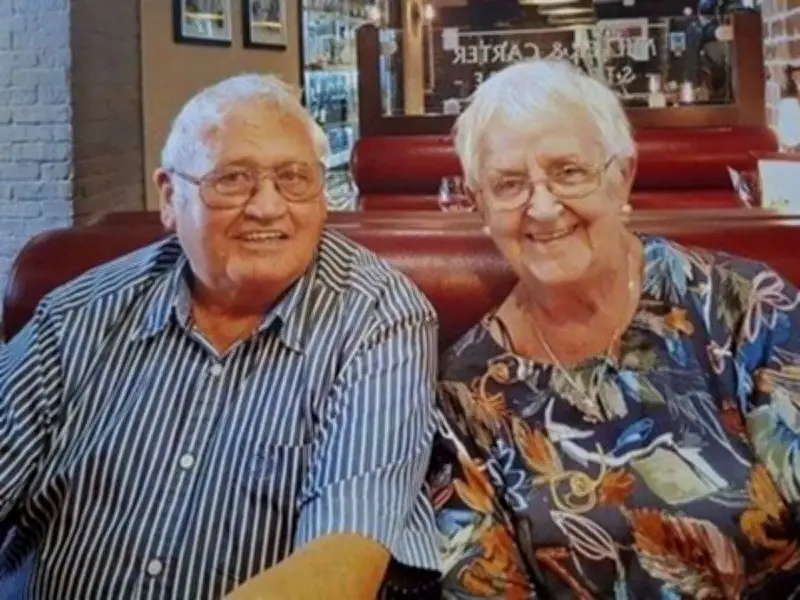
An elderly couple died in a house fire caused by a gas leak from a portable gas heater, an inquest has heard. Marlene Mumford, 84, and William Mumford, 90, were found dead inside their home on Heol Fawr in Nelson, South Wales, after emergency services forced entry.
The incident occurred on 12 December last year, according to the inquest at Gwent Coroners' Court on Wednesday (7 October). Assistant coroner Sarah Le Fevre presided over the hearing.
Witnesses saw flames and heard explosion
At approximately 10.15am that morning, local resident Alvin Adams was walking to the pub when he saw Mr Mumford struggling to carry a 13kg propane gas cylinder from his car into the house. Mr Adams helped carry the cylinder into the porch, noting some dirt and rust on its base but said he was not concerned by what he saw.
Hours later, at around 5pm, Marcus Rhys Paul was in the smoking area of the neighbouring Tyler's Arms pub, directly opposite the property. He spotted flames emerging from the front of the house, describing them as six feet tall and visible from "over the wall". Mr Paul ran around the house trying to gain entry before returning to the pub to call the emergency services. Outside, he noticed a gas cylinder lying on its side, which exploded while he was inside raising the alarm.
Carbon monoxide poisoning confirmed
Emergency services arrived approximately 15-20 minutes later, but the extent of the damage prevented them from entering. Paramedics from the Welsh Ambulance Service could see through the doorway, where the bodies of both Mr and Mrs Mumford were clearly visible.
Post-mortem findings revealed both had inhaled substantial quantities of carbon monoxide. Mrs Mumford had a carboxyhaemoglobin level of 43.9% and Mr Mumford 27.8%, consistent with carbon monoxide poisoning.
Investigation points to accidental ignition
Gwent Police DCI Neil Blyth told the inquest investigators explored three possible explanations: accidental fire, negligence, or third-party involvement. Extensive door-to-door enquiries and CCTV investigations found no evidence of third-party involvement. A gas cylinder recovered from outside was undamaged, though its regulator was absent and parts of the heater, including the hose, had been destroyed.
South Wales Fire and Rescue Service determined the blaze originated in a television room adjacent to the living room, where a portable gas heater had been placed in the doorway. Station commander Melvin Robert Laidler said the fire was triggered by an uncontrolled release of gas from the heater, attributed to a missing or damaged jubilee clip, or another mechanical or connection failure. The subsequent ignition caused flames to spread rapidly, with firefighters reporting thick black smoke and fire upon arrival.
The fire service had attended the address in 2017 following a smaller blaze caused by unattended cooking. Smoke alarms and additional fire safety measures were fitted then, though investigators could not confirm whether they remained in working order.
Coroner records accidental deaths
The inquest heard Mrs Mumford had worked in a factory, while Mr Mumford was a former coal miner. Both regularly used the portable gas heater, sometimes connected by their son Karl Mumford and at other times by William himself.
Pathologist Dr Richard Jones gave the medical causes of death as exposure to the combustion products of a fire. Ms Le Fevre accepted this and recorded both deaths as accidental.
Ms Le Fevre said: "The fire originated in the back room of the property, likely in process of fitting a new cylinder to the heater. A spark would have been enough to start the blaze and it spread quickly due to items surrounding the fire such as a sofa."
She added: "William realised the fire had taken and he was unable to control it and therefore thought the best cause would be to try and remove the fire from the house. He took the fire from the back room, through the living room and into the porch. He tried to take the cylinder outside in an effort to minimise its spread."
Ms Le Fevre concluded the cause of death was an accidental fire, sparked by a mechanical or connection-related failure from a gas bottle at the home. She described the tragedy as a "terrible, desperately sad, singular event".