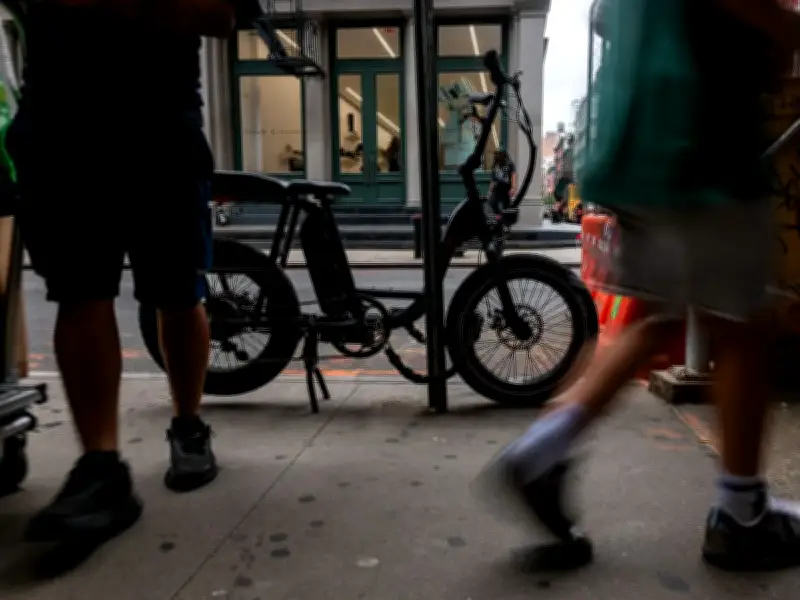
Police seizures of 'menace' e-bikes have increased in Greater Manchester amid new calls for a change in the law, data shows. Confiscations nationally have surged by 83 per cent in a year. Across the city region, Greater Manchester Police said 78 e-bikes were seized in 2024-2025, with the figure for the latest 12 month period standing at 86.
National seizure figures rise sharply
Some 7,049 of the machines were confiscated across the UK in the 12 months to May 19, according to the new data. That's compared with 3,858 during the previous year. Campaigners, meanwhile, have called for changes in the law as they warned of the dangers posed by illegal e-bikes.
MP proposes ban on illegal sales
One Labour MP has proposed a ban on sales of illegal e-bikes and conversion kits, saying they should be defined as an 'unsafe product' which cannot be sold by online retailers. Warning how e-bikes can put other motorists and pedestrians at risk of injury, Carlisle MP Julie Minns said they do not have an MOT, they are not licensed or insured and cannot be traced as they do not have registration plates.
She said: “Something needs to be done about this and I think the way to do it is to designate an illegal e-bike because you have a definition of what a legal one is – the motor that will cut out at 15-and-a-half miles an hour – and as long as it does that, that’s a perfectly legal e-bike … which are a brilliant way of getting people cycling. The illegal ones, however, are a problem and we need to do something about them. And the way to do it is to say, if it’s not legal, it’s an unsafe product. I think an illegal e-bike is an unsafe product and I think the Government should designate illegal e-bikes so that the ones that don’t meet the definition and the kits that create them that don’t meet the definition of a legal e-bike, designate those an unsafe product and say to retailers you can no longer sell them.”
Government consultation and charity warnings
Earlier this year the Department for Business and Trade sought views on product safety reforms, including considering tougher rules on e-bike batteries and conversion kits, to crack down on illegal modifications. The department is expected to publish its response to the consultation next month. It comes after the All-Party Parliamentary Group for Cycling and Walking (APPGCW) last year warned of a “crisis hiding in plain sight” as it published a report which found the rise of illegal and unsafe e-bikes was putting lives at risk.
Catherine Woodhead, chief executive of charity Living Streets, said the increasing use of electric two-wheelers 'must not come at the expense of people walking'. She told the Press Association, which published the latest data: "No e-bikes should be used on our pavements, and ones that go over the maximum power and speeds should be off our streets altogether. With e-bike use increasing, the situation needs to be tightly controlled. On-street enforcement is part of that."
Police powers strengthened
The Government said it has changed the law to strengthen police powers for e-bike seizures. The figures, however, prompted police, politicians and charities to call for new laws to clamp down on the dangerous vehicles which have caused deaths and serious injuries in some cases. Sergeant Stuart Ford, who leads the cycle team at City of London Police, described illegal e-bikes as 'a menace'.
Under UK law, legal e-bikes are known as electrically assisted pedal cycles (EAPCs) and must meet certain safety regulations such as their electric motor having a maximum power output of 250 watts and cutting out when a speed of 15.5mph is reached. Many illegal e-bikes confiscated by police have been modified to travel much faster, with some exceeding 70mph. Non-compliant machines are effectively electric mopeds or motorbikes, which must be registered, taxed and insured.
While major retailers sell thousands of legal e-bikes every year, many illegal machines are bought on the internet. Kits which add an electronic motor to a conventional bike are available online for under £300. As well as being used for crime, illegal e-bikes are also often used for legitimate journeys such as food deliveries and commuting.
A Government spokeswoman said: "Illegal e-bikes that can reach dangerous speeds have no place on our roads and pavements, and the rise in seizures shows the scale of the problem police are dealing with. That’s why we have strengthened police powers, changing the law so that officers no longer need to issue a warning before seizing these vehicles where they are used anti-socially." These tougher powers came into force on June 29 under the Crime and Policing Act 2026.