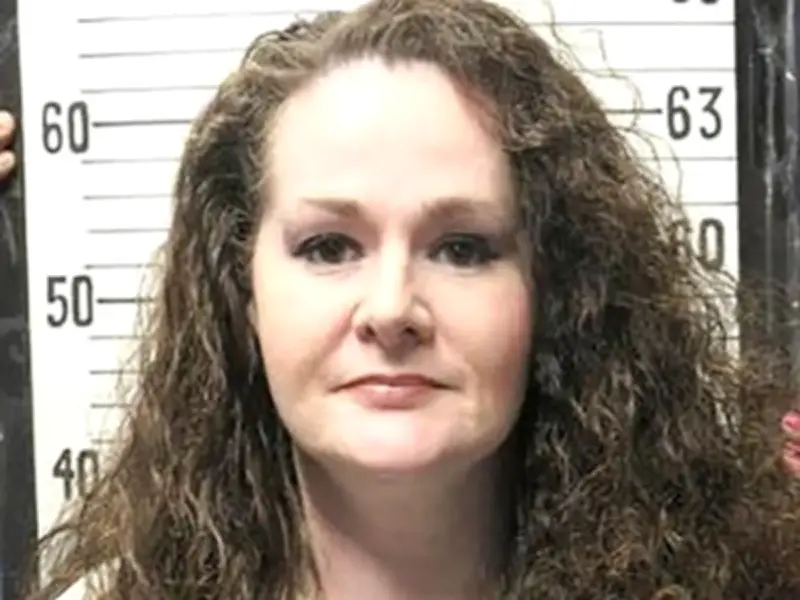
A top doctor has outlined exactly why Death Row inmate Christa Pike didn’t die during the horrific botched execution attempt and warned she may be too ill to be killed.
The convicted murderer was set to be executed by lethal injection in the state of Tennessee on Wednesday (September 30). Pike – who had a last ditch request for clemency refused by Governor Bill Lee – was strapped to the gurney as a team of officials attempted to find a vein for the lethal drug.
But after two failed doses of the drug, Pike was reportedly left “thrashing” on the gurney and was later rushed to hospital with potentially life-altering brain damage.
Untrained execution team
Dr. Joel Zivot, a vocal opponent of capital punishment and a member of Pike’s defence team, explained how he believed the execution attempt was doomed from the start.
“Lethal injection is not a medical act – and it's a difficult thing to administer,” he said.
Dr Zivot revealed that lethal injection involves inserting an intravenous catheter (IV), a delicate procedure performed by trained professionals.
But as doctors are bound by ethics to abstain from capital punishment, execution teams normally rely on untrained non-medical staff instead.
Dr. Zivot added: “Placing an intravenous catheter is a specific medical skill that is practiced by people in the healthcare sector. And it’s not something that translates into the execution chamber.
He said that even if the person administering the lethal injection knows how to intravenously inject patients “that in no way is similar to administering it to someone who is about to die”.
Previous botched executions
Pike’s botched execution is not the first of its kind. There have been numerous examples of Death Row inmates left writhing in agony – but very much still alive – following a failed attempt to end their life.
In May this year, prisoner Tony Von Carruthers was left “wincing and groaning in pain” at Tennessee’s Riverbend Maximum Security Institution after the same team that administered Pike’s failed doses failed to successfully execute him.
Dr. Zivot said: “These things were predictable. I knew that they would happen. I called that they would happen and they happened.”
Pike's injuries
Dr Zivot believes the injections of lethal drug pentobarbital was likely to have leaked into her arm tissue rather than entering her bloodstream.
He said Pike is “very likely has a significant burn on one or both arms from the pentobarbital that I expect went into the tissues,” after the chaotic scenes unfolded on Wednesday.
Pike’s attorney Randy Spivey has slammed Tennessee authorities, claiming the execution team in Nashville attempted to find a vein for an hour.
“I counted at least seven needles used in her left arm alone,” the defence attorney said. “One of which appeared to be bent when it was pulled from her left arm after an unsuccessful attempt.”
Dr. Zivot also said he believews Pike may now require skin grafts and is likely to have been left with a "weakened heart."
Trump's reaction
The failed execution has sparked backlash around the world, with even Donald Trump chiming in in typically tone-deaf fashion.
“How does that happen?” the dumbfounded US President asked reporters who travelled with him to Texas earlier this week. “Should be easy to do. It shouldn’t be very difficult.”
He added: “That was an interesting situation, but you’re going to have to speak to Tennessee about it. Whether or not they’re going to go forward.”
Pike was secured to a gurney in the Riverbend Maximum Security Institution's death chamber shortly before 7:30pm local time, an hour after her stay of execution was overruled by the Supreme Court.
Even experienced media witnesses to the execution were stunned by what they observed. Following the second dose's failure to take effect, Pike raised her head and glanced around the chamber to enquire whether the "hurting and burning" she experienced was typical.
"None of that was normal," Catherine Sweeney of WPLN told reporters. "I covered all of the executions last year and most of the ones this year; we haven't seen anything like it."
The State of Tennessee permits a second dose of the lethal drug mixture to be given to a condemned prisoner if the initial dose doesn't produce the desired result, but fails to specify what occurs if a second dose proves unsuccessful, according to the Associated Press.
Tennessee Gov. Bill Lee said in a statement that "a comprehensive, third-party review to determine exactly what occurred" has been ordered, and the state's sole execution scheduled for this year has been delayed.
Pike was sentenced to death in 1996 for the brutal murder of a fellow student, Colleen Slemmer, 19, whom she lured into a secluded area near the University of Tennessee campus in Knoxville alongside her then-boyfriend Tadaryl Shipp.