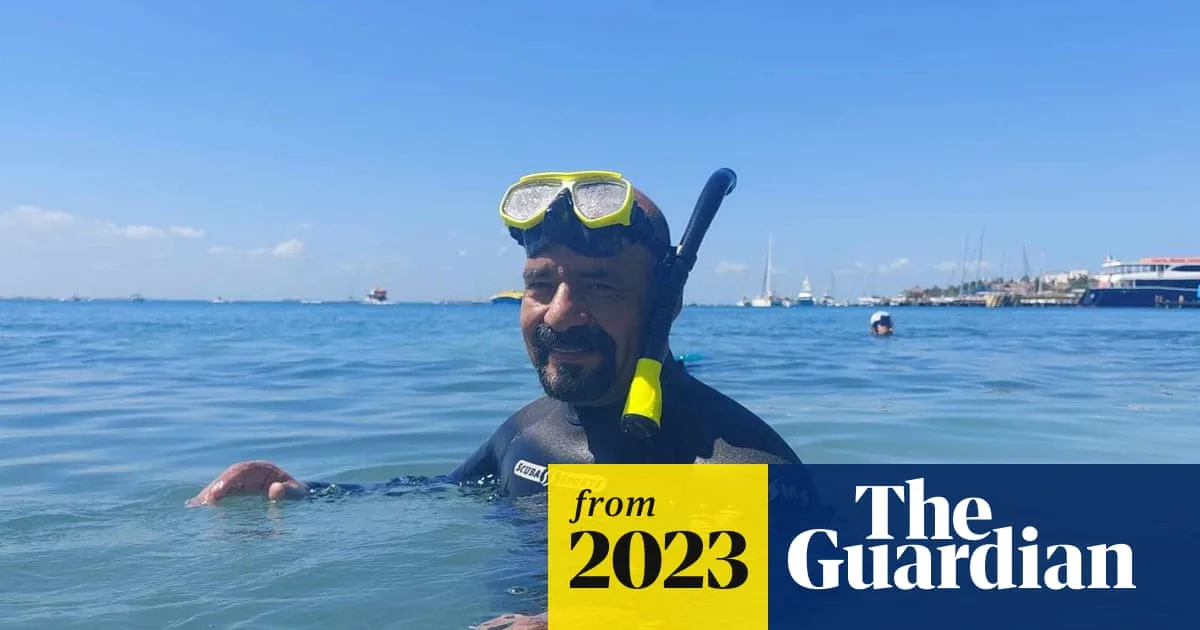
Juan Carlos Tercero, an anthropologist and expert in underwater forensics who dedicated his life to helping families find missing loved ones, has himself disappeared in western Mexico. He was last seen on a balmy day in early April leaving his home in Tepic, Nayarit state. In a country where 25 people are reported missing daily, Tercero’s case highlights the dangers faced by those who search for the disappeared.
Tercero travelled across Mexico and the region teaching courses on recovering human remains from water, and was about to join the state commission charged with locating the disappeared. Instead, he has become one of Mexico’s more than 100,000 missing people. His friend and fellow criminologist Marisol Madero said: “If the people who are doing the searching are disappearing, imagine the fear for mothers or other groups dedicated to the search.”
In the face of government inaction, groups of women have led searches for the disappeared, but they too have become targets: at least six searching mothers have been killed since 2021. Journalist Javier Risco wrote in El País: “No one is safe in Mexico. Neither the relatives who are looking for their disappeared, nor the public officials who are in charge.”

Madero expressed frustration at the state prosecutor’s office, which has denied the family a copy of Tercero’s case file and given little indication of progress. The state prosecutor suggested Tercero might have gone missing due to “personal matters”, a claim rejected by family and friends. Tercero left behind all his equipment, camera and hard drives, indicating he intended to return.
His partner, María Antonieta Castañeda, said: “He is missing because they disappeared him, not because he wanted to disappear. It’s pretty painful that someone who dedicated his life to the search … now we’re having to look for him ourselves.” The United Nations has noted that enforced disappearances in Mexico are facilitated by “almost absolute impunity”, with only 36 federal convictions for disappearance cases.
Human rights experts say state-level investigations are often slow and bureaucratic. Tyler Mattiace of Human Rights Watch said: “Nothing about the way this case appears to be being handled … is surprising.” Nayarit has a particularly dark history, with thousands of disappearances and a notorious former governor convicted for ties to drug cartels.