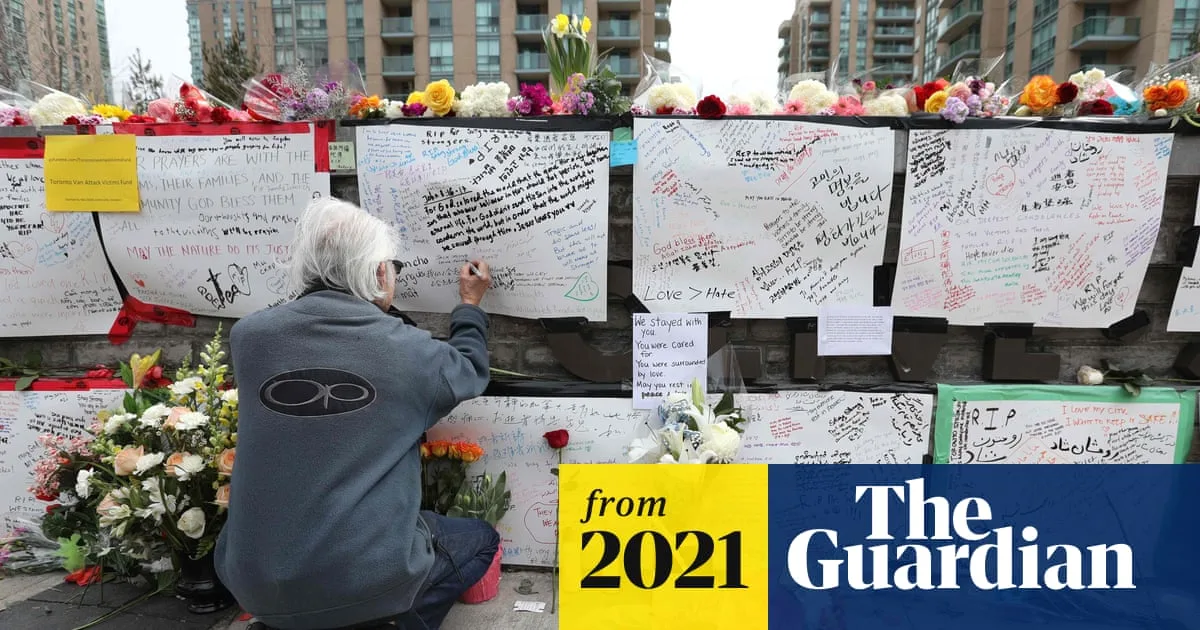
A Canadian man who killed ten people when he drove a rental van onto a crowded Toronto sidewalk has been found guilty of first-degree murder and attempted murder, after a judge rejected defence arguments that he was not criminally responsible due to autism.
Alek Minassian was convicted of ten counts of first-degree murder and sixteen counts of attempted murder on Wednesday. The victims included Renuka Amarasingha, Betty Forsyth, Ji Hun Kim, and seven others. Ontario Superior Court Justice Anne Molloy, who refused to use Minassian’s name, calling him 'John Doe', said he 'knew death would be irreversible' and chose the 'morally wrong' option for personal notoriety.
Minassian had admitted planning the 2018 attack, which he claimed was motivated by the 'incel' (involuntary celibate) movement. However, Justice Molloy found that while resentment towards women was a factor, his primary drive was a desire for fame. 'He piggybacked on the incel movement to ratchet up his own notoriety,' she wrote, describing him as 'profoundly lonely' and drawn to 'depraved' internet sites.
The defence had argued that Minassian’s autism spectrum disorder prevented him from understanding the wrongness of his actions. The judge dismissed this, noting he had fantasised about the crime for years and deliberately set aside any concerns about his family to achieve his goal. 'He did it to become famous,' she concluded.
Speaking outside court, Nick D’Amico, brother of victim Anne Marie D’Amico, said: 'You’re holding your breath for three years. And now you can finally breathe.' The hearing was livestreamed due to the pandemic, with family members gathered outside the Toronto court.