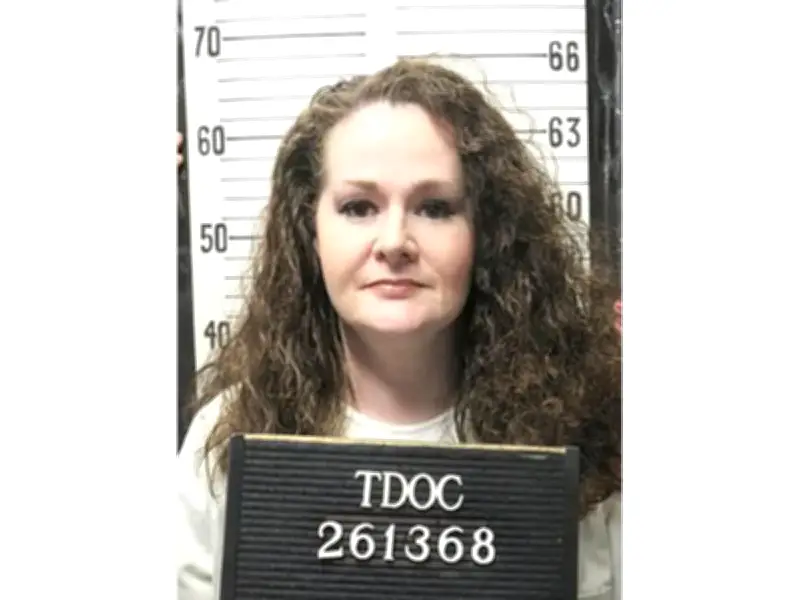
Death row inmate Christa Pike is in critical condition in a Nashville hospital under guard after a botched execution left her “still alive and audibly snoring,” according to witnesses. Pike, 50, was sentenced to death in 1996 for the murder of Colleen Slemmer and was due to become the first woman executed in Tennessee in more than 200 years when she was taken to the execution chamber on September 30.
After being given two doses of the drugs, Pike was reportedly still alive and was rushed to hospital. She remains unconscious, intubated and on a ventilator as doctors try to stabilise her and clear the drugs from her system.
Uncertain Prognosis and Next Steps
Randy Spivey, one of Pike’s lawyers, said: “We don’t know what the prognosis is, as in the long-term prognosis, if she recovers.” He added she remained unconscious in the hospital as of Sunday morning. “She may not fully recover,” the lawyer added.
What happens next is unclear, including whether the state could attempt to execute her again if she survives. Pike’s lawyers and campaigners are now calling for her sentence to be commuted in the wake of the failed execution attempt.
Second Failed Execution in Tennessee
Reporter Michael Graczyk, who has covered nearly 500 executions and witnessed Pike’s, told the BBC he feared “it was just a matter of time” before something like this happened. Pike is the second death row inmate Tennessee officials have failed to execute this year, following the attempted execution of Tony Carruthers, convicted of kidnapping and murdering three people in 1994. His executioners tried and failed for over an hour to establish an IV. Governor Bill Lee announced soon afterward that the state would not try again for at least a year.
Pike’s lawyer said she cooperated with the execution team and tried to give them tips on how to insert the IV lines. These complications have driven some states to introduce alternative methods, including the firing squad.
Calls for Firing Squad
The string of failures has reignited calls for states to move away from lethal injection altogether and rely on alternative execution methods, including the firing squad. After a failed lethal injection attempt involving inmate Thomas Creech, Idaho made the firing squad its primary execution method in July this year. Lawmakers are now pushing for Tennessee to consider a similar switch.
Congressman Tim Burchett, who represents Knoxville, said he supports using the firing squad as an alternative. He said: “It's 100% effective, and I just don’t see a problem with it. It’s that or hanging.” Tennessee State Representative Dennis Powers is also calling for change. Powers and Senator Frank Niceley originally drafted and proposed firing squad legislation in 2023, and after Pike’s botched execution attempt he said lethal injection is a “method that keeps failing”.
Under Powers’ proposed amendment, death row inmates could opt for a firing squad in writing instead of lethal injection or the electric chair. “Done correctly, it is over in seconds,” he said. According to the Death Penalty Information Center, since 2010 close to 8% of lethal injection executions have been botched. Powers has also argued a firing squad could be cheaper, claiming facilities setup and staff training would be a one-off cost of about $50,000, which he said would be far less than the legal and medical expenses triggered by failed executions.
Legal Questions and Aftermath
There are now questions over whether Pike, if she regains consciousness, could sue the state. Nick Beres of Nashville’s NewsChannel 5 reported there is speculation about a potential legal challenge under the Eighth Amendment, which bans “cruel and unusual punishments”.
In the aftermath of the incident, executions in Tennessee have been paused for the remainder of 2026, saving Gary Wayne Sutton. On Saturday, it was announced Tennessee Department of Correction Commissioner Frank Strada is stepping down following the botched execution.