The events of 1066 have echoed across the centuries for nearly 1,000 years. As every schoolchild knows, it was the year of the Norman invasion and the Battle of Hastings, when William, Duke of Normandy, defeated Harold Godwinson to become King of England.
The invasion reshaped the nation forever. The Anglo-Saxon elite was swept aside and replaced by new rulers who centralised power, transformed the Church, and introduced feudalism. Hundreds of castles were built across the country - one of which laid the foundations for the modern city of Newcastle. Over time, the English language, absorbing thousands of French words, was reinvented, and a new legal system emerged.
Bayeux Tapestry returns to England
This year, on the 960th anniversary, the Bayeux Tapestry - telling the dramatic story of the invasion and decisive Battle of Hastings - has returned to England, going on display at the British Museum in London.
Back in 1066, the unwanted arrival of William the Conqueror provoked fierce resistance across England, especially in the North, including on Tyneside. Newcastle's Castle Keep, built on the site of the original Norman fortification, stands as a lasting reminder of that era.
The historian John Brand in the late 18th century wrote: "In the year 1068, Northumberland was invaded, and the town now called Newcastle taken by Edgar Etheling, heir to the crown of England, together with Malcolm, King of Scotland, and some Danish pirates."
The clash on Gateshead Fell
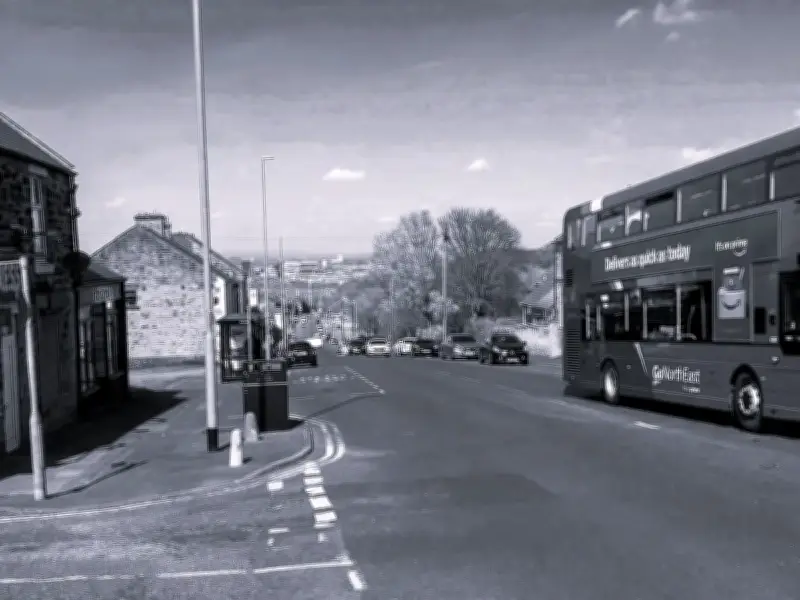
When his newly appointed earl, Robert de Comines, was killed in Durham, William marched north in anger, determined to crush the rebellion. The insurgents retreated toward the River Tyne, gathering on the broad, exposed upland of Gateshead Fell - the high ground stretching across modern Sheriff Hill, Beacon Lough, and Wrekenton, now home to 20th-century housing estates.
The barren, windswept fell offered the rebels a natural defensive line. From Sheriff Hill summit, they could watch the Norman army advancing along the old Great North Road, climbing onto the plateau near Wrekenton.
But William's forces, disciplined and mounted, struck with speed. The 11th-century chronicler Symeon of Durham describes a sudden, brutal assault. Many rebels were cut down on the ridge, while others fled down the steep slopes toward the Tyne crossing.
The Harrying of the North
The settlement of Gateshead, built around its church and the river ford, became the rebels' last refuge. William's troops pursued them into the village and set it ablaze. The church was destroyed, and the community scattered.
This violence was part of the wider 'Harrying of the North'. The scorched-earth campaign in 1069 and 1070 razed villages, destroyed crops, caused mass starvation, and killed thousands, forcing the North into submission.
The Bayeux Tapestry, depicting the 1066 Norman invasion of England, is on show at the British Museum until July 2027.
Brand wrote: "Having recovered Gateshead Fell, King William is said to have laid it almost level with the ground, to prevent its becoming in future an asylum to his enemies."
The New Castle rises
The battle ended the last organised Anglo-Saxon resistance in the region and cleared the way for full Norman military control. In its aftermath, the strategic importance of the Tyne crossing became paramount.
Within a decade, William's eldest son, Robert Curthose, built a new wooden fortress on the north bank - the New Castle. Later, the original motte and bailey structure was rebuilt in stone by King Henry I between 1168 and 1178. This was the stronghold that would grow into the city of Newcastle-upon-Tyne.
While the story of the famous castle is common knowledge, the sketchy history of the Battle of Gateshead Fell is less so, and recalls a distant age when Tyneside became the focus of the might and fury of William the Conqueror, who oversaw the brutal Norman subjugation of the region in person.