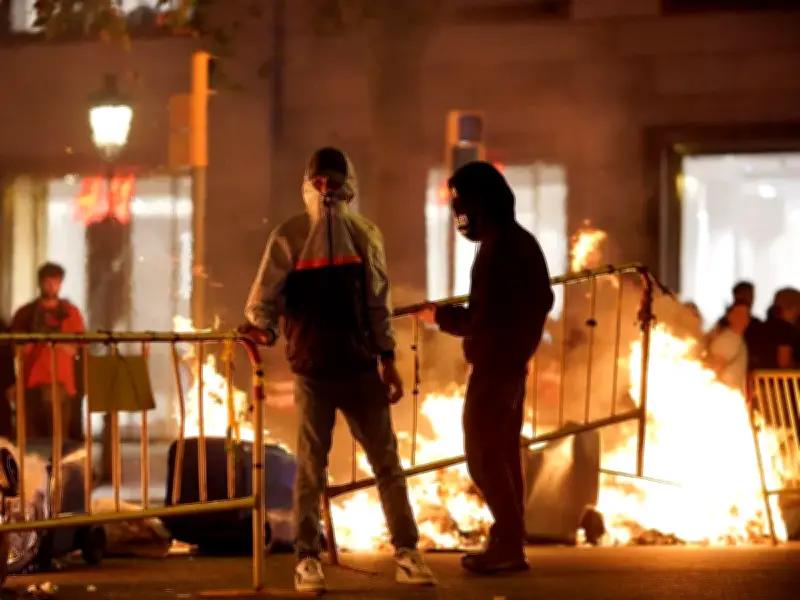
Protesters clashed with police in Barcelona overnight, hours after Spanish Prime Minister Pedro Sánchez called a snap general election. The move came after his government suffered a legislative defeat over emergency housing measures, aiming to capitalise on momentum from housing protests that have swept the nation and position the vote around issues favourable to his Socialist party.
Spanish police arrested three members of a far-right group and fired rubber bullets on Saturday night in Madrid. Spaniards have mounted repeated demonstrations across cities nationwide in recent weeks – with last night's among the most violent – demanding action on the deep-rooted housing crisis following widespread fury over the highly publicised eviction of an 87-year-old woman in Madrid last month.
Parliamentary defeat and political fallout
Sánchez's administration endured a damaging parliamentary defeat last week when right-wing opposition parties rejected emergency measures introduced by his government to tackle evictions and property speculation. The blow triggered widespread speculation that Sánchez would bring forward the general election and harness the momentum against his right-wing rivals.
Should Sánchez's calculated risk fail, it could open the door for a right-wing alliance between conservatives and the far-right Vox party, potentially ending one of Europe's most prominent progressive administrations and outspoken critics of the Trump administration.
Sánchez's address to the nation
Addressing the nation, Sánchez contended that a wider progressive coalition in Parliament would enable Spain to confront its greatest challenges. "The time has come for the Spanish people to decide what future you want for yourselves and for your country," Sánchez said. "Whether you wish to join that far-right wave - which rolls back progress wherever it governs - or whether you want Spain to remain a bastion of openness, social justice, and environmental responsibility. Whether you want our country to move backward or continue moving forward."
Sánchez, 54, has served as prime minister since 2018, establishing him as one of Europe's most enduring leaders. During his tenure, Spain has boasted one of the most rapidly expanding economies amongst developed nations in recent years. However, a string of legal proceedings involving his party alongside his wife and brother have undermined the prime minister's reputation. His wife and brother reject any wrongdoing.
Challenges and election prospects
He has also faced difficulties explaining this summer's mass border crossing by thousands of predominantly Moroccan migrants into Spain's North African enclave of Ceuta, where a humanitarian emergency persists two months following the initial incursion. He has headed a coalition minority administration alongside left-wing junior partner Sumar since 2023. Throughout his political career, Sánchez has built a reputation as a political survivor with the ability to triumph in elections he seemed destined to lose.
Speculation surrounding whether he would call snap elections focused on the political capital his party might now possess regarding housing and public services, while the opposition Popular Party – which already commands the largest number of parliamentary seats – is expected to centre the campaign around corruption and the governing administration's handling of the Ceuta crisis. Opinion polls indicate the Popular Party and Vox could jointly secure sufficient backing to remove Sánchez from power. It remains uncertain how powerfully housing will galvanise voters on either side.
"Sánchez is choosing this moment because it is arguably the best time to do so, given that the issue of housing frames the electoral conflict or debate in terms that are highly favorable to (his party's) position," said Oriol Bartomeus, a political-science professor at the Autonomous University of Barcelona. "Sánchez can frame the election - or has realized he can frame it - in very classic left-versus-right terms," Bartomeus said.
Sánchez will go head-to-head with Popular Party leader Alberto Núñez Feijóo, who seeks to seize control of the government. "At last, the Spanish people will decide," Feijóo said on Monday after the election announcement. "These are not elections like previous ones in our democracy. This is about Spain defeating Sánchez and what he represents," he said.