Five years after the Taliban seized Kabul, Maryam, a woman still trapped in Afghanistan, remembers the terror of that day and the life she has lost. She told the Mirror: "Five years have passed from that time, but still when I remember that, I can feel that fear that I had at that moment in my heart, and I think that is happening right now. It was a very terrible moment."
The Day Kabul Fell
On August 15, 2021, Maryam's sister-in-law Sosan ran into her workplace with a chilling instruction: "Run." The two women fled through chaotic streets, desperately seeking transport home. Outside, scenes of pure chaos unfolded as everyone ran, aware that the Taliban had broken into prisons, releasing thousands of dangerous prisoners.
Before the downfall, Sosan had worked in a dangerous field, and the family had received threatening letters. Maryam said: "We were afraid that, when the Taliban took over, the family might experience the torture of the last period." They had previously felt protected by their government, soldiers, and president, but now nothing stood in the way of the Taliban.
President Ashraf Ghani fled by helicopter to Uzbekistan that afternoon, and the Taliban took over the Presidential Palace. Maryam recalled: "When we reached the house, everybody was scared, and it was a difficult moment, because we were scared, and we were shocked, because we couldn't believe that it was happening." Neighbours fled, leaving the neighbourhood a ghost town. "We also left the house, because we were scared, and I'm sure that the neighbourhood was empty of any human being at that time, at least for a week."
Escape and Loss
Data from the International Rescue Committee UK (IRC UK) showed that 2.5 million Afghans fled the country in August 2021, with over 15,000 flown out by Britain's Royal Air Force as part of an evacuation of more than 122,000. Sosan and Maryam's brother Elias were evacuated, but Maryam remains in Afghanistan, her dream of becoming a judge crushed.
Maryam, who lives with her parents, watched the airport chaos on television. On August 26, a suicide bomber killed 170 Afghan civilians and 13 US service members at Kabul's airport. Sosan and Elias had been in Kabul that day but, as Maryam said, "thank God, something happened... and they didn't go, and we are grateful that they are safe."
Life Under Taliban Rule
Under Taliban rule, women are forbidden from legal professions, the civil service, NGOs, and parliamentary positions. According to UN Women, almost 80 per cent of Afghan women aged 18 to 29 are not in education, employment, or training. Maryam, who is married, said: "I'm also struggling with depression like so many other women, because it feels like an endless prison."
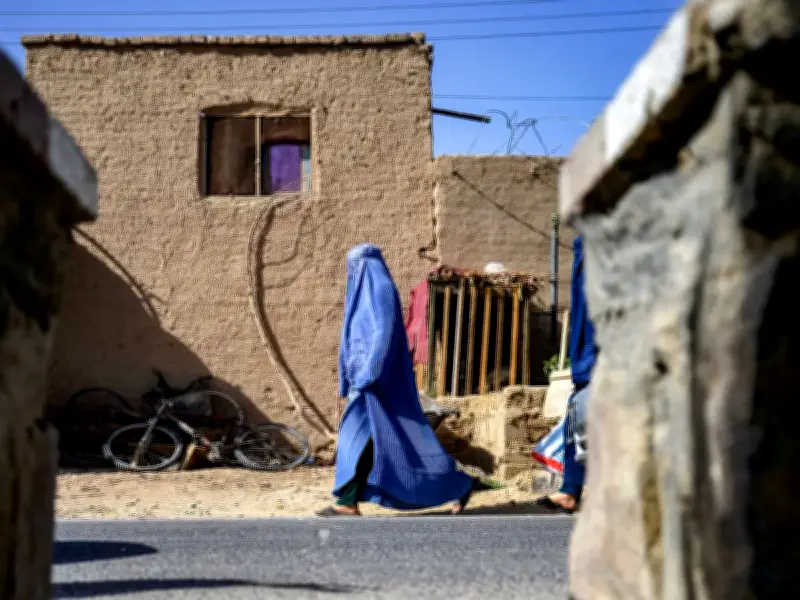
Maryam is forbidden from leaving home unless completely veiled and accompanied by her husband, Usman, who lives in terror. They must carry their marriage certificate to prove they aren't just friends; otherwise, they could be imprisoned. In 2024, the Taliban banned women from being heard in public, with talking, singing, or speaking loudly outside prohibited. Maryam explained: "I need to speak less, not to raise my voice, and because my husband tries to protect me, he tells me that anything that I want, I tell him, and he'll tell that to the shopkeeper or to somebody."
Public spaces like parks and gyms are now off-limits, contributing to a mental health crisis. Zaman Sultani, Amnesty International’s Researcher for South Asia, said: "Five years on, our research shows the Taliban haven't just restricted Afghan women and girls' rights - they've systematically erased half its population from public life." He added that the ICC has charged the Taliban's leaders with gender persecution, but "words alone won't open a single classroom door."
Finding Strength
Maryam finds "small joys" in music and comedy films, but admits: "I cry a lot, and I know that that is a useless thing, but there are no other things that I can do." Despite this, she has trained as a mental-health counsellor, supporting survivors of Taliban prisons and women at risk of suicide online. She said: "I feel like women and girls around me and in our country, they are assets, and we need to do everything that we can to keep them alive, to keep them motivated, because that freedom morning will come."