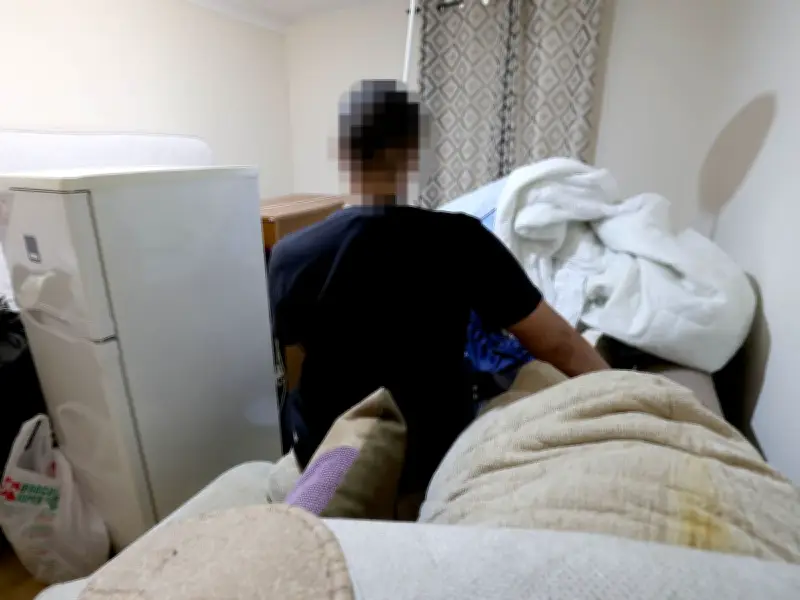
An abuse survivor who was put in a flat she called 'worse than a pigsty' said she would not wish the 'disgusting' conditions on her worst enemy.
Annie, not her real name, said she endured many issues with the property, which she said had been 'condemned'. She is being supported by social services after reporting abuse.
Council apology and lessons learned
Manchester council has apologised and said Annie should never have been placed in that property. Deputy council leader Tracey Rawlins said the case was an exception but that 'significant lessons have been learned'.
Annie is being supported by Greater Manchester mayoral candidate Sian Astley. This comes as the Greater Manchester Combined Authority (GMCA) decided not to recommission the Women in Safe Homes (WISH) scheme.
Temporary scheme ends
The WISH scheme, first commissioned in May 2024 and extended to May 2026, aimed to support women experiencing homelessness or abuse. The GMCA and local authorities agreed not to recommission it, saying alternative provision could be made available.
A GMCA review reportedly found the service was not effectively meeting the needs of women sleeping rough, and that properties could be used for better outcomes for homeless households.
Ms Astley said women had been 'moved from pillar to post without any care at all'. The Reform candidate said she was assured women would get safe accommodation and managed to keep two women in their original properties.
Annie contacted Ms Astley about the flat. Ms Astley called the conditions 'absolutely shocking'.
Annie's experience
Annie said she was 'mortified' when she first saw the flat and 'could smell the damp and mould'. She claimed she was told 'it was that or nothing'. She said: “What they said to me was if I didn’t move into this property, I would be making myself homeless so they wouldn’t help me.” Feeling she had no choice, she signed a tenancy agreement.
Issues included mould and damp, poor flooring, unsafe electrical wiring, a 'pee stain' on a mattress protector, and initially no working smoke alarms. The front door did not lock from the inside when she moved in.
Annie said the conditions affected her mental health, asthma, and caused panic attacks. She said: “If I had a worst enemy in the world, I wouldn’t want them in a property like this because it’s not on. It’s not fair to expect somebody to live [like this]. I’m not being funny there’s probably cleaner and better pigsties on a farm. They’re probably better housed than what I have been housed.”
She added: “They didn’t even say ‘do you want me to check up on you before the support ends on May 31’? I called them up and they didn’t answer.” Responding to the council's apology, Annie said: “It doesn’t help me and they’ll probably just do it again to some other poor fool who doesn’t have anybody to back their corner. If I didn’t have this help [Ms Astley], I would have been rotting away for god knows how long in a damp mouldy property.”
Annie said the council later inspected the property, promising a report that never came.
Reactions
Ms Astley said: “The way this was delivered and the way this was done was just horrendous. It’s the uncertainty for these girls. It’s like they’re nothing. It’s like they can be moved from pillar to post without any care at all.”
A spokesperson for Nacro, which provided the WISH service for the GMCA, said: “We recognise that the closure of the Women in Safe Homes (WISH) service was extremely difficult for the women affected.” The charity said it continued to work with residents through the closure process, recognising that adjusting to new living arrangements can be difficult.
Councillor Rawlins said: “Annie was re-housed in new temporary accommodation earlier this week and no longer lives at the property featured. She should never have been placed in this property in the first place and significant lessons have been learned to ensure this situation is not repeated. We agree that the conditions shown here were unacceptable and we are sorry that this happened. … The conduct of the landlord in this case fell significantly below the standards we expect. We have no other tenants in properties belonging to this landlord and will no longer work with him. Supporting women who have become homeless because of domestic abuse remains one of the council’s highest priorities. We believe this case was an exception and does not reflect the experience of other domestic abuse survivors, who are in suitable accommodation.”
A GMCA spokesperson said: “We recognise the need for women who have faced homelessness and domestic abuse to have access to safe, secure housing. … WISH was never intended as a long-term solution and when, after two years, the contract came to an end, we supported local partners to ensure that alternative accommodation was provided and that residents were prepared for their move into new accommodation. With more than 6,000 households currently living in temporary accommodation across Greater Manchester, we’re working to ensure we have the right mix of accommodation available to support people experiencing homelessness, including families with children.”