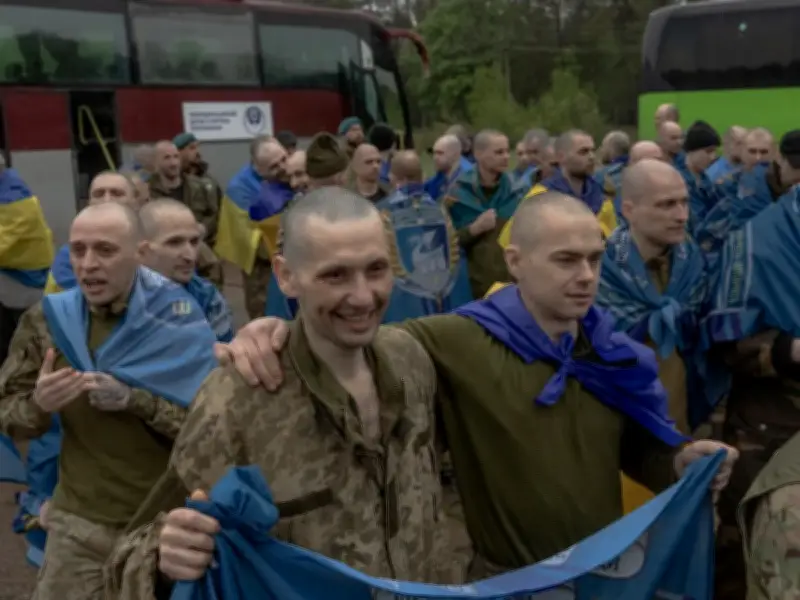
Britain has warned the United Nations of “systematic ill-treatment” of Ukrainian prisoners of war and civilian detainees in Russian custody. The warning follows harrowing accounts from inside some of Russia’s most notorious jails, including the “Polar Wolf” penal colony.
Inside Russia’s notorious jails
Among the toughest sites is IK-3, nicknamed “Polar Wolf”. It is a maximum-security penal colony above the Arctic Circle in Kharp, infamous for crushing isolation, brutal weather and allegations of severe physical abuse. IK-1 in Yaroslavl also gained international notoriety after leaked footage exposed systematic guard-led torture and beatings.
In Russian-occupied eastern Ukraine, survivors and monitors describe Izolyatsia in Donetsk as an illegal interrogation centre linked to extreme torture and sexual violence against detained civilians and POWs. Captives have also reported “admission” tortures, starvation and lack of medical care in detention centres in places including Kamyshin and Irkutsk.

Survivor accounts and admissions
A Japan Times report published in May described the grim reality behind the walls. “The young Ukrainian lieutenant talked back too much so his Russian jailers beat him to a pulp,” a former medic said. He was left with “extensive injuries and the bruising festered on his buttocks and the backs of his thighs”.
Former prisoners said strong men were “broken like dogs”. Three ex-prison officers who fled Russia confirmed the violence, with one saying they were given “carte blanche” by superiors.
UK’s condemnation at the UN
Yaroslav Rumyantsev, a Ukrainian marine captured in Mariupol, said: “They take everything from you… They manage to change your thoughts and make you believe that no one is waiting for you anymore.” He recalled being given “exactly two minutes” to eat, and prisoners standing for 16 hours: “The guys went in their pants”.
On Monday (August 10), UK Deputy Permanent Representative to the UN Ambassador Kate Foster issued a stark condemnation. She said in an official press release: “The United Kingdom remains deeply concerned by reports of systematic ill-treatment of prisoners of war, civilian detainees, and vulnerable foreign nationals by Russian authorities, as they pursue their full-scale invasion of Ukraine.” She added: “Prisoners of war and civilian detainees must be treated humanely.
“Torture, enforced disappearance, arbitrary detention, and arbitrary deprivation of life are prohibited. These are not optional standards. They are binding obligations.” Citing UN findings, she said: “According to the OHCHR, 96% of released Prisoners of War provided accounts of torture or ill-treatment.”
Ms Foster warned the pattern included “stress positions, electric shocks, suffocation, and mock executions,” and urged Russia “to end these practices, to allow meaningful international monitoring, facilitate exchanges and family contact, and comply fully with its obligations under international humanitarian law and international human rights law.”