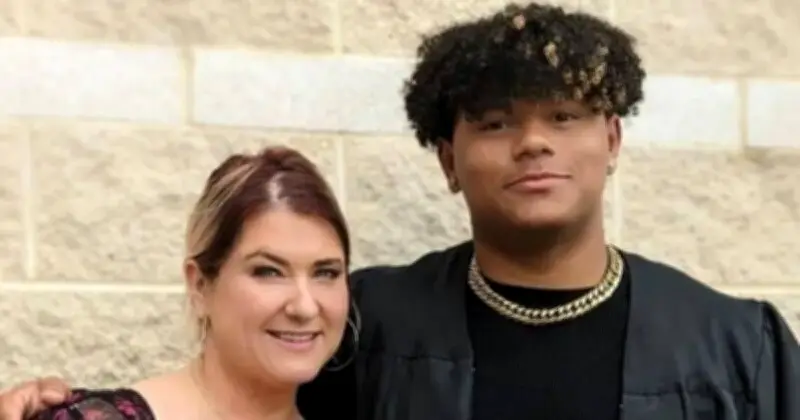
Andrea Mauk was on holiday in Costa Rica when she received the devastating news that her 18-year-old son, Damon, had died in a car crash. Upon her return to Ohio, she discovered that parts of Damon's body had been removed as "anatomical gifts" without her consent.
Damon had recently graduated from high school and was pursuing his real-estate licence. On June 24, 2023, in Lucas, Ohio, he lost control of his vehicle on a country road and collided with a tree, tragically cutting his life short.
A second ordeal
Andrea was enjoying a holiday with her husband and friends in Costa Rica when her parents rang to deliver the news. She recalled needing to be sedated upon learning that she had lost her son. The 42-year-old mother rushed home, utterly heartbroken, only to discover a second ordeal had unfolded.

Speaking to the New York Post, Andrea said: "I was completely devastated. I went to the funeral home and couldn't even look at him after they'd taken pieces of his body." She added: "They stole my son's eyes. I didn't want to remember Damon like that."
Consent given by biological father
The Ohio mother stated that the hospital never contacted her, despite records clearly listing her as her son's primary emergency contact. Damon was not a registered organ donor. Consent to harvest his organs had been granted by Damon's biological father, a man Andrea claims played virtually no role in their son's life.
Consent had been secured, so the Organ Procurement Organisation (OPO) had technically acted within the law. Yet Andrea could not comprehend why she, as Damon's primary emergency contact, had never been reached. Her details were plainly visible on his hospital records, and yet no call was ever made.
Damon had been raised without his biological father. It was only in death that his biological dad chose to exercise his parental rights and make choices on his son's behalf. Andrea told the New York Post she was left devastated and powerless in a foreign country, with no rights and no communication from those harvesting her son's organs.
Campaign for Damon's Law
"I loved Damon very deeply," she said. "I had him when I was very young and we always joked that we brought each other up. We were incredibly close. A call to me was all I wanted. Decisions I didn't get to take part in were made."
Andrea is now determined to see 'Damon's Law' incorporated into legislation to reinforce hospital protocols surrounding tissue and organ donations. "One 'yes' over the phone from Damon's estranged biological father was all it took for his heart tissue, skin, eyes, and ligaments to be removed without my knowledge or consent and before a complete autopsy could be performed," she said. "My son's body parts were then sent to for-profit tissue centres, and his eyes were sent as far away as Argentina."
She added: "Congress must pass Damon's Law to stop organ procurement organisations from pressuring grieving families, require truly informed consent, and keep donated body parts from being shipped to or sold by for-profit companies. While facing the worst loss of my life, I was denied the chance to give my son the goodbye I had hoped for. Instead, I was forced to fight for answers. I testified before the Ohio Senate and took a public records case all the way to the Ohio Supreme Court, helping lead to higher transparency laws in the state. No family should have to fight this hard for the truth."
Reforms to organ transplant system
Andrea maintains there are no records showing that anyone from the hospital had tried to contact her after Damon died. "After deciding 30 minutes was a 'reasonable' amount of time to reach me, they turned to Damon's biological father, who had no custody, was not involved in his life, and had never helped make medical decisions for him," she said. "I have found no record that anyone called me. The medical records only show that I called the hospital."
Andrea believes the current legislation is insufficient to safeguard grieving relatives. She is not opposed to organ donation. "I believe in organ donation," she said, "This is not about ending the gift of life."

On July 21, the US Department of Health and Human Services announced sweeping reforms to the organ transplant system, establishing transparent, enforceable policies to define criteria for donor eligibility. The reforms follow an investigation that exposed troubling practices by a prominent organ procurement organisation operating across Kentucky, West Virginia, and Ohio. The probe uncovered cases in which some patients may have still been alive when their organs were removed, and revealed the organisation may have carried out inadequate neurological assessments of potential donors. Poor co-ordination with medical teams and questionable consent practices were also brought to light.
Current legislation governing organ and tissue donations is overseen by overlapping state and federal laws. US federal law mandates that hospitals participating in Medicare or Medicaid notify OPOs of deaths and imminent deaths, many within 60 minutes, regardless of whether a patient is a registered donor. OPOs are obliged to approach family members of potential donors; failure to do so results in financial penalties, which has fostered a culture where grieving families find themselves under pressure.
It is this that drives Andrea to campaign for reform in honour of her son, whom she still describes as the light of her life. A Change.org petition for Damon's Law is available for signatures.