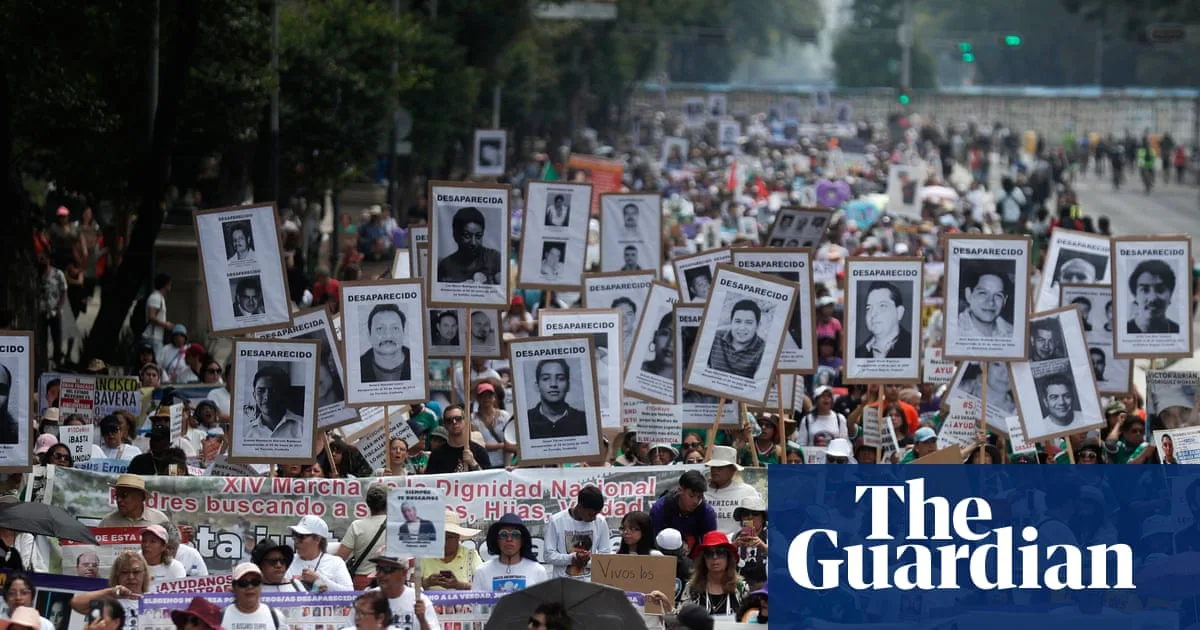
A new report from the Inter-American Commission on Human Rights (IACHR) has revealed that state actors are involved in disappearances in Mexico at an 'alarming' rate, with deep collusion between criminals and officials in some regions. The report, obtained exclusively by the Guardian, paints a dire picture of a crisis where over 130,000 people have gone missing, mostly in the last two decades since the government launched its war on drug cartels.
While criminal gangs are responsible for most disappearances, the IACHR found that many such crimes occur in coordination with state agents. In some areas, disappearances directly carried out by government officials are almost as numerous as those by criminals. The report also highlighted an 'alarming' number of cases involving torture and forced disappearances by security forces.
Forced disappearance has a long history in Mexico, dating back to the 'dirty war' of the 1960s and 1970s. In recent years, organised crime groups have adopted the tactic to sow terror, intimidate rivals, or erase evidence. Disappearances have increased by over 200% in the last decade. The IACHR noted that state actors are often involved, either by directly handing victims to criminal groups or by turning a blind eye.

Mexico's President Claudia Sheinbaum has repeatedly denied state involvement in forced disappearances, calling such claims 'biased'. Activists accuse the government of downplaying the crisis. In March, authorities suggested that a third of disappearance cases lacked sufficient data to be pursued, effectively abandoning about 40,000 missing people.
The IACHR report acknowledged that Mexico has taken some steps, such as reactivating the National Search Commission, but families continue to bear the burden of searching for loved ones, often at great personal risk. Since 2010, at least 27 people searching for missing relatives have been killed, most of them mothers.