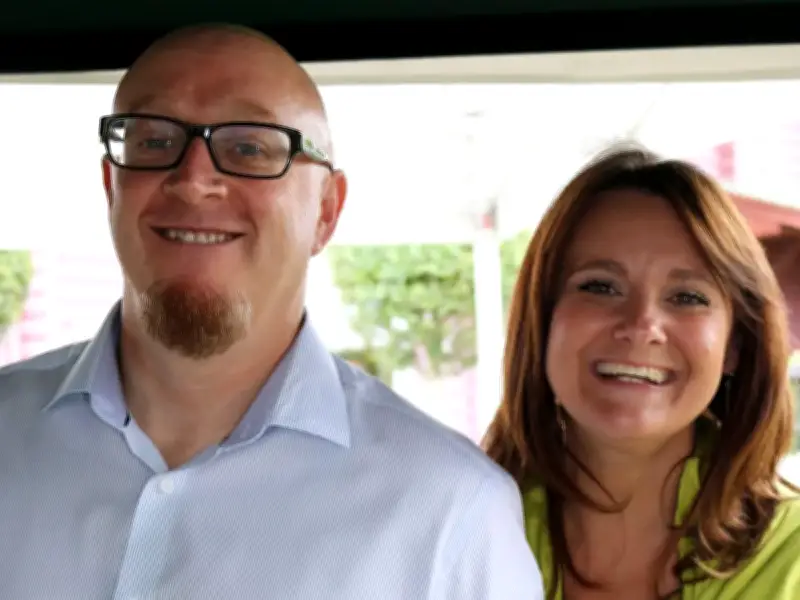
Paul Price, a Liverpool father who suffered catastrophic injuries in the Manchester Arena bombing, has described the process of seeking compensation as 'another source of trauma'. The 58-year-old was waiting outside the arena in May 2017 after the Ariana Grande concert to pick up his daughter Gabrielle and his partner Elaine McIver when suicide bomber Salman Abedi detonated an improvised explosive device. The attack killed 22 people and injured 1,000.
Elaine, a 43-year-old detective constable with Cheshire Police, died in the blast. Paul was left with life-changing injuries that prevented him from returning to work. He said navigating the compensation system involved 'delays, uncertainty and a constant need to justify my injuries'.
Report highlights survivor mistreatment
Paul's account is included in a new report co-authored by Brendan Cox, husband of murdered MP Jo Cox, and published as the UK marks the first dedicated memorial day for victims of terrorism on Friday, August 21. The report claims survivors of terror attacks are still being 'mistreated and neglected'.

Paul said: 'The blast changed my life forever. I suffered catastrophic injuries that left me unable to return to work after a lifetime of employment. Alongside my own injuries and the months of hospital treatment and rehabilitation that followed, I had to face the devastating loss of Elaine. I turned to the Criminal Injuries Compensation Authority believing it would provide recognition and support as I tried to rebuild my life. Instead, the process became another source of trauma.'
He described being forced to repeatedly relive the events of that evening while providing substantial evidence to demonstrate the consequences. He added: 'The delays, uncertainty and constant need to justify my injuries left me feeling as though I was not being supported, but questioned. After surviving a terrorist attack and losing Elaine, the last thing I expected was to feel as though I had to prove my suffering to a system that was supposed to recognise it.'
Campaign group calls for reform
Campaign group Survivors Against Terror (SAT), established in 2018, claims financial support for victims is fragmented and can depend on individual circumstances such as employment and pension arrangements. SAT has put forward a 'survivors charter' modelled on assistance offered in other nations, based on the concept that the state bears particular responsibility towards survivors given that victims are typically 'not targets themselves, but are proxies for the state'.
The report, drawing on experiences of hundreds of survivors, found that financial support remains disjointed. It said: 'The absence of a guaranteed mechanism means survivors and bereaved families may face unexpected and significant costs at a time of profound trauma, without certainty about whether financial assistance will be available or when it will arrive.' Britain lacks a specific compensation programme for those affected by terrorism, forcing victims to pursue compensation via the Criminal Injuries Compensation Authority (CICA).
The report noted that few aspects of support 'have attracted such sustained criticism', with numerous survivors, MPs and government-commissioned reports highlighting identical concerns, 'yet meaningful reform has remained elusive'. Only 9% of those surveyed regarded the CICA claims procedure as reasonable, and just 7% felt it was sympathetic to the needs of victims and survivors.
Calls for national honour and accountability
The report also highlighted that there is no 'clear, consistently applied mechanism' ensuring victims and survivors comprehend their legal options, receive assistance to access independent legal advice and representation, and can secure support throughout all procedures following a terrorist attack. SAT has advocated for an official national honour to recognise those killed, injured or placed in danger by terrorist acts, 'reflecting the lifelong impact of terrorism and the fact that such attacks are an attack against the state as well as individuals'.

Brendan Cox stated: 'Today's first national memorial day for victims and survivors of terrorism is a moment when we hope the nation will remember the impact of terrorism on our fellow citizens. But survivors also want it to be a moment of accountability. This report shows the scale of progress it is possible to make and we welcome the changes on issues like mental health support in particular. But it also lays bare the scale of the failure on issues like compensation. The public expect survivors to be cared for, today's report shows that is a promise only being half kept.'
Jo Berry, report co-author and daughter of Anthony Berry MP who was killed in the 1984 Brighton hotel bombing, commented: 'The new Prime Minister has supported survivors and worked with us closely in the past. We hope that he takes that support into his new role and demands progress, especially on the failed compensation system.' Lisa Ghiggini, report co-author who was at the Fishmongers' Hall terror attack in 2019, said: 'Uneven progress simply isn't good enough. Survivors don't expect the earth, they just want to be supported when their lives have changed fundamentally through no fault of their own. At the moment we still have members who don't have the resources to build a downstairs toilet following attacks that have left them struggling to walk. The public expects better.' The Government has been approached for comment.