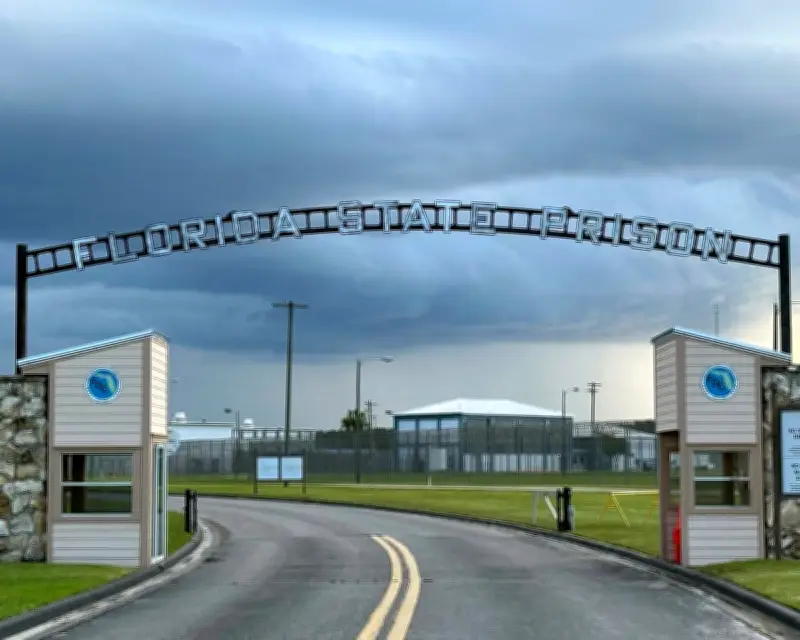
Florida is preparing on Tuesday to carry out its first double execution within a single day since the modern era of the US death penalty began in 1976. Barring last-minute legal intervention, James Duckett, 68, is scheduled to die by lethal injection at noon at Florida state prison near Starke. Six hours later, Dominick Occhicone, 80, faces the same fate.
Rarity of double executions
Should both killings be completed, it would be the first time since 2017 that a death penalty state has conducted more than one execution on the same day. In Florida itself, a review by the Associated Press showed that 1964 was the last time multiple judicial killings occurred in a single day. “Two executions in a day is incredibly rare,” said Robin Maher, executive director of the Death Penalty Information Center.
Secrecy and pace under DeSantis
Maher added that the decision by Florida’s hardline Republican governor, Ron DeSantis, was all the more bewildering given the secrecy surrounding it. “That is consistent with the secrecy that has surrounded every execution, and every execution decision, that Florida is making these days,” she said. Under DeSantis, Florida carried out 19 executions last year, reversing a decade-long decline. This year, even before Tuesday’s double execution, the state had put to death 10 people—more than double the next most prolific state, Texas, with four. “DeSantis has been setting execution dates roughly every two weeks, which is an extraordinary pace. And always without explanation or rationale, and without any sort of institutional check on his authority,” Maher said.

Risks of haste
Experts warn that cramming more than one execution into a day carries considerable risks. The human rights group Reprieve examined botched executions since 1976 and found haste was a factor behind several. “By rushing executions, Florida is increasing the chances that these and other men will suffer a torturous death,” said Matt Wells, deputy director of Reprieve US. Wells added that public records show Florida has been violating its own execution protocols, using expired drugs and wrong doses, with an iron wall of secrecy compounding the problem. “Men could die in agony and witnesses wouldn’t know it,” he said. “Florida uses a paralytic designed to prevent signs of visible pain.” In February, US Supreme Court Justice Sonia Sotomayor described the secrecy around Florida’s death penalty practices as “intolerable”.
Cases of Duckett and Occhicone
Both condemned prisoners have complications. Occhicone, 80, was sent to death row for murdering his former girlfriend’s parents in 1986. “He’s a frail old man who doesn’t pose a security threat to anyone,” Maher said. If executed, he will be the oldest prisoner in Florida’s history, surpassing Dennis Sochor, put to death two weeks ago aged 74. Duckett, a former police officer, was sentenced to death for murdering an 11-year-old girl in 1987. His claim of innocence remains unresolved as DNA testing of crime scene evidence was inconclusive. In both cases, the men were sent to death row by divided juries—seven votes to five for Occhicone, eight to four for Duckett. “In both cases, neither jury was unanimous for the death sentence,” Maher said.
Broader death penalty turmoil
The flurry of executions in Florida is part of turmoil across largely southern US death penalty states. Difficulties procuring lethal injection drugs amid an international boycott have led to revival of the firing squad. Unreliable forensic techniques continue to undermine death sentences. Last month, the Louisiana Supreme Court freed death row inmate Jimmie Duncan, ruling that bite mark analysis used in his murder conviction was “scientifically indefensible”. A forensic dentist and pathologist had testified that bite marks on the victim matched Duncan’s teeth, an approach now debunked as junk science.