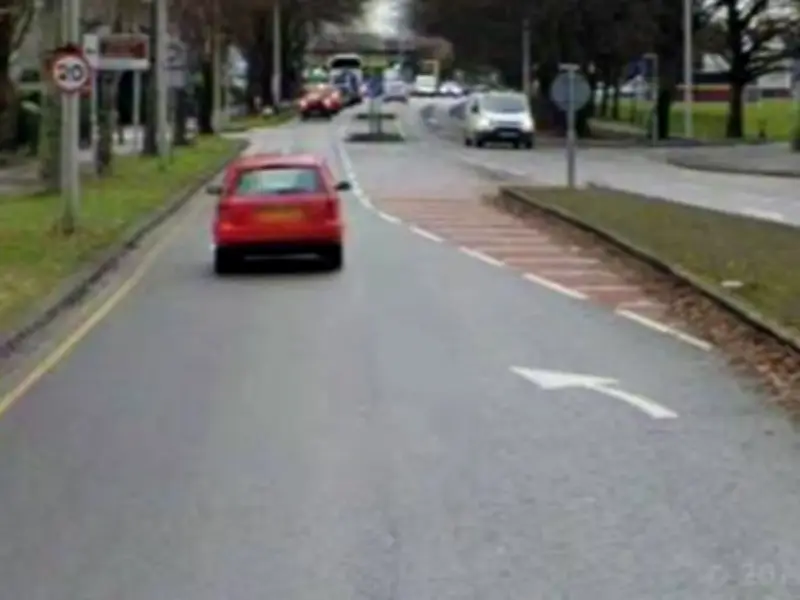
Drivers who block others from merging when two lanes become one could face a £100 fine and three points on their licence, police have clarified. The correct method is to use both lanes until the merge point and then take turns, a technique known as zip-merging.
Almost every driver in the UK has faced the scenario where two lanes converge into one, such as at roadworks or a permanent lane reduction. Many will have seen a long queue of single-file traffic in the left-hand lane while the right-hand lane sits empty, and some consider drivers using the empty lane to be jumping the queue.
What is zip-merging?
The proper technique for merging when two lanes converge at a specific point is known as zip-merging. Rather than pulling into a single lane as soon as a lane closure is signposted, drivers should take turns merging one at a time at the actual closure point. The term derives from the way the teeth of a zip fasten together, and it is widely regarded as an effective way to reduce traffic congestion.
The police, Highway Code, RAC and National Highways all agree on this. Avon and Somerset Police stated that the method helps make full use of the available road space and noted: "Problems tend to arise when drivers are unwilling to allow others to safely merge, or when motorists change lanes aggressively, without adequate observation, signalling or consideration for other road users."
Guidance from National Highways and the RAC
National Highways offered comparable guidance, stating: "By keeping both lanes in use until the merge point, congestion is minimised and journey reliability is improved."
Highway Code rule 134 states: "You should follow the signs and road markings and get into the lane as directed. In congested road conditions do not change lanes unnecessarily. Merging in turn is recommended but only if safe and appropriate when vehicles are travelling at a very low speed, e.g. when approaching road works or a road traffic incident."
The RAC said: "When motorists encounter a lane closure on a motorway or dual carriageway, the majority of drivers follow the etiquette of moving over early, but this creates one long, slow line of traffic and a near-empty outside lane."
Fines for incorrect merging
While drivers will not face a fine for joining the left-hand queue prematurely, or for using the empty lane up to the merge point, improper use of merger lanes could lead to a driving conviction, penalty and endorsement points. Attempting to block someone from using the less congested lane could result in prosecution for careless driving. The fixed penalty for careless driving now stands at £100 alongside three points on the driver's licence.
National Highways stated: "Dangerous, careless or inconsiderate driving can occur if a driver forces their way into traffic, deliberately obstructs other vehicles, or carries out manoeuvres which create a risk of collision."
If a driver is blocked by a motorist who does not understand the proper way to navigate lane mergers, they can submit dashcam footage to Operation Snap, a UK police scheme enabling members of the public to upload video evidence of suspected driving offences.