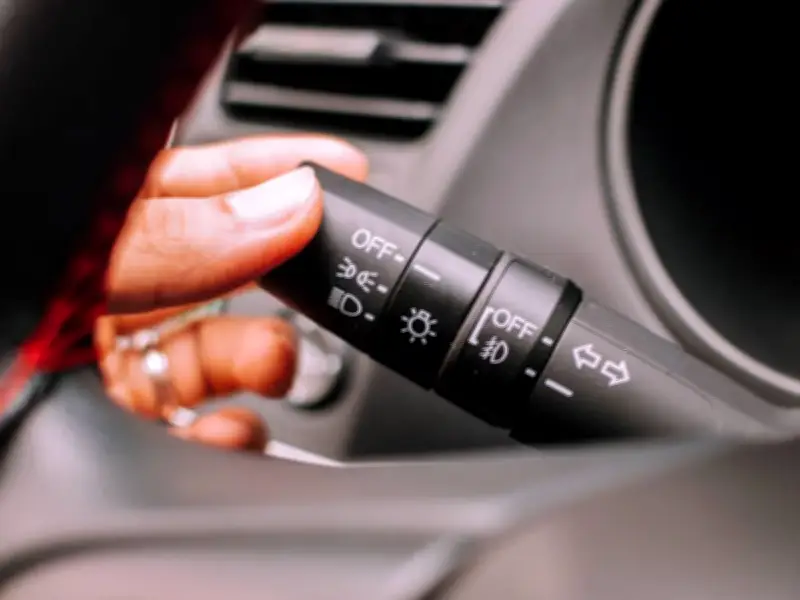
Failing to indicate when turning or changing lanes can lead to a £100 fixed penalty notice and three penalty points, and more serious cases can go to court with fines up to £5,000.
The Highway Code's wording creates some ambiguity, as it relies on guidance rather than strict requirements for signalling. However, road safety officials and traffic police have emphasised that when a failure to signal creates a hazard or causes inconvenience, officers retain complete authority to take action.
What the Highway Code says
According to Rule 103 of the Highway Code, drivers are instructed that signals alert and inform other road users, including pedestrians, of their planned movements, and should provide clear signals with adequate notice while cancelling them after completing a manoeuvre.
While the Code doesn't explicitly mention the offence of not indicating, police can pursue charges for such conduct under Section 3 of the Road Traffic Act 1988 for driving without due care and attention or inconsiderate driving. Police guidance stresses that when a failure to signal forces another motorist to swerve, brake suddenly, or face a potential collision, the driving standard falls below that expected of a competent and careful driver.
Penalties and court action
For minor infractions, the Sentencing Council confirms that traffic officers possess authority to issue an immediate £100 fixed penalty notice together with three penalty points. Should an unsignalled manoeuvre create a substantial danger, cause an accident or put pedestrians at risk, the case proceeds straight to court, where magistrates may levy fines reaching £5,000 and impose up to nine penalty points.
National Highways warns: "Failing to signal can lead to fines, points on your licence, or worse if it causes a collision. Whether you're changing lanes or exiting, your indicators are your voice on the road."
Insurance and legal consequences
Motor insurance provider Admiral has reinforced these cautions to help drivers avoid difficulties. The firm emphasised that neglecting to indicate creates serious hazards during everyday journeys, as oncoming vehicles may not reduce speed while pedestrians are wrongly led to believe crossing is safe.
Financial penalties aren't the only consequence facing negligent motorists. Points on your licence will unavoidably increase subsequent car insurance costs or might even invalidate existing coverage, Admiral warns.
According to prominent UK motoring lawyer Emma Patterson from Patterson Law, collisions resulting from signalling errors represent another frequent hazard. She said: "In some ways, an over-eagerness to signal can be just as bad as failing to signal. You'll typically see a driver flash their lights or physically signal that it's okay for someone to make their manoeuvre.
"But you might then get a motorcyclist, who's filtering through traffic, oblivious to the signal and who's then put in harm's way. It's a scenario we deal with regularly."
This is further reinforced by the Highway Code, which stipulates that road users should: "Watch out for signals given by other road users and proceed only when you are satisfied that it is safe."
It isn't solely the misuse of indicators that can cause difficulties for motorists. Those whose vehicles are stationary owing to defective or broken indicator bulbs are permitted a strict 14-day period from the date of notification to furnish the police with evidence of the repair.