Counterfeit football shirts worth over £18 million seized in the UK during the World Cup could be killers, investigators warned. The tournament produced a spike in sales of fake shirts and kits.
Fire chiefs warn of danger
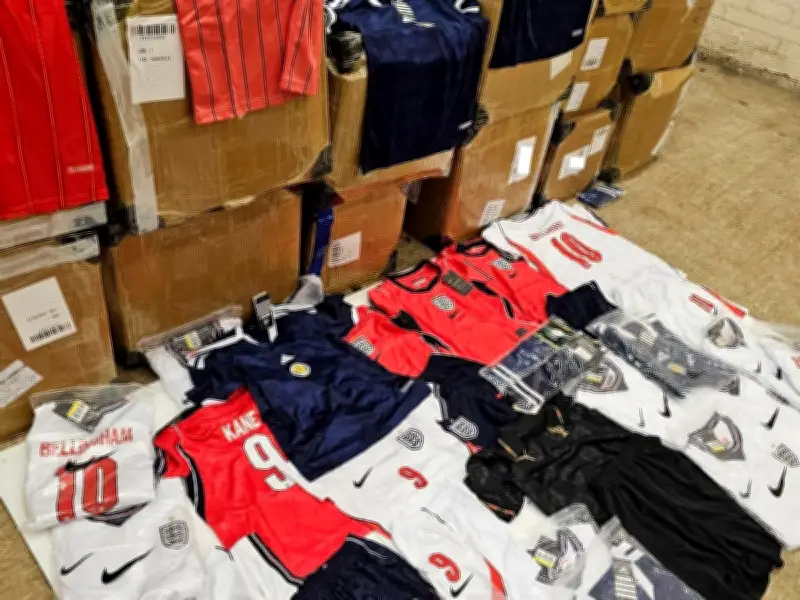
Fire chiefs have warned bogus strips are far more flammable and dangerous than genuine ones. More than 220,000 items of football merchandise were recovered by the Police Intellectual Crime Unit. One raid involved 1,618 fake strips seized at a warehouse in Birmingham, including replicas of star players such as France's Kylian Mbappe and Norway's Erling Haaland. Firefighters carried out tests and found the fake kits were much more flammable.
Police and fire service comments
Det Sgt Jamie Kirk said: “I understand why people want to buy these shirts. People love football and the incentive is the lower price. But these shirts - they're not regulated and could be highly flammable. They have dyes in them which could be harmful to skin, particularly children's skin. While the cost is lower - and that's the attractive part - potential damages to you and the people making them is just far too high.”
Watch manager Dave Jackson, who tested the flammability of kits for Cheshire Fire and Rescue Service using a blow torch, said: “It's quite clear that the counterfeit one melted as soon as the burner went on it. I really had to try to make the genuine one ignite and melt. It's extremely dangerous. It's something that can cause horrific injuries to your children. It's just not worth the savings.”
Intellectual Property Office warning
Kate Caffrey, head of intelligence at the Intellectual Property Office, said: “Counterfeit strips are not subject to health and safety regulations, British Standards or EU standards. We've got evidence that counterfeit goods are made in appalling conditions so you just don't know what's in them, how they're being made and there's no way of providing any safety reassurances. Counterfeiting is criminal. These are manufactured and supplied by criminal networks - gangs - and they're very adept at targeting markets where there's demand. So the World Cup, the forthcoming Premier League season - they're going to flood the market with fake shirts. The price of a fake shirt - you don't know what you're funding with that money.”
Record seizure in Edinburgh
Trading Standards investigators made a record seizure of 58,000 fake World Cup football shirts worth £5.5 million at a distribution warehouse in Edinburgh. Undercover officers placed an order to an online ad and followed a trail to the centre packed with bogus gear weighing nine tonnes. All the Chinese-made kits - largely England and Scotland - were sneaked into the UK past border patrol officers.
Fake shirts sold near stadium
Fake football shirts were found on sale in the shadow of Mexico’s Estadio Azteca during the World Cup’s opening match. A shop just 100 yards from the gates was flogging fake Mexico, Brazil and Germany tops for £12 in full view of thousands of cops patrolling the iconic stadium. The real shirts cost up to £110. When confronted, the owner freely admitted her kits were not genuine. “No, no, no,” she said in broken English. “But good.” Asked if she had any bogus England shirts, she said: “No England.” But she said she was expecting more and could get them to order.
Seizures in London
Camden Council seized 10,550 fake football shirts from outlets in the north London borough between January and May. The haul - which included England kits - was worth an estimated £755,652. A consignment of bogus Scotland shirts was also intercepted, along with fake Spain, Germany and Belgium tops. Camden Council cabinet member for finance and cost of living Camron Aref-Adib said: “We recommend football fans buy their kit from official stores ahead of the World Cup. While you may think you've found a bargain, counterfeit clothes are often poorly made with hazardous materials.”
KitLegit app launched
A new app called KitLegit has been launched to give counterfeiters the red card by telling fans if the England shirt they are about to buy is real or fake. Developed by brand protection investigators, it can tell from a photo if a shirt is real or not, and offers a certificate of authenticity to aid a future trade or diploma of dodginess to help duped fans get their money back from banks or finance houses. The bot works off a picture of a shirt or an online photo, allowing supporters to check authenticity before they send cash. Investigators hope it will stop Del Boy-style traders.
FIFA did not respond to a request for comment.