Five suspects arrested near RAF Fairford may have been a “decoy” designed to distract airbase security before a bigger Iran-backed attack. The incident triggered a major UK-US security row after all 12 US Air Force B-1 bombers were suddenly pulled out of the Gloucestershire base on Sunday (October 4), just days after some had deployed to Britain.
US confirms withdrawal amid threats
US officials said new intelligence forced the withdrawal, a claim denied in the UK. But President Donald Trump confirmed the move on Monday (October 5), saying: “There were some threats. Why should we leave them there?” He added: “We actually know the people who made the threat.”
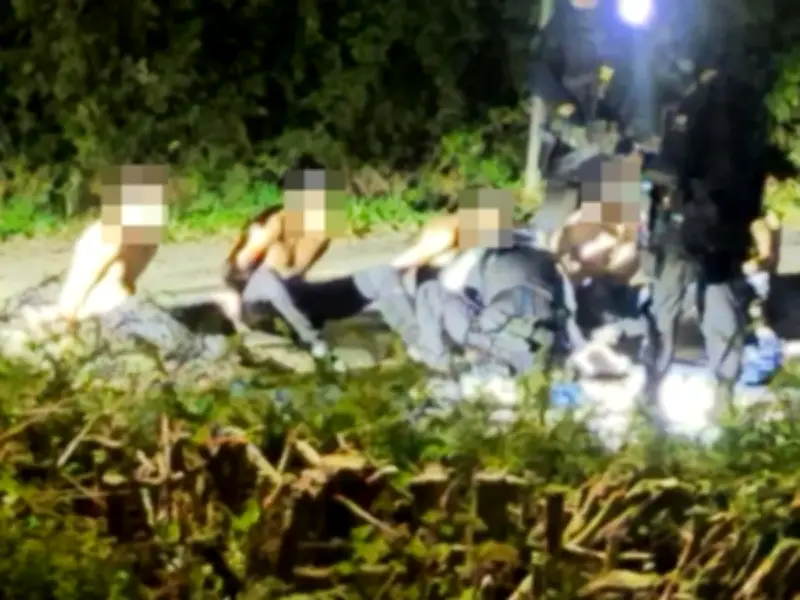
The initial scare began shortly after midnight on September 27 when three suspicious white vans were spotted on a perimeter country road near the base. Five British men in their 20s were arrested, triggering an 85-home civilian evacuation and a bomb disposal sweep.
Decoy plan investigated
Counter-terrorism police later found no viable explosives in the vehicles and the five were released on strict police bail, the Sun reported. However, the probe escalated when a sixth suspect, a 27-year-old dual UK-Iranian national, was arrested in London on suspicion of preparing terrorist acts.
Western intelligence agencies and US commanders then assessed the “clumsy” van incident may have been a deliberate probe to test response times, or even a diversion to draw security away from the real threat. A source said a viable line of inquiry was that the five were part of a decoy plan, adding: “It would certainly explain why they appear to have called the police themselves.” An investigator said “diversionary tactics” were consistent with Iran-linked sabotage, including arson attacks on Jewish ambulances and synagogues.
Intelligence spike and evacuation
After the arrests, intelligence reportedly spiked suggesting Iran’s Islamic Revolutionary Guard Corps was actively planning a secondary, coordinated strike, including fears of a multiple-drone swarm attack or arson plots using local proxies to destroy the multi-million dollar bombers on the tarmac and kill US personnel. That prompted the extraordinary decision to evacuate every B-1, with the departure so rushed that some jets reportedly headed for South Dakota before standard refuelling aircraft were fully in place, Time Magazine reported.
Former Air Marshal Ed Stringer branded the US exit “extraordinary”. He said: “They had a routine rotation a week ago and now suddenly all 12 have gone home. Clearly someone’s done a risk-benefit analysis. The threat’s gone up, the benefit has gone down.” He added the planes could return when “someone gets to the bottom of what the threat is”, warning recent attacks on airfields showed “we cannot be complacent”.
Political and local reaction
Prime Minister Andy Burnham said there were “strong indications” Iran was involved, though Tehran has vehemently denied the allegations. US Secretary of State Marco Rubio blamed Iran but insisted the move was “not unusual”, saying: “The Department of War is constantly reallocating resources where they need to be. We have documented what happened last week. I would directly tie that to the move that was made.”
US Vice-President JD Vance said the decision was taken “out of an abundance of caution”. In Fairford, local councillor Tristan Wilkinson said the removal of the bombers came as a shock: “There were reports they were in a hurry… whether that’s an immediate threat or abundance of caution I’m not sure.” And the farmer mum who called police after spotting the “terror plotters” said locals remained on edge: “I wouldn’t say anyone feels reassured. But unless you’re willing to leave your home behind you’ve got to get on with it.”