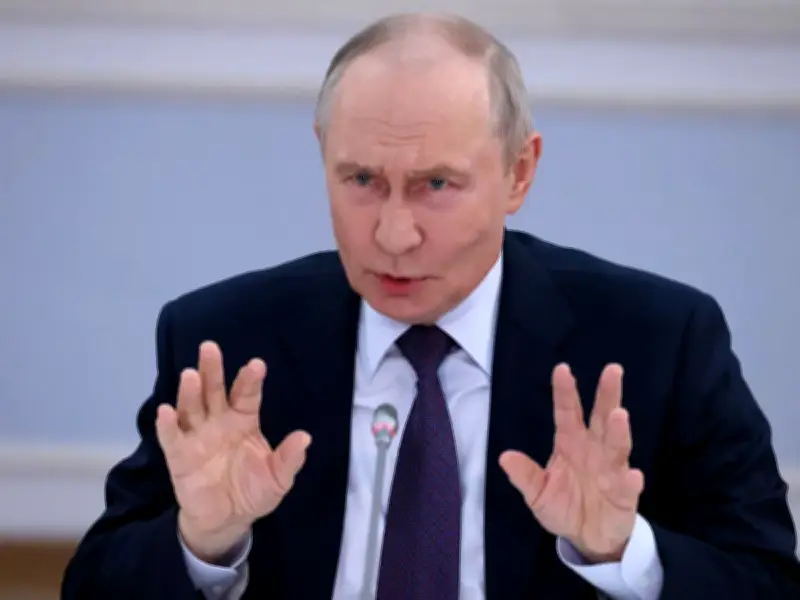
Vladimir Putin's own officials are reportedly concerned that he could be about to use nuclear weapons in Ukraine, as frustration grows over the lack of progress in the war.
Kremlin insiders are said to be increasingly worried that Putin is prepared to detonate a tactical nuclear weapon to break the stalemate. The concerns follow warnings from multiple intelligence agencies, including the CIA, that Russia is readying a new round of escalation in the autumn.
Options under consideration
A nuclear strike is said to be among the options being considered inside the Kremlin, while sabotage attacks on key infrastructure across Europe and armed provocations inside Poland also feature in top-level plans.

According to Bloomberg, Putin is listening more to 'hawkish' figures in his inner circle and is convinced that the only outcome worse than continuing the costly war would be losing it. Several people close to the Kremlin told the outlet that Russia is weighing up its options for intensifying the war effort.
Allies urge restraint
Under Joe Biden's presidency, the US warned Russia that there would be a huge US and Western response if he were to use nuclear weapons. But it is not known how Donald Trump would respond given his relationship with the Russian leader.
Fiona Hill, senior fellow at the Brookings Institution and former national security advisor to three presidents, including Trump during his first term, told Bloomberg that Putin is testing how far he can, and needs to, go before people give in to him.
Even Russian allies and partners such as China and India have warned Putin against using nuclear weapons. Last month China told Russia to not even think about bringing nuclear weapons into the war with Ukraine, according to Ukrainian President Volodymyr Zelensky and a senior European official.
CIA visit and UK support
CIA chief John Ratcliffe made a surprise visit to Moscow for talks with Russian officials on Tuesday. During the visit, he is believed to have warned Russia against escalating tensions with its European neighbours, including Poland, Estonia, Latvia and Lithuania. The last time a top CIA official travelled to Russia was when Ratcliffe's predecessor, William Burns, held talks in the months ahead of the full-scale invasion of Ukraine in 2022.
Prime Minister Andy Burnham travelled to Kyiv earlier this week, his first visit to Ukraine since coming to office, where he pledged to support Ukraine with missile technology by declassifying information on UK components for long-range weapons. He told broadcasters: "It's a challenging situation when we look around the world right now."
"But from what we're doing, people need to be sure of this: We're doing what we've done since the start of this conflict, which is to provide that back-up support to Ukraine to be able to defend themselves, because they do need to do that. They are obviously in an impossible situation, so challenging, but Britain needs to be there and be a constant as they go through this illegal invasion that they're facing."
"So, we will continue to do that. Prime ministers before me gave that assurance and I visited Ukraine to send a really clear message to the Ukrainian people that Britain isn't changing course. We said we would support them. We are supporting them, and that won't change."
There have also been assessments showing concern that Russia could escalate its hybrid warfare tactics, including one US report warning Russia could launch a limited ground incursion or cyberattacks across Europe potentially any time from this autumn to 2029. It followed another assessment carried out by US and European agencies which indicated Russia was considering moving on Poland with potential missile or drone strikes on critical infrastructure, potentially also launching 'false-flag' attacks designed so Ukraine would be blamed.