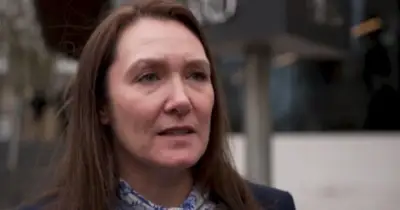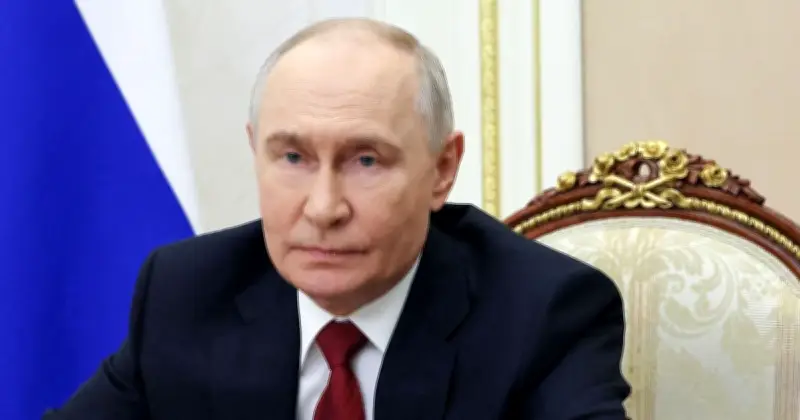
Vladimir Putin knows he risks a nuclear war with NATO but could still be weighing up a full-scale strike against Britain, a leading academic has warned as fears over Russian drone attacks escalate across Europe. Professor Anthony Glees, an academic at the University of Buckingham and security expert, said the Kremlin's growing use of drones and other forms of "grey warfare" could be testing the West's response ahead of a much more serious attack.
CIA alert over Mediterranean drone threat
His warning came after reports that the CIA has alerted Spain, France and Italy to a possible Russian drone operation against targets in the Mediterranean. According to reports, based on information leaked by Lithuanian authorities, Moscow could launch Gerbera drones from Russian merchant ships operating in the Mediterranean.
The drones are reported to have a range of around 600km and a top speed of approximately 160kph, potentially allowing them to strike targets including ports and air bases.
'Grey warfare' threat to UK and Europe
Prof Glees said the reported threat should not be dismissed as an isolated Mediterranean concern, arguing that it mirrors the danger facing Britain, Germany and France from suspected Russian drone activity.
He explained: "What we've learning from the CIA actually mirrors the threat we are facing right now from Russian drones here in the UK, in German and in France."
"The list of attacks and overflying by drones we strongly believe have been launched against us by Russia grows daily."
NATO's Article 5 calculation
Prof Glees said NATO chiefs believe Mr Putin understands the consequences of crossing into NATO territory. The academic continued: "We are told that NATO chiefs are convinced Putin knows that if Russia crosses into NATO territory to start even a limited ground offensive against a NATO member, Article 5 will kick in and he risks a nuclear war with NATO which he cannot win and will end with his destruction."
However, he warned that this calculation could make the Kremlin more likely to continue with attacks below the threshold of open warfare.
Deterrence and the risk of escalation
Prof Glees said NATO's description of Russian activity as "grey warfare" could prove dangerous if the West assumes the drone attacks are merely an attempt to intimidate rather than part of preparations for a wider offensive.
He added: "The trouble with this view is not only that we cannot be sure this 'prodding' along the Costas and the Med resorts of France and Spain is not the first stage of a strategic strike against a NATO member, be they Balts, Brits or Scandinavians."
He also suggested that failing to respond could encourage Moscow to escalate still further. He said: "If NATO does not retaliate, like for like, Putin may be encouraged to go for that full strike against us even if, at the moment, all he wants to do is frighten us off further support for Ukraine."
The warning comes as Denmark's military intelligence service said there is a growing risk of limited Russian military action against NATO countries, although it stressed that an invasion remains highly unlikely.
Prof Glees said Britain and its European allies must demonstrate that Russian threats will not force them to back down, stressing: "The best way of deterring Putin, if this is what he's thinking, is to show him that Europeans and we Brits in particular mean business; that we won't be bullied and threatened and we certainly won't appease him by backing off from our support for brave Ukraine."
He called for NATO to respond to what he described as Russian "proactive sub-threshold prodding" with measures of its own. He concluded: "That will deter Putin and make war less likely. Shilly-shallying around will lead only to the reverse."