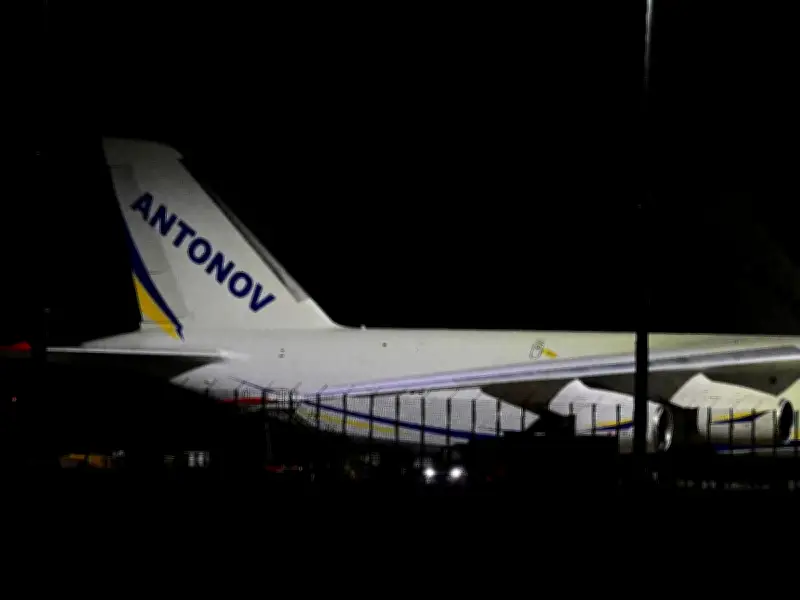
NATO has expressed full support for Germany after Berlin formally concluded that Russia was behind an attempted drone attack at Leipzig Airport last month. The incident, in which an explosive device was found near a Ukrainian cargo plane, has heightened tensions between the Western alliance and the Kremlin.
German authorities accused Moscow of attempting to strike the Leipzig facility, prompting fears over Russia's escalating aggression. NATO Secretary General Mark Rutte pledged "full solidarity with Germany," while the EU echoed support for the bloc in countering the Russian threat.
Drone found near Ukrainian plane
Local authorities discovered the drone close to a Ukrainian aircraft at the airport on August 4. Bomb experts were called in to defuse the device, and nearby runways were closed as a precaution.

German Interior Minister Alexander Dobrindt had previously pointed the finger at the Kremlin, describing the attempted sabotage as fitting a pattern of "Russian hybrid operations." On Tuesday, he confirmed that the German government now "comes to the conclusion that Russia is responsible for the hybrid attack in Leipzig."
Further hybrid attacks feared
Dobrindt added that Germany assumes it is "the target of further hybrid attacks by Russia." He stated: "We do not view the Leipzig incident in isolation, but rather see it in the context of other hybrid actions."
Foreign Minister Johann Wadephul announced that the Russian consulate in Bonn will be closed on September 18 and said he had summoned the Russian ambassador. The announcement marks a significant escalation in the rising tensions between NATO and Russia, amid fears the Kremlin is plotting attacks on eastern Europe.
Alliance response and wider threats
Rutte said: "NATO will continue to strengthen our ability to deter and defend all Allies against any threat — including malign actions like those seen in Leipzig and elsewhere across the Alliance."
EU chief Ursula von der Leyen added: "We are united in our resolve to stand against Russian aggression. We will deter anyone who seeks to undermine our freedom and security."
Confirmation of Germany's suspicion comes at a time of rising tension with the Kremlin. Russian President Vladimir Putin is, according to reports, increasingly worried about his safety over his disastrous war in Ukraine and is frustrated by NATO support for Kyiv.
It is believed that US air military facilities across the UK are also under threat, as are weapons manufacturers linked to UK support for Ukraine. US heavy bombers and fighter jets, housed in the UK throughout the Cold War period, have left for the Middle East to take part in the American war on Iran.
Iran has supplied weapons to Russia, which is suspected of reciprocating by providing Tehran with detailed intelligence on US bases in the Middle East. Bases in Jordan have come under fire, and British troops have been forced to shoot down incoming drones aimed at bases in northern Iraq throughout the crisis. The Russian Foreign Ministry denies involvement in the Leipzig plot.