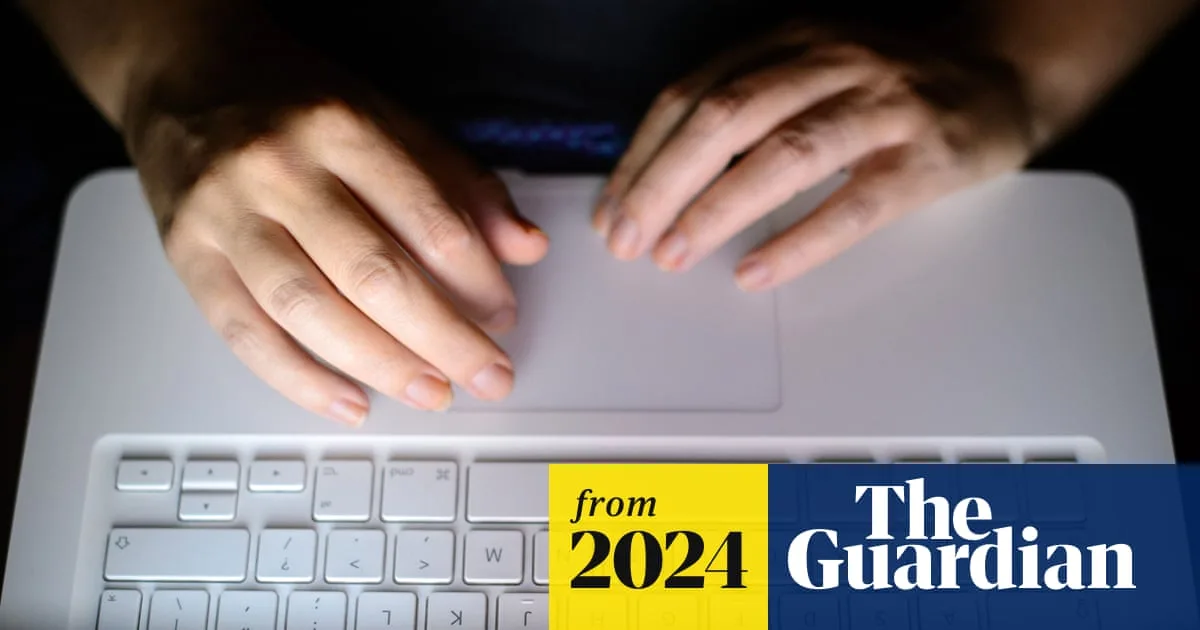
Teenagers as young as 13 are coming under suspicion of engaging in terrorism after being exposed to a toxic cocktail of easily accessible far-right extremism online, experts have warned. Insiders describe “a horrible hateful soup” of social media content where children can “pick and mix” terrorist narratives, including the Terrorgram network – recently banned in the UK – of white supremacist channels on Telegram.
Experts have tracked 49 children convicted of terror offences since 2016 – all but one of whom are boys – and this week Ken McCallum, the head of MI5, said “13% of all those being investigated by MI5 for involvement in UK terrorism are under 18”, a threefold increase in three years. But the increasing proportion of children under scrutiny also poses problems, with questions arising over whether teenagers should be criminalised – and MI5 and experts acknowledge cases often raise issues of mental health or grooming.
Hannah Rose, an analyst with the Institute of Strategic Dialogue (ISD) thinktank, said there had been a “surge in online extremist ecosystems” for several years, which remain “very easy for children to access”, and that “offline vulnerabilities, which kids are more likely to have, can make somebody more prone to adopting extremist views”. In April Britain proscribed Terrorgram, a loose online neo-fascist group. Coordinators helped run three Telegram channels with more than 70,000 subscribers, an ISD study found in August, purporting to be news feeds, one of which claimed to be associated with Steve Bannon’s War Room podcast.

Some of the online radicalisation is considered by investigators to be a hangover from the Covid period, when youngsters and families were forced to spend more time online. But it has also led to a blurring of ideas and motivations, making it hard at times for investigators to see what, if any, ideology is involved. “We’re also seeing the mainstreaming of ideas such as extreme misogyny online, or school shooter fandoms,” said Rose. “Some of this is aestheticised online with graphics or fast music, presented as a computer game – and one result is that people without an ideology become motivated to carry out acts of extreme harm.”
Child terror cases are largely related to extreme rightwing networks, but there has been a resurgence in Islamist activity. Last month a 15-year-old from Nottingham received three-year community behaviour and youth referral orders for sharing violent videos relating to Islamic State and pledging allegiance to the terror group on Telegram. MI5 has previously found itself investigating a 13-year-old from Cornwall, who became leader of the UK arm of the banned neo-Nazi Feuerkrieg Division, an online group that was itself set up in 2018 by another 13-year-old from Estonia.
Adam Hadley, the executive director of Tech Against Terrorism, which aims to disrupt extremist groups online, said there had been “significant job cuts” at social media companies, particularly in “trust and safety content moderation”, which has helped extremist content escape being censored. Specialists say extremist material is most prevalent on X, which has cut content monitoring since its takeover by Elon Musk, and on Telegram. Last month its boss, Pavel Durov, announced he would seek to improve moderation on the network.