A senior Kremlin figure has warned that British facilities manufacturing drones for Ukraine could face strikes from "unknown sources" following Britain's decision to provide long-range missile blueprints to the embattled nation.
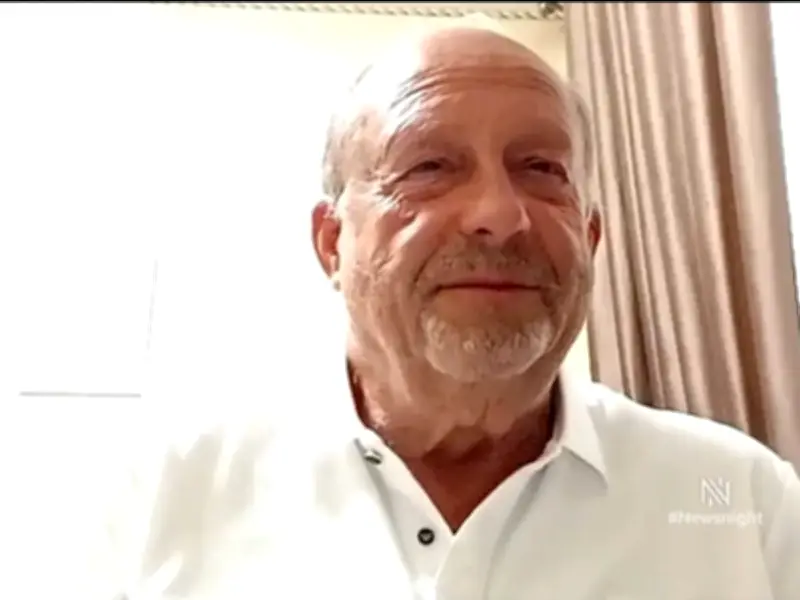
Former Russian deputy foreign minister Andrei Fedorov stated he could not "100% exclude" the possibility of "semi-military" operations after Andy Burnham travelled to Kyiv.
Moscow views Burnham's journey as a direct provocation while the Kremlin presses on with its invasion offensive against neighbouring Ukraine. Russia originally commenced its comprehensive and overt invasion of its European neighbour in 2022.

First foreign visit
For the Prime Minister, the Kyiv journey represents his inaugural foreign visit since assuming office at No 10. The UK has reaffirmed its "unwavering" backing for Ukraine, which subsequently provided what authorities have described as a "goldmine" of battlefield intelligence to strengthen British security.
Mr Fedorov continued that "sooner or later, there might be not only verbal but maybe some visible reaction from Russia towards the UK".
When pressed to clarify what form this might take, he stated: "There are different discussions how it should look like - it might be so-called technical reaction, maybe some hackers attack from unknown source, not from official level of course.
"There might be different political steps and I cannot exclude 100% that there might be some semi-military, for example."
When asked to clarify what he meant by "semi-military", he told BBC Newsnight: "For example, something might happen with enterprises, with the factories which are producing drones for Ukraine, etc etc."
Questioned on whether this suggested British factories on British soil could face military attacks from Russia, the adviser responded: "They could be attacked, not by Russia, but by... from unknown sources."
Scalp missile blueprints
Britain has agreed to declassify blueprints for British-manufactured components used in the Scalp missile, a French-produced variant of the Storm Shadow which has already been deployed against targets inside Russia.
The move has provoked fierce criticism from Russia, with President Vladimir Putin's spokesman Dmitry Peskov claiming it would add "fuel to the fire" of the conflict.
However, Mr Burnham told reporters in Kyiv: "Who started the fire? That's the question, isn't it?".
Throughout his visit, the Prime Minister called on Ukraine's allies to supply additional interceptor missiles to Kyiv as the country continues to endure relentless Russian bombardment.
He co-chaired his first coalition of the willing meeting, stating the group was doing "everything we can" to "dig into our own stocks and help others dig into their stocks".
Ukrainian President Volodymyr Zelensky has consistently appealed for more US-manufactured Patriot interceptor missiles in recent months as Kyiv's supplies have dwindled. Patriot supplies have been redirected to the Middle East following the eruption of conflict with Iran, with Ukraine obtaining considerably fewer missiles this year compared to prior years.
Russia has attempted to exploit the deficit by intensifying its ballistic missile attacks, claiming at least 23 lives and injuring over 100 in just the last three days.
Funding gap and AI partnership
Speaking afterwards on Monday, Mr Zelensky welcomed the talks between the coalition of the willing but said "now, we have to deal with a funding gap", including the possibility of advancing part of the European loan to Ukraine, or releasing frozen Russian assets.
"The total gap is 27 billion," he said in a post on X.
"One of the main options is to bring forward part of the European loan funding this year. But we should not give up on other ideas for how to ensure fair protection in this war - a war that Russia started and continues to prolong."
The Prime Minister also promised "continuity" in the UK's stance towards Ukraine, declaring "we're not a fair-weather friend, we're here for the long haul".
"Obviously, with a change of prime minister, presumably people might think is there a change of policy - well, I'm here to say there isn't," he told ITV News.

Mr Burnham and Mr Zelensky have additionally signed an arrangement to grant the Ministry of Defence, collaborating with selected British firms, access to Ukraine's "Avengers" AI database, Downing Street confirmed. The agreement is anticipated to enable the UK to benefit from Ukraine's frontline expertise and create artificial intelligence-driven approaches to national security issues facing both nations.
While the deal is primarily centred on defence and security, officials said the deal could "revolutionise all parts of public life, from air traffic control to train systems".
The inaugural trial of the new partnership is set to see AI sensors provide an additional layer of security for military installations, guarding against protestors and hostile actors, while a second initiative will see the UK and Ukraine collaborate on low-power AI chips that could power a new generation of longer-lasting machines capable of operating in more demanding conditions.
No 10 said the so-called "Avengers AI Labs" was "a goldmine of battlefield data" which would give British researchers "unparalleled access to real-world operational insights and the opportunity to 'plug and play'."